Reading practice at home can fit a busy week without a long nightly session. A mix of independent reading, shared stories, and book talk can help a steadier habit form.
- Short windows. Ten minutes between school and sport counts.
- Shared reading. It still helps once your child reads alone.
- Their choice. Comics and graphic novels are fair game.
- Easy talk. One question about a character is plenty.
- Room to change. The plan grows with your child.
Swimming on Monday. Spelling words and piano on Tuesday. Soccer training on Wednesday, with dinner squeezed between pickup and bath time. Then Friday’s reading log comes home with three blank nights in a row, and it feels like one more thing that slipped.
So do three blank nights matter? Less than they seem to on a Friday. Children who read regularly rarely have long nightly sessions behind them, just reading that turns up at the same point most days.
How Can You Fit Reading Into a Busy Family Week?
Build a Simple Seven-Day Reading Routine
Consistency beats ambition, so treat this week as a menu.
- Monday. A chapter together after dinner.
- Tuesday. Your child reads alone before lights out.
- Wednesday. Swap pages and take turns reading aloud.
- Thursday. Library day, or a new book off the shelf.
- Friday. Their pick, and no questions afterwards.
- Saturday. A quiet moment, even the car trip to sport.
- Sunday. Five minutes on the week’s favourite character.
Nobody needs all seven. In fact, the tell that a routine has gone stale is a reading log filled in on Sunday night, every tick in the same pen. Reading tied to bedtime or the end of a homework routine may last longer, and a missed day is just a missed day.
The same approach works when building a home study routine for children. Small, manageable activities are easier to fit around everything else the family has going on.
Attitude is the part a timetable can’t schedule. In Australian research summarised by Australia Reads, which surveyed 997 children aged 8 to 12 across 24 Western Australian schools and interviewed 47 of them, attitude to reading was the strongest predictor of how often children read, and the encouragement they described came through talk, books bought or gifted, and reading together.
Make the Most of Small Pockets of Time
Children may read more willingly in the gaps because nothing’s riding on it. A book in the sports bag turns the wait before swimming into reading nobody calls practice.
Most family days are already full. The Australian Bureau of Statistics’ 2024 time-use survey found couples with children under 15 averaged 6 hours 16 minutes of unpaid work a day, and that’s why the plan above never asks for a free hour. Plus, if a grandparent does Tuesday pickup, Tuesday’s reading can be theirs.
How Should Reading Practice Change as Children Grow?
Adapt Activities to Your Child’s Reading Stage
Younger primary students can benefit from reading aloud and talking about the pictures. Middle primary students suit independent reading beside a shared chapter book, and older students want longer books and a chat about the ending. None of these is a fixed milestone.
Mind you, dropping shared reading once a child can decode is a habit worth resisting. Confident readers often skim, and a skimmer asked what surprised them hands you the blurb.
As books become more challenging, simple conversations about characters, events and what might happen next can help improve reading comprehension in primary school.
Enjoyment also slips with age. In the Scholastic Kids and Family Reading Report, an American survey of 1,700 parents and children, it fell from 70% of 6 to 8 year olds to 46% of 12 to 17 year olds, and while those aren’t Australian figures, the slide looks familiar to Hills parents.
Keep Reading Interesting With Choice and Variety
A child who “hates reading” is often reading plenty already, just not the school reader. A game guide, the footy results, a whole graphic novel series.
Choosing is part of being a reader, and so is dropping a book that didn’t land. When motivation’s low, start with the interest. Finding ways to get your child to read more without nagging can help take some of the pressure out of the routine.
Self-chosen reading, digital and multimodal included, was the focus of a Creative Australia literature review of children aged 5 to 14. Children whose families encouraged reading and whose parents read for pleasure were more likely to read for pleasure, though it dropped away quickly towards adolescence.
How Can Parents Make Reading a Lasting Family Habit?
Encourage Reading Without Turning It Into Homework
Children notice what adults do with spare time, so a parent reading on the couch says plenty.
The risk comes after the last page. Once every session ends in questions with right answers, children often start choosing shorter books, which is a sensible response to being tested. So ask what they thought of a character instead, praise the effort on a harder book, and let small slips go when the meaning survives. Stopping on every word can teach a child to watch your face rather than the page.
A question about why a character made a particular choice can also help children develop inference skills when reading without making the conversation feel like a comprehension test.
Recognise When Your Child May Need Extra Reading Support
A routine builds the habit, but it won’t fix every difficulty underneath. Guessing longer words from the first letter, reading fluently without being able to say what happened, or going quiet when asked to read aloud are worth raising with the teacher. Listen to the complaints, though. “It’s boring” is sometimes honest and sometimes a polite way of saying “It’s hard.”
These are among the signs your child could benefit from an English tutor, particularly when the same difficulties keep appearing despite regular practice.
If concerns persist, more home reading rarely solves it alone. A child who decodes well but loses the thread may need targeted comprehension support.
Frequently Asked Questions About Reading Practice at Home
How Often Should My Child Practise Reading at Home?
Most days, with the weight on “most”. Four or five short sessions usually outlast a seven-night rule that’s gone by Thursday.
How Long Should a Primary-School Child Read Each Day?
There’s no right number, and the research here doesn’t set one. Ten minutes suits many younger readers, and older ones often reach twenty once a book grabs them.
Should I Read With My Child or Let Them Read Independently?
Both, well past the early years. Plenty of Year 5 and 6 students still enjoy a shared chapter that’s a little harder than they’d pick alone.
What If My Child Doesn’t Enjoy Reading?
Start with what they already read unprompted, like a joke book or the sports pages. Interest is usually the way back in, and more set books rarely are.
Can Reading Tutoring Help Improve My Child’s Confidence?
It can, when low confidence comes from a specific gap like decoding longer words. Even so, the first signs are small, such as offering to read a sign aloud.
Targeted reading tutoring can help children work on the specific literacy skills that make independent reading difficult.
Help Your Child Build Stronger Reading Habits With Boost Tutoring
A manageable routine keeps reading going, though some children need guidance with specific literacy skills.
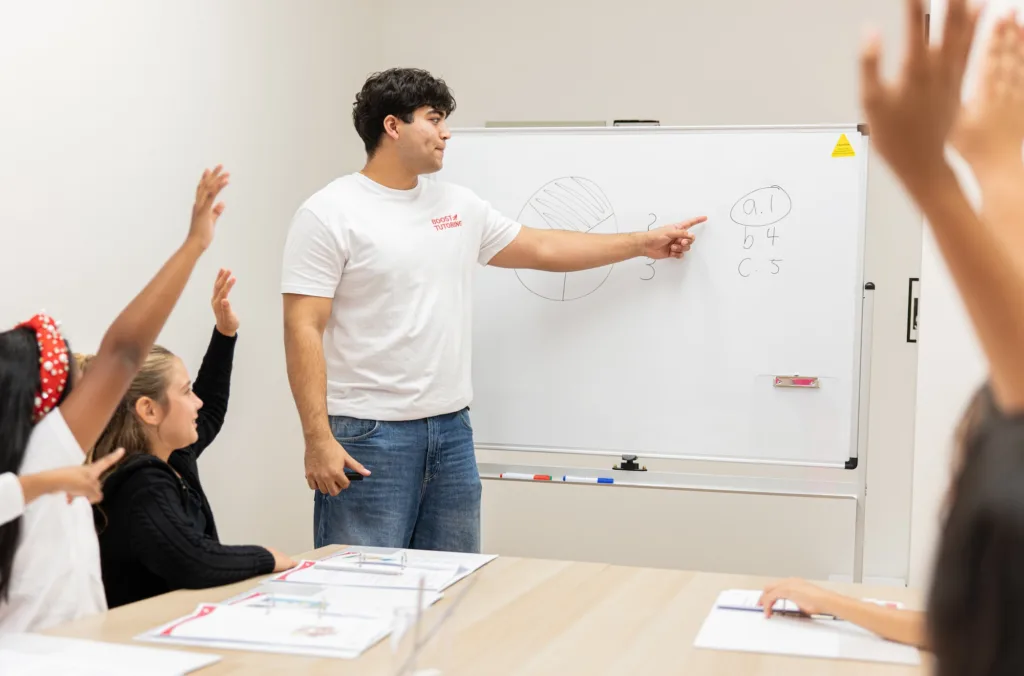
This is exactly why every primary English session at Boost Tutoring Beaumont Hills and Castle Hill opens with five minutes of Prime Skills work, such as spelling patterns and new vocabulary. Then comes real teaching through the class content, and time to practise before heading home. Small-group English tutoring keeps the same tutor each week, and Boost Accelerator carries it into reading practice at home. Not because home reading needs replacing, but because some skills need teaching first.
Our English tutoring programs support students in developing foundational literacy skills, strengthening reading comprehension and becoming more confident independent readers.
If you’re not sure whether your child needs a better routine or help with a specific reading skill, an assessment with Boost Tutoring Australia can help identify where support is needed.
Book a free academic assessment and help your child build stronger reading skills.