
If you’ve started looking for maths tutoring in Castle Hill, you’ve probably noticed the same thing every other parent does. There’s a lot of it. Walk down Old Northern Road, scroll through a couple of local Facebook groups, and you’ll find centre after centre, all promising results, all looking more or less the same from the outside.
Deciding your child needs help with maths is the easy part. Working out who’s actually good at it is the hard part. Most places say similar things on their websites, and the websites won’t tell you much. So here’s what actually separates strong maths tutoring from the rest, and what to ask before you hand over a cent.
Start with how they work out where your child sits
A good centre won’t drop your child straight into a class. They’ll find out where your child actually is first. Which topics are solid, which ones have gaps, and whether the real problem is this year’s content or something from two years ago that never properly locked in.
This matters more in maths than in almost any other subject, because maths is cumulative. A Year 6 student stuck on fractions is often really stuck on something from Year 4. Close that gap and the new content suddenly makes sense. Skip it and you’re building on sand, no matter how many sessions your child sits through.
So before anything else, ask how a centre decides what your child needs. If they can’t tell you specifically where your child stands before they start, they’re guessing. Look for a proper assessment, not a five-minute chat at the front desk.
Ask how many children are in a class
School maths classes run to thirty students. A child who’s quietly lost in a room that size tends to stay lost, because there’s rarely time for anyone to notice. The whole point of tutoring is to give your child more attention than school can.
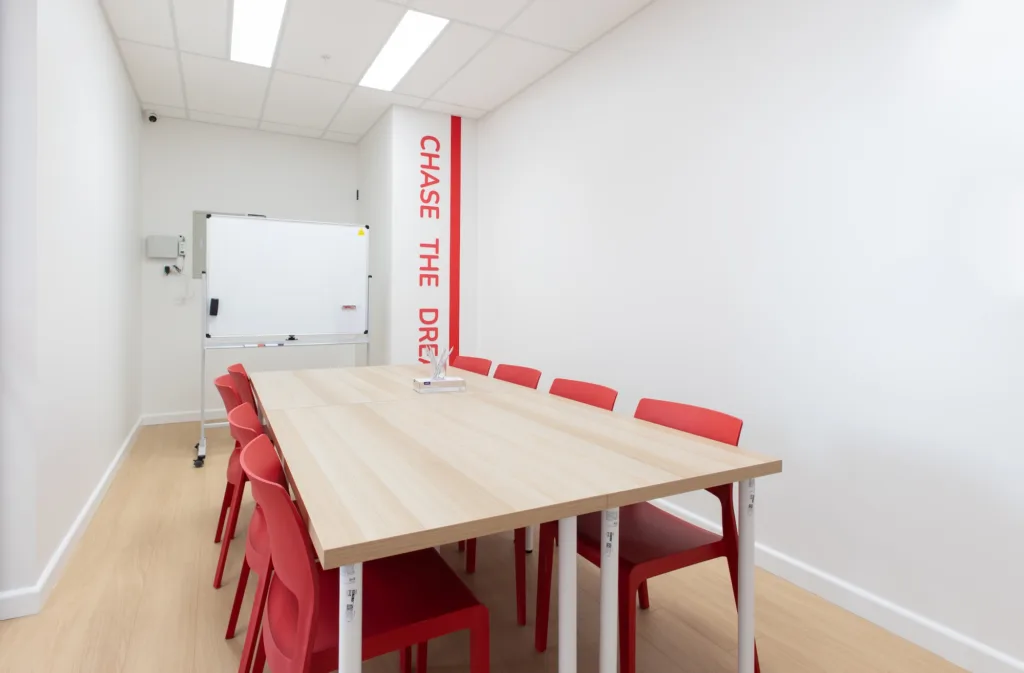
Some centres run groups almost as big as a classroom, which defeats the purpose. Others push expensive one-on-one that most families don’t actually need every week. For the majority of kids, the right answer sits in between: a small group where the tutor knows every child by name, can see who’s stuck in real time, and can move around the room. Big enough to keep things moving, small enough that no one hides at the back.
Ask the question directly. How many students are in a class? If they dodge it, that tells you something.
Find out who’s doing the teaching
A surprising number of centres run on uni students picking up a few shifts between lectures. Some are excellent. But there’s a difference between someone who’s good at maths and someone who knows how to teach it to a ten-year-old whose confidence has taken a knock.
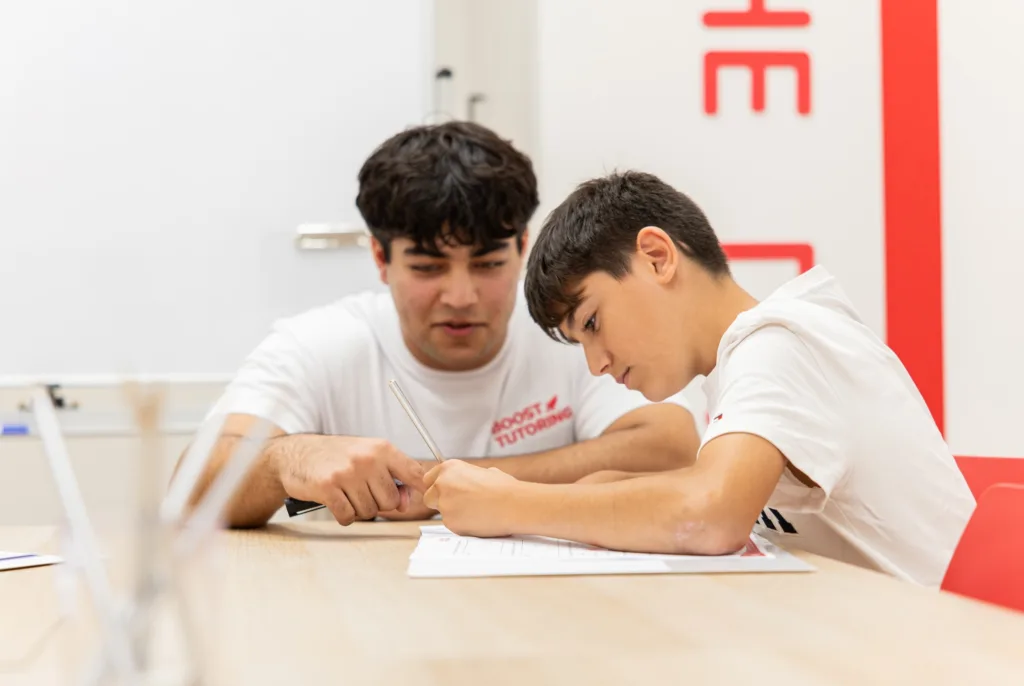
Ask who’ll actually be in the room with your child, what their background is, and whether your child will see the same person each week. A tutor who knows your child, who remembers where they were last term and where they’re heading, will always beat a rotating cast of strangers. Consistency builds trust, and trust is what gets a nervous kid to put their hand up and admit they don’t get it.
Look for a method, not just homework help
A lot of tutoring is really just supervised homework. Your child brings in whatever they’re stuck on, someone helps them through it, and they go home. That’s better than nothing. But it’s reactive. It follows the school’s pace instead of building anything underneath it, and it leaves the gaps exactly where they were.
Good maths tutoring has a shape to it. A clear way of opening a session, teaching something new properly, then getting the child to practise it themselves until it actually sticks. Teaching and practising are not the same thing, and the practising is where most of the learning happens.
Ask what a typical hour looks like. If the answer is vague, the teaching probably is too. You want to hear a structure, not “we help with whatever they need on the day.”
Find out what happens between sessions
One hour a week, on its own, won’t move the needle. Maths is built on reps. The skills that stick are the ones a child practises regularly, not the ones they see once and forget by the following week.
So ask whether there’s anything for your child to do at home, and whether you’ll actually hear how they’re going. The best centres keep the work ticking over between sessions and keep you in the loop, without turning your weeknights into another homework battle. Consistency is the thing that quietly does the work over a term, and it’s the thing the glossy websites rarely talk about.
How we run maths tutoring in Castle Hill
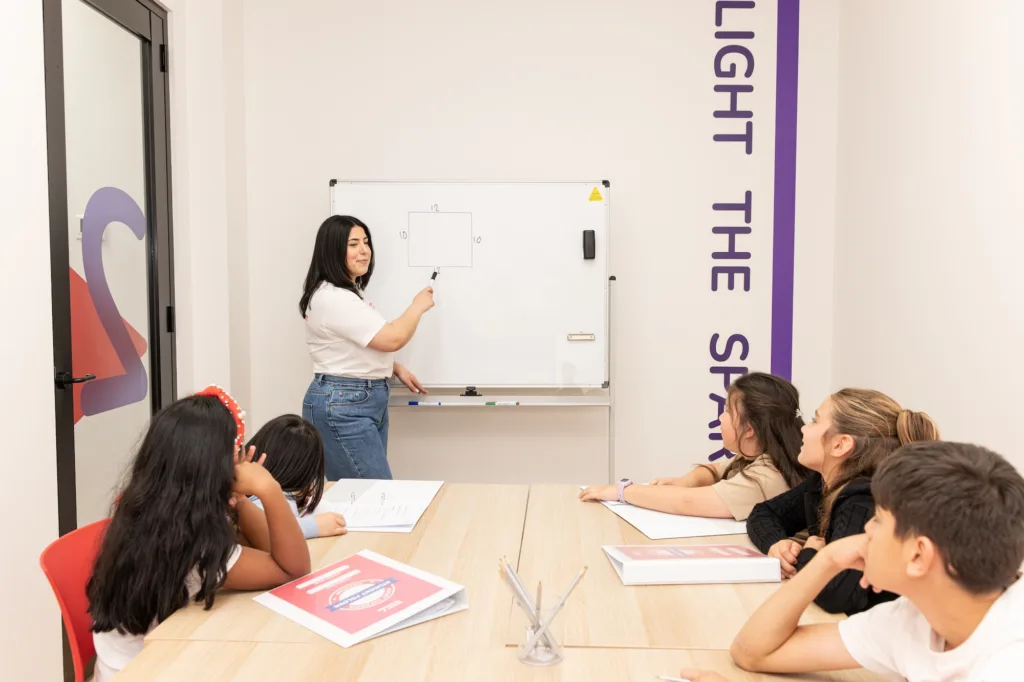
This is the thinking we built Boost around. Every session opens with five minutes of skills work to switch the brain on, then real teaching from a tutor who knows the NSW syllabus, then the part most places skip entirely: the student working through the content themselves until it’s locked in. We call it Prime, Train, Retain.
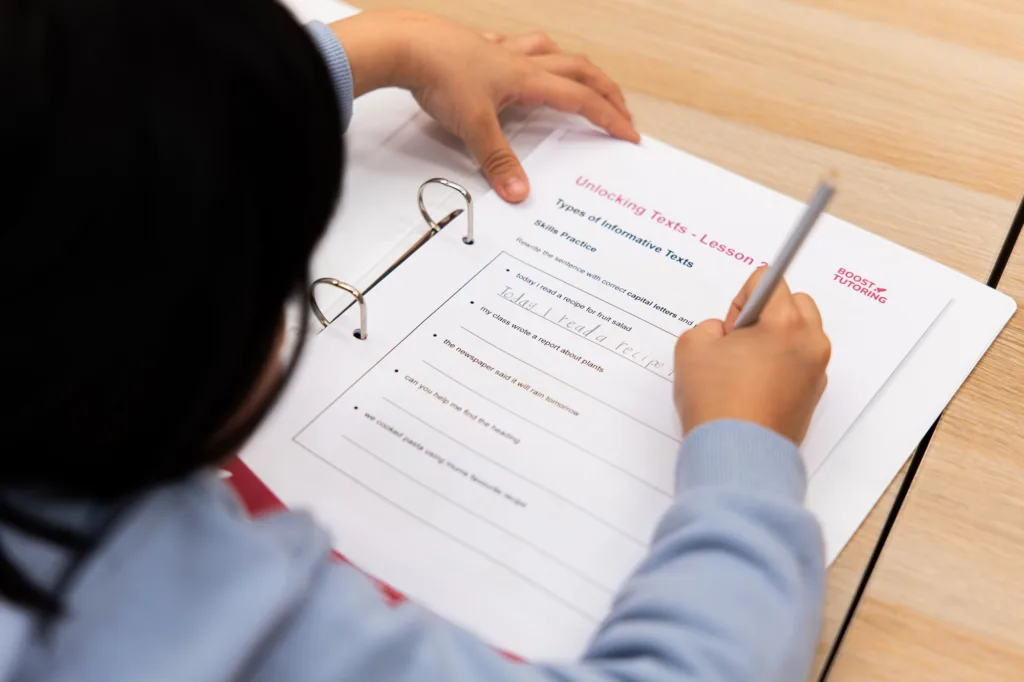
That runs in small groups of six to eight, with the same tutor each week, so your child builds a relationship rather than starting over with a stranger every term. And it carries on at home through a short daily worksheet, so the learning doesn’t stop the moment your child walks out the door.
Before any of that, we sit down and work out exactly where your child is. Not a guess. A clear picture of what’s solid and what needs work, so you’re choosing with the full story in front of you.
Once you know where your child actually sits, the right next step gets a lot clearer.
Book a free academic assessment and find out exactly where your child stands.