
A maths gap is a bit like a small leak. Caught early, it’s quick and easy to put right. Left alone, it doesn’t stay small, it spreads, quietly, into everything built on top of it, until what would have been a minor job has become a major one. The difference between catching a maths gap in Year 4 and discovering it in Year 8 is enormous, not because the gap itself grew, but because of everything that got built on top of it in the meantime.
This is why closing gaps early matters so much in maths, more than in almost any other subject. If you’re thinking about maths tutoring in the Hills, understanding how gaps work, and why timing is everything, changes how you approach the whole thing.
Why Maths Gaps Compound
Maths is cumulative in a way few other subjects are. Almost every topic is built directly on an earlier one. Fractions lean on times tables. Decimals and percentages lean on fractions. Algebra leans on all of it. Nothing stands alone.
This means a gap doesn’t stay where it is. A child who doesn’t really understand fractions doesn’t just lose fractions; they lose everything that uses fractions afterward, which is a great deal. The gap sits underneath each new topic, quietly undermining it, and because the child keeps being taught new material regardless, they fall further behind with each thing that’s built on the missing piece.
That’s the compounding. A small gap today is a bigger problem next term and a serious one next year, not because anyone neglected it deliberately, but because that’s simply how a cumulative subject works. Left alone, maths gaps grow.
Why Early Is Dramatically Easier Than Late
Here’s why the timing matters so much, and it’s worth being concrete about.
A gap caught early is small. It’s one missing piece, close to the surface, and closing it is quick, because there’s not much built on top of it yet. A term, often less, and the child is back on track.
The same gap caught late is a different beast. By then it’s buried under a year or two of material that was all built on the missing foundation, so closing it means going back a long way and rebuilding through everything in between. That takes much longer.
And there’s a second cost to waiting, one that’s easy to overlook. A child who’s been behind for a year or two hasn’t just accumulated a bigger academic gap; they’ve usually accumulated a belief, that they’re “not a maths person”, which stops them trying and has to be undone before the maths can even be addressed. Catch a gap early and you’re closing a gap. Catch it late and you’re closing a bigger gap and rebuilding confidence at the same time. The first is far easier than the second.
This is the whole case for acting early: it’s not just better, it’s dramatically less work, for everyone.
How to Catch Gaps While They’re Small
The catch is that early gaps are quiet, which is exactly why they get missed. Here’s what to watch for, so you can catch them while they’re still small.
Don’t wait for bad marks. By the time the marks drop, a gap has usually been there a while. The marks are the last signal, not the first.
Watch for slowness and effort. A child who gets the right answer but takes a long time, or who’s still counting on fingers past the early years, has a fluency gap even if the answers are correct. Watch how automatic the basics are.
Watch for avoidance and the language. A child who starts avoiding maths, or who says “I don’t get it” or “I’m bad at this”, is often signalling a gap before it shows up anywhere measurable.
Check understanding, not just answers. Ask your child to explain how they got an answer. A child who can is on solid ground; one who says “I just did what the teacher showed us” and can’t say why may be standing on something shaky.
And when you see a real signal, act on it rather than waiting a term to see if it sorts itself out. In a cumulative subject, waiting is how small gaps become big ones.
How We Close Maths Gaps Early in the Hills
Closing gaps, early, is a lot of what Boost does, and it starts with finding them.
We begin by working out exactly where a child sits, which means finding not just that there’s a gap but where it actually starts, because in maths the trouble usually traces back further than where it shows. Then we close it properly, going back to firm up the real foundation rather than just drilling the current topic, before moving forward on solid ground.
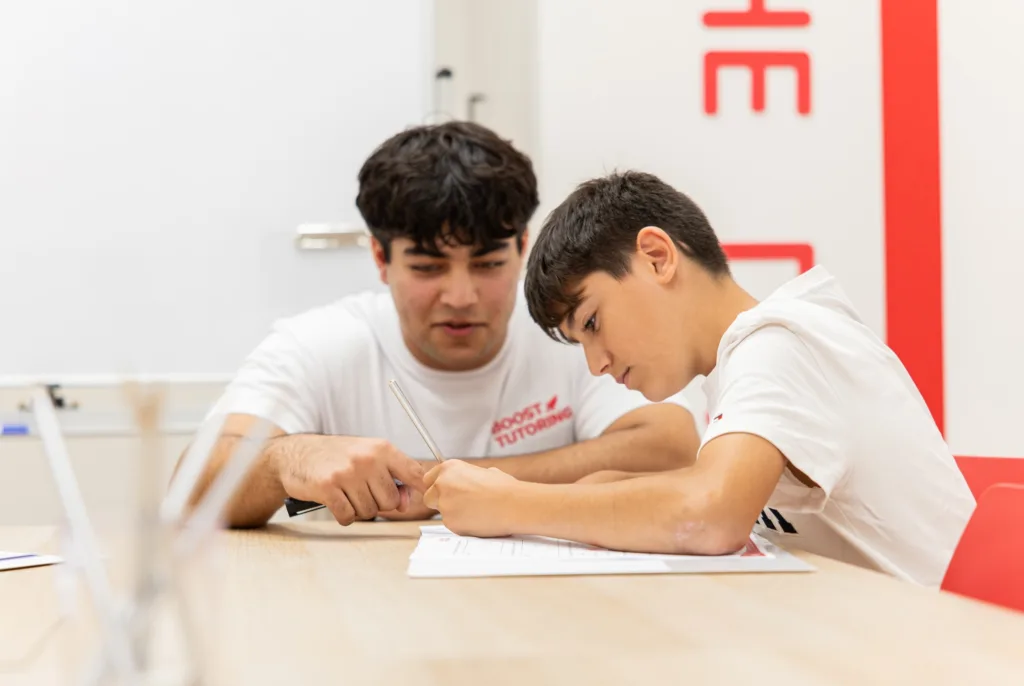
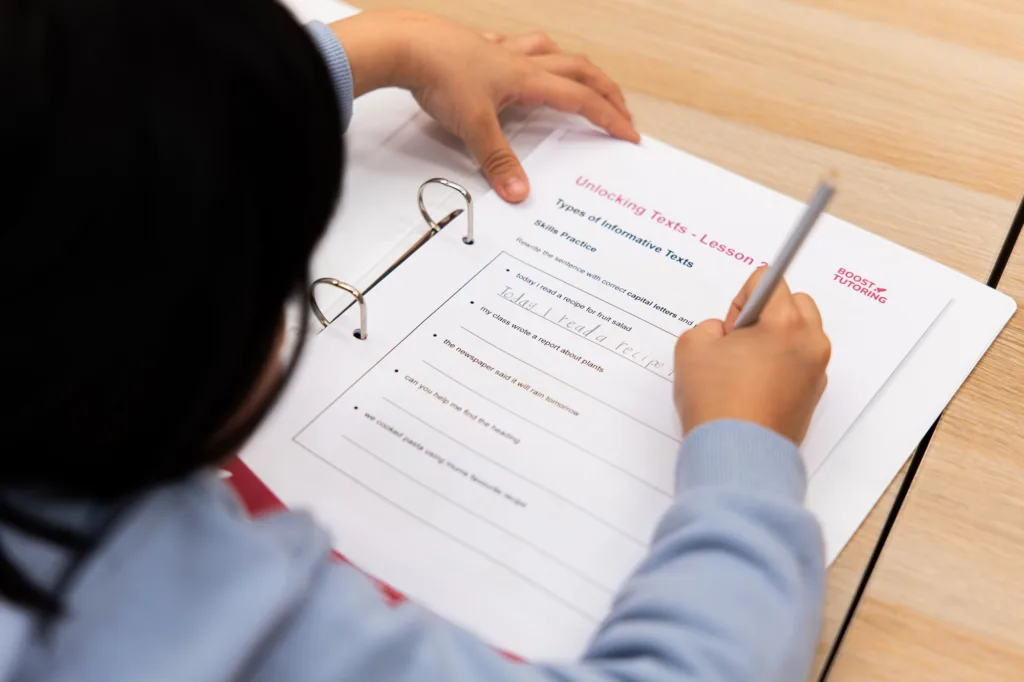
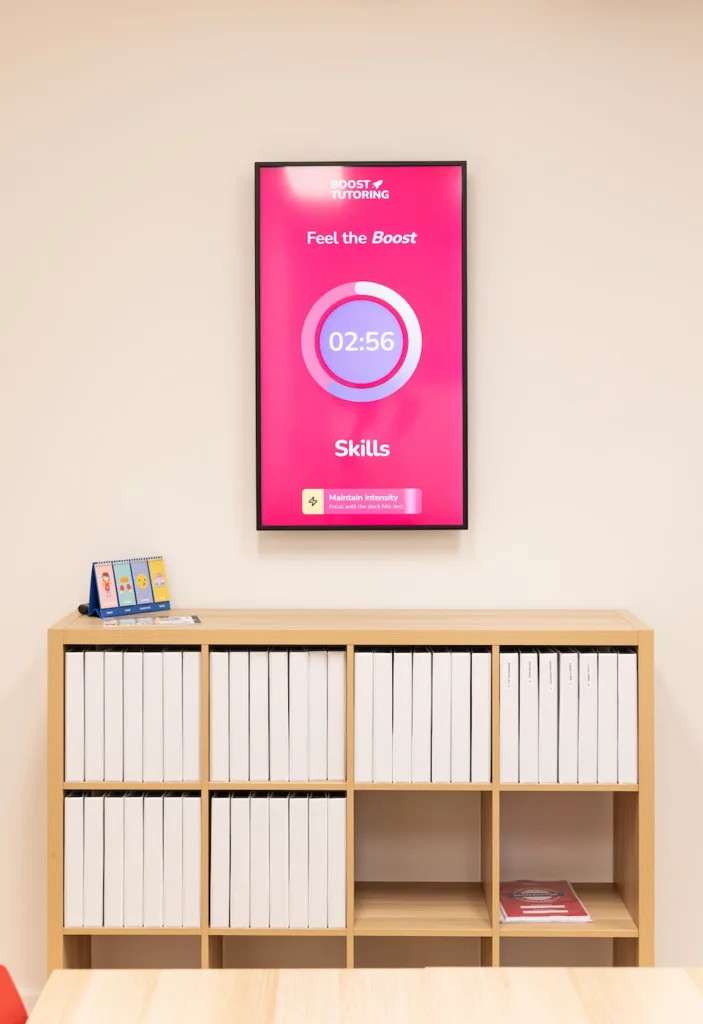
Sessions run in small groups of six to eight with the same tutor each week, aligned to the NSW syllabus, built around Prime, Train, Retain, with a few minutes of skills work each session to keep the fundamentals automatic and catch fluency gaps early. It carries on at home through a short daily worksheet, because steady reps are what close a gap for good. And because the same tutor sees your child each week, new wobbles get caught while they’re small, rather than discovered a year later.
In maths, timing is everything, because gaps compound. A gap caught early is small and quick to close; the same gap caught late is a far bigger job, with a child’s confidence to rebuild on top of it. Watch for the quiet signs, act on the first real one, and you keep small gaps from ever becoming big ones. The place to start is finding out exactly where your child’s maths sits, and where any gap actually begins.
Book a free academic assessment and find any maths gaps while they’re still small