A lot of families end up with their tutoring stitched together from spare parts. A maths tutor found through a friend. An English tutor from somewhere else entirely. Two different people, two schedules, two approaches, and nobody with the full picture of how your child is actually doing across the board. It works, after a fashion, but it’s rarely the best way to support a child, and it’s more effort than it needs to be.
There’s a stronger way to think about maths and English tutoring in the Hills District: as one coordinated program rather than two separate arrangements. Here’s why that matters.
The Problem With Piecing It Together
Separate tutors for separate subjects sounds sensible, and sometimes it’s necessary. But it comes with real downsides that are easy to miss.
Nobody sees the whole child. The maths tutor knows the maths; the English tutor knows the English; neither sees how the two connect, or whether a problem in one is affecting the other. And they often do connect: a child’s maths word-problem trouble is frequently a reading problem in disguise, something a maths-only tutor may never spot, because comprehension isn’t their brief.
There’s no coordination. Two tutors working in isolation can’t reinforce each other, share what’s working, or build a consistent approach. Your child gets two separate relationships, two sets of expectations, and nobody joining the dots.
And it’s simply more to manage. Two schedules to juggle, two people to deal with, two lots of feedback to make sense of, if you get feedback at all. For a time-poor family, that friction adds up, and it often means one subject quietly gets dropped.
Why One Program for Both Makes Sense
Bringing both subjects into a single program solves most of that, and adds some real advantages of its own.
One view of the whole child. When the same program covers both maths and English, someone can actually see the full picture, including the cross-subject issues that separate tutors miss. If a reading weakness is dragging down maths, it gets noticed and addressed, rather than falling between two tutors who never compare notes.
A consistent approach. Both subjects taught the same way, with the same structure and the same expectations, is easier for a child than switching between two different styles. Consistency is one of the quiet drivers of progress, and it’s far easier to achieve within one program.
Simplicity for the family. One place, one relationship, one lot of feedback, and both subjects handled together. For a busy household, that’s not a small thing, and it makes it far more likely both subjects actually get the attention they need, rather than one slipping.
And both subjects kept in balance. A combined program means neither maths nor English gets neglected because it’s the one without its own separate arrangement. Both are simply part of the plan.
What This Looks Like in Practice
In practice, a combined program means your child’s maths and English are handled as two parts of one whole, not two unrelated projects.
The same approach runs through both subjects, so a child isn’t constantly adjusting to different methods. Progress in each is visible in one place, so you can actually see how your child is doing overall rather than piecing it together from two sources. And because the whole picture is visible, the connections get used: the reading that strengthens maths word problems, the structured thinking that helps both writing and mathematical reasoning, the confidence that lifts everything at once.
It’s a more joined-up way of supporting a child, and for most families it’s both more effective and less work than running two separate arrangements.
How We Teach Maths and English Together in the Hills District
This is the thinking Boost is built on. Rather than tutoring one subject and leaving the other, membership covers both maths and English, one session a week in each, as a single coordinated program.
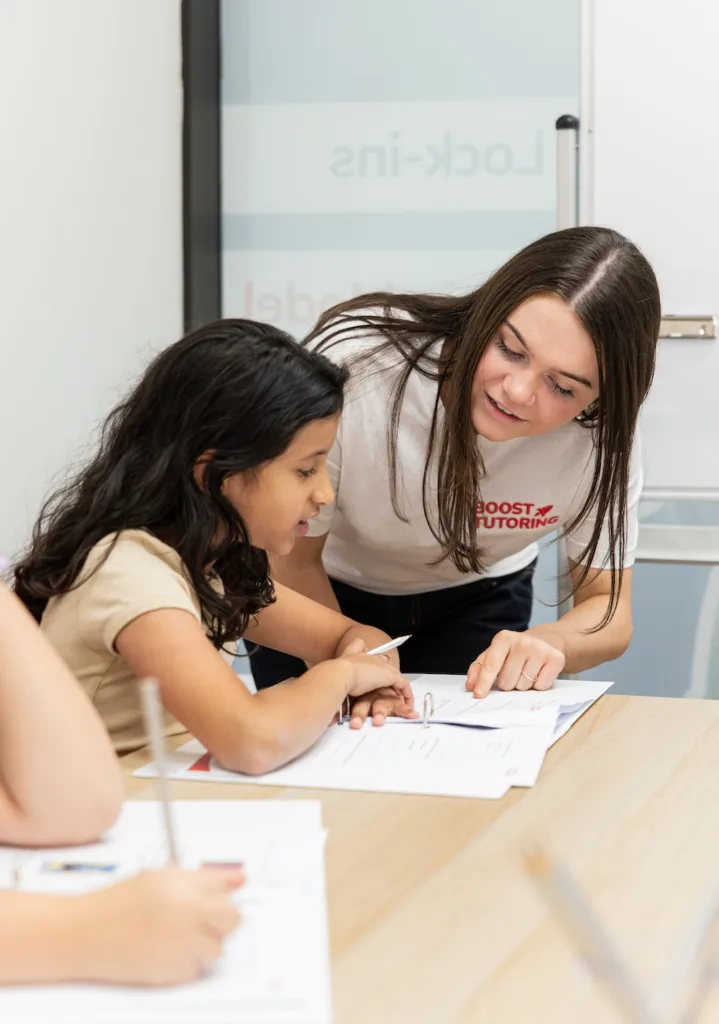
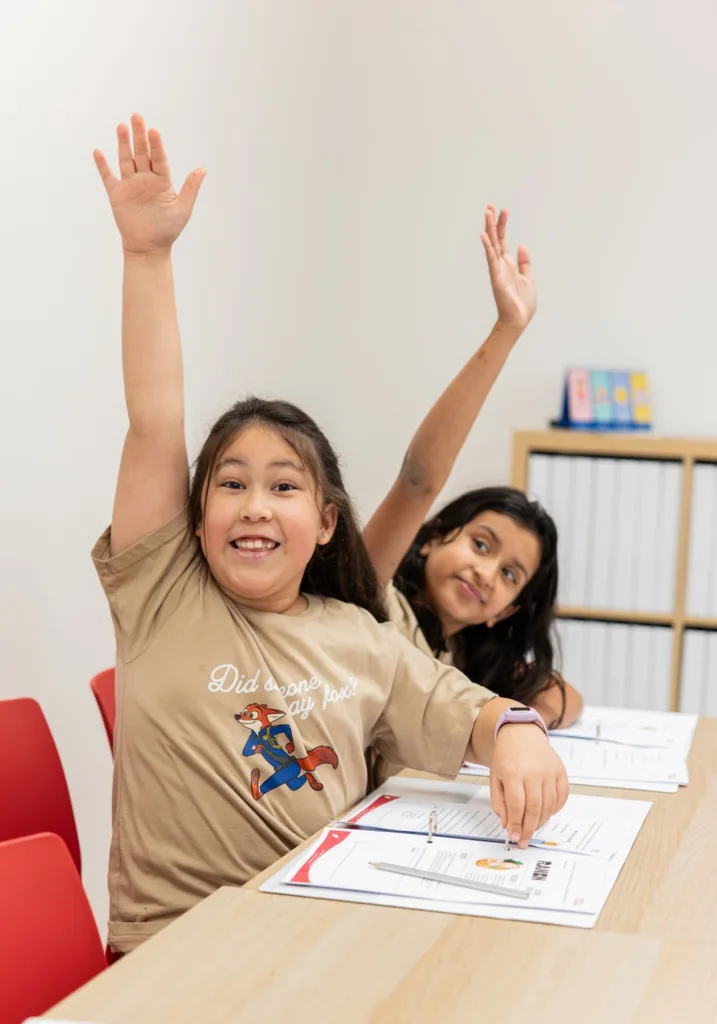
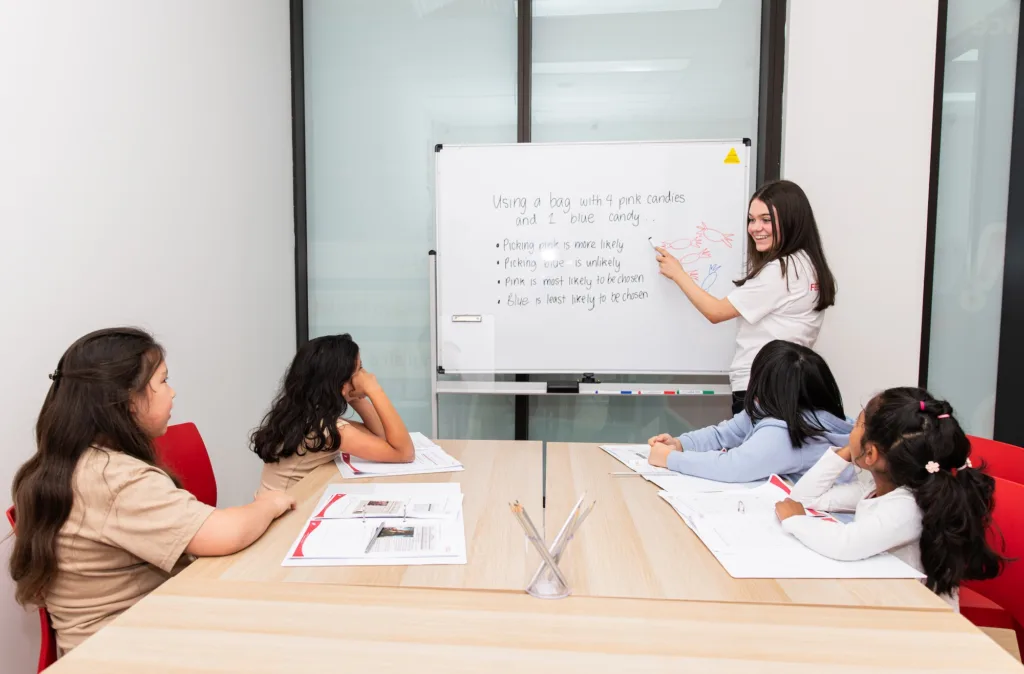
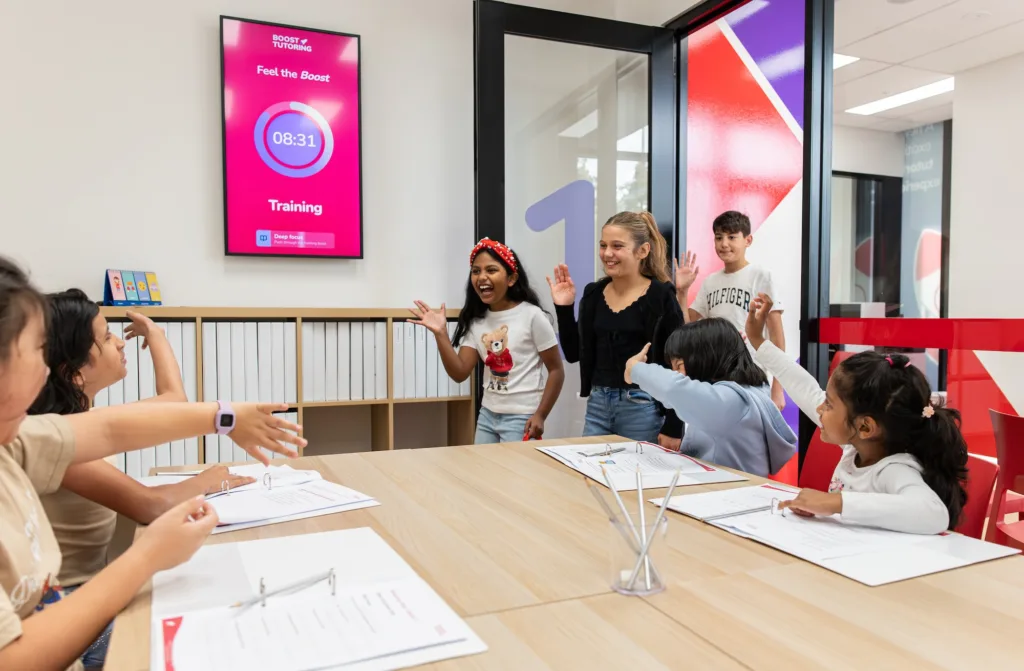
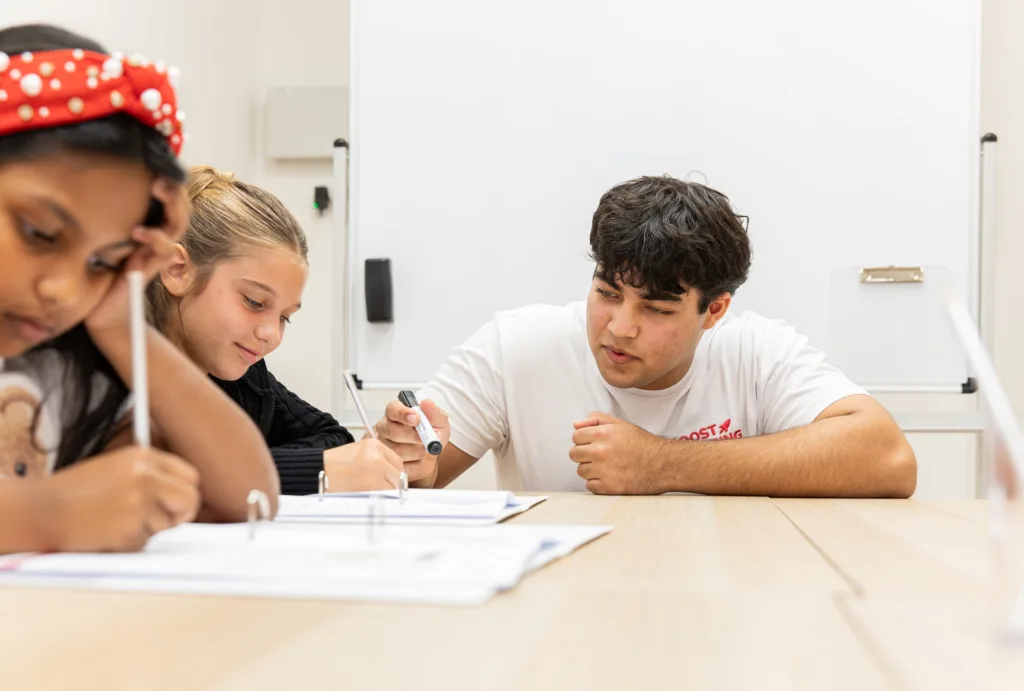
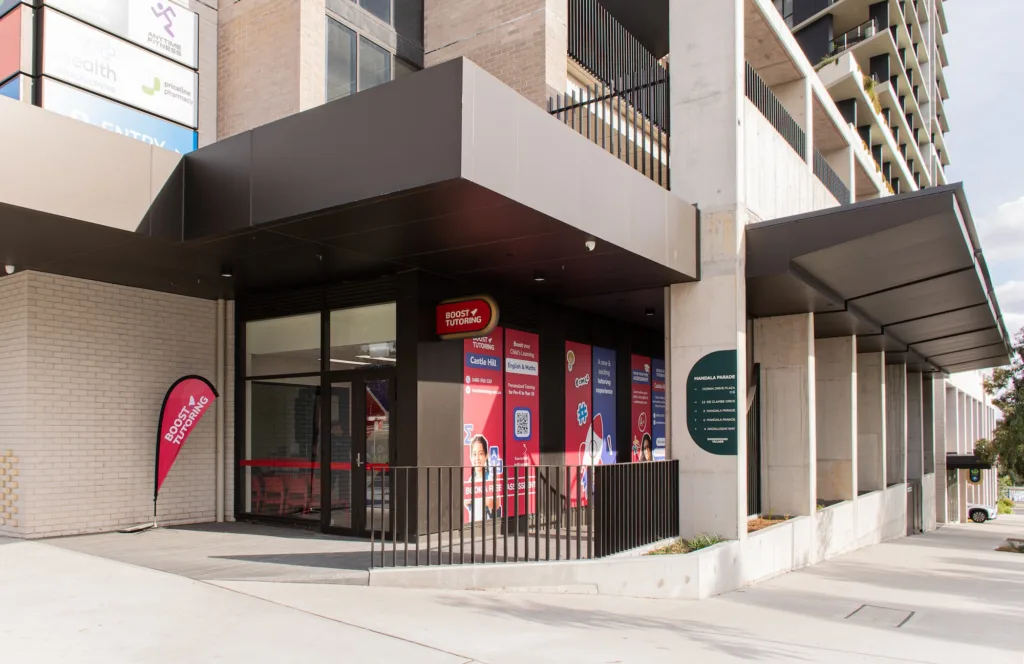
Sessions run in small groups of six to eight with the same tutor each week, aligned to the NSW syllabus, built around Prime, Train, Retain, for students from Kindergarten through to Year 10. Because both subjects sit within the one program, the whole picture of your child is visible, and the connections between the subjects are used rather than missed. It carries on at home through a short daily worksheet in both subjects, and you get feedback on how your child is going overall, in one place, by email. It runs right across the Hills, from Castle Hill and Beaumont Hills through Kellyville, Bella Vista and beyond.
Maths and English aren’t two separate problems to solve with two separate people. They’re two halves of your child’s learning, and they work best handled together.
Supporting your child in maths and English doesn’t have to mean two tutors, two schedules and nobody seeing the whole picture. One coordinated program covering both is usually more effective and far less work, because it keeps the subjects in balance, uses the connections between them, and gives you a single, clear view of how your child is doing.
Book a free academic assessment and see where your child sits in both maths and English