
In the Hills, Selective fever sets in early. By the time a child hits Year 5, plenty of parents around here are already deep into practice papers, comparing notes on which coaching college has the best strike rate, and quietly working out whether James Ruse or Baulkham Hills is within reach. The pressure is real, and it’s easy to get swept up in it before you’ve stepped back to ask what the test actually rewards, and whether it’s the right path for your child at all.
So here’s what parents should know about Selective prep in the Hills, minus the hype.
What the Selective Test Actually Involves
The NSW Selective High School Placement Test is sat in Year 6, for entry into Year 7 the following year. Applications open around November and close in February, and there are no late entries, so the first thing to know is the least glamorous: don’t miss the date.
The test is computer-based, and it’s made up of four sections. Reading, Mathematical Reasoning, Thinking Skills, and Writing. Each one counts for a quarter of the placement score, and that even weighting is worth sitting with, because it changes how you’d sensibly prepare. There’s no point pouring everything into maths if writing and reasoning carry exactly the same weight.
Two of those sections catch Hills parents out. The first is Thinking Skills. Schools don’t teach it. It’s abstract reasoning: patterns, logic, and problem-solving under time pressure, the kind of thinking a child can’t revise for the night before. The second is Writing, which is now typed. A child who’s a slow or uncomfortable typist is at a real disadvantage before they’ve written a word, and the section rewards clear structure and control more than flashes of brilliance. Both of these reward steady skill-building over months, not last-minute cramming.
When to Start Selective Prep in the Hills
Most families begin structured preparation in Year 5, which gives roughly a year. That’s a sensible runway. Long enough to build genuine skill across all four sections without turning a ten-year-old into a stressed-out exam machine.
The trap, and it’s everywhere in the Hills, is doing too much, too soon, or simply too much. Endless practice papers don’t build reasoning. They build fatigue. A child who’s been drilled to exhaustion often performs worse, not better, because the thing that sinks capable kids on test day is rarely a knowledge gap. It’s nerves and burnout. By May, you want a child who feels ready, not one who’s already sick of the whole thing.
The quieter truth is that most of the heavy lifting happens well before Year 5. A child with strong reading, quick mental maths, and the habit of writing regularly walks into a prep year already most of the way there. The foundation does far more than the cramming ever will, which is exactly why the families who start earliest and gentlest tend to do better than the ones who panic late and go hard.
Is Selective Actually Right for Your Child?
This is the question the Hills rarely stops to ask, and it’s the most important one on the list.
Selective schools are demanding, fast-paced environments built for children who genuinely thrive on challenge. For the right child, they’re a brilliant fit. But a child who scrapes in on the back of relentless drilling can land at the bottom of a very steep class, with their confidence taking the exact hit your preparation was meant to protect. Getting in and flourishing once there are two different things, and it’s worth being honest with yourself about which one you’re aiming for.
There’s also a structural point worth knowing. From the 2027 intake, co-educational selective schools allocate places equally between boys and girls, so the competition now runs within each group rather than across the whole cohort. It doesn’t change how you prepare, but it does change how placement works, and it’s the sort of detail the group chat usually gets half-right.
None of this is a reason not to aim for selective. It’s a reason to aim honestly, starting from a clear picture of where your child genuinely sits rather than where you’d like them to be.
How We Approach It at Boost
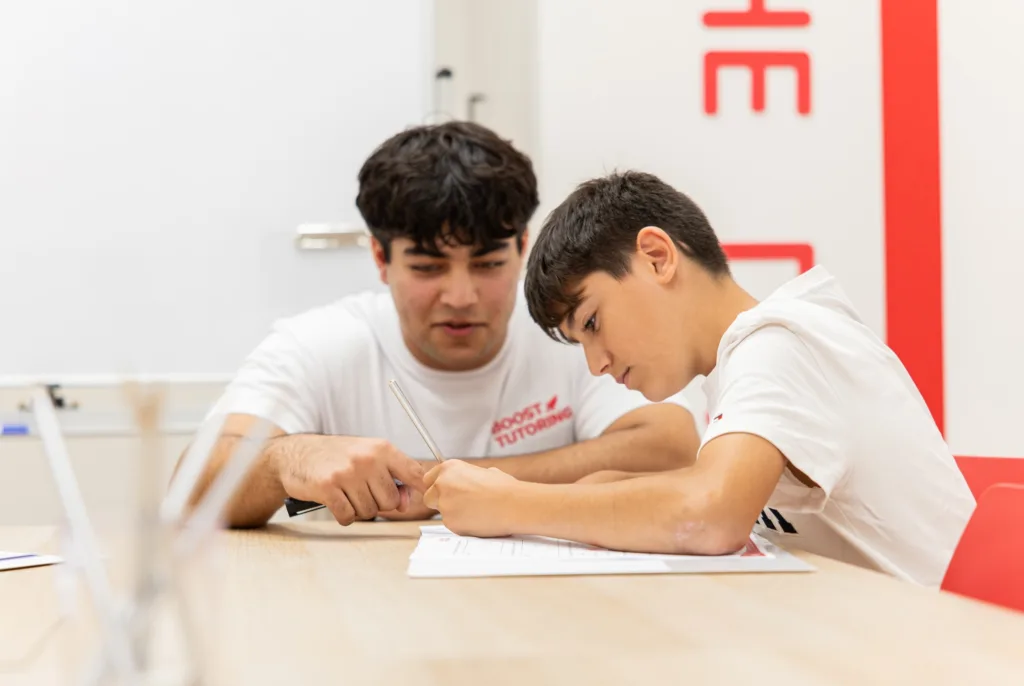
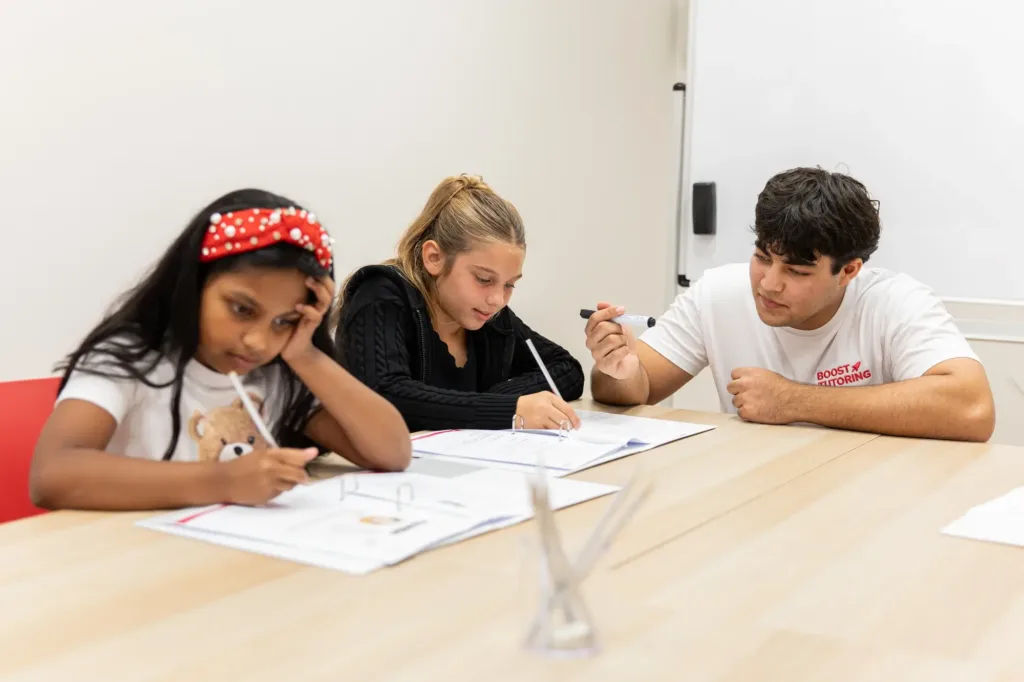
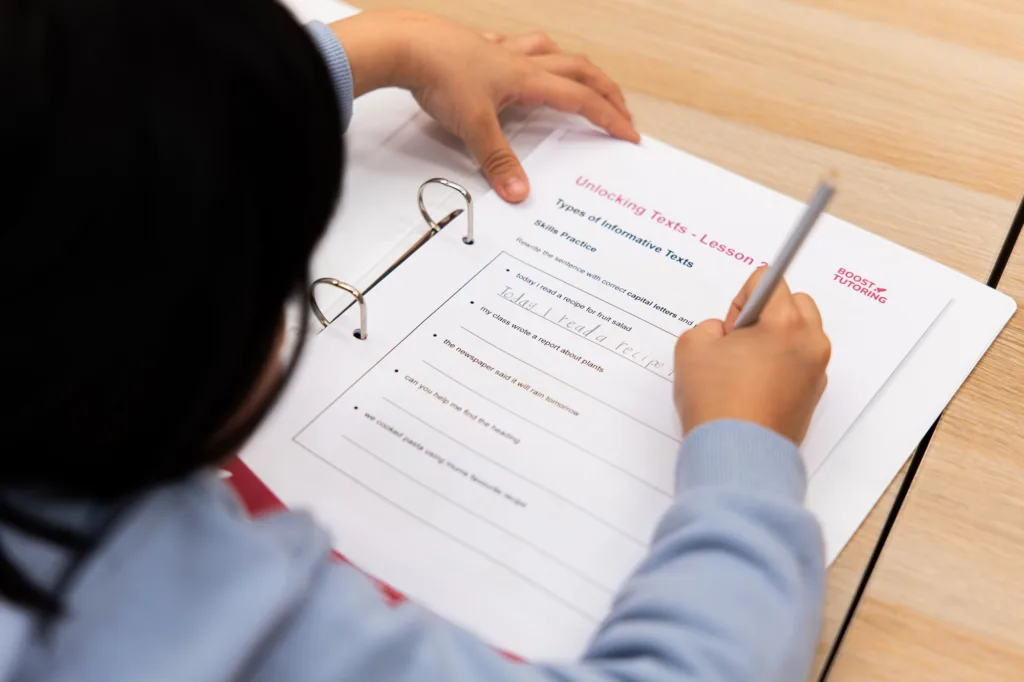
We run Boost Selective for Years 5 and 6, and we run it as part of a longer build rather than a sprint. The reasoning and fluency the test rewards are the same things our sessions develop week to week. Every session opens with five minutes of skills work, then real teaching aligned to the NSW syllabus, then students repping the content themselves until it holds. Prime, Train, Retain. Closer to the test, we layer in targeted familiarity with the format and the sections that trip kids up.
The aim is a child who walks in prepared and steady, not drilled and frazzled. And before any of it begins, we work out exactly where your child sits, so the goal you set is a realistic one.
Selective can be a wonderful path for the right child. The trick is knowing whether it’s the right path for yours, and starting from where they actually are rather than where the group chat says they should be.
Book a free academic assessment and get an honest read on where your child stands.