Typing “tutor Castle Hill” into Google is the easy part. What comes back is the problem. Page after page of centres and private tutors, all with five-star reviews, all promising results, and no obvious way to tell which one is actually right for your child. Ask the school parent group instead and you’ll get twenty recommendations, half of them contradicting each other.
For a busy parent who just wants a good answer and their evening back, the search itself becomes the chore. So here’s a practical way to find a tutor in Castle Hill without spending three weekends on it.
Where Parents Actually Find a Tutor in Castle Hill
Most searches start in one of a few places, and it helps to know what each one is worth.
Word of mouth is the most common, and usually the most useful. A recommendation from a parent you trust beats a paid ad every time. The catch is that the right tutor for their child isn’t automatically right for yours. Different child, different need. Treat it as a strong lead, not a final answer.
Google is where most people land next. It shows you the options, but it ranks them by marketing budget and search optimisation, not teaching quality. A centre sitting at the top of the page is good at being found, which isn’t the same as being good. Use it to build a shortlist, not to pick a winner.
Local Facebook groups are full of recommendations and full of noise in equal measure. Genuinely helpful parents sit alongside businesses quietly promoting themselves, so they’re useful for names and less useful for judgement. And then there’s your child’s school, which is the source most parents forget. Teachers see where your child sits every day, and many will happily point you in a sensible direction if you ask.
Private Tutor or Tutoring Centre?
This is the real fork in the road, and the honest answer is that it depends on what you’re after.
A private tutor gives you a person. Flexible, one-on-one, and personal when it works well. The risk is that everything rests on that one person. Quality varies widely, there’s often no structure beyond “help with tonight’s homework,” and if they move on or get busy, you’re back to square one.
A centre gives you a system. Structure, consistency, accountability, and usually some way of tracking progress over time. The trade-off is that quality varies between centres just as much as it does between private tutors, so the name on the door tells you less than what actually happens inside.
The truth is that the private-versus-centre question matters less than two others. Is there a real method, or just supervision? And will your child actually get enough attention to be seen? Get those two right and the label barely matters.
How to Actually Choose
Here’s the shortcut, and it’s the opposite of what most people do. Don’t start by comparing tutors. Start by working out what your child needs.
A specific gap before an exam, ongoing support to keep foundations solid, and preparation for OC or Selective are three very different jobs, and they don’t all call for the same kind of help. Once you know which one you’re solving, the shortlist sorts itself out quickly.
The cleanest way to get that clarity is a proper assessment, which most good centres offer for free. It tells you where your child genuinely sits, which means you’re matching a known need to the right option rather than guessing in the dark. For a time-poor parent, that one step saves more hours than any amount of comparing reviews.
After that, a few questions sort the rest. How do they work out where my child sits? How many children are in a class? Who’s actually teaching, and is it the same person each week? What happens between sessions? Strong, specific answers are a good sign. Vague reassurance is not.
And don’t skip the trial. Reviews and recommendations only tell you so much. Watching your own child in a real session tells you the thing you actually need to know.
How We’d Suggest Starting at Boost
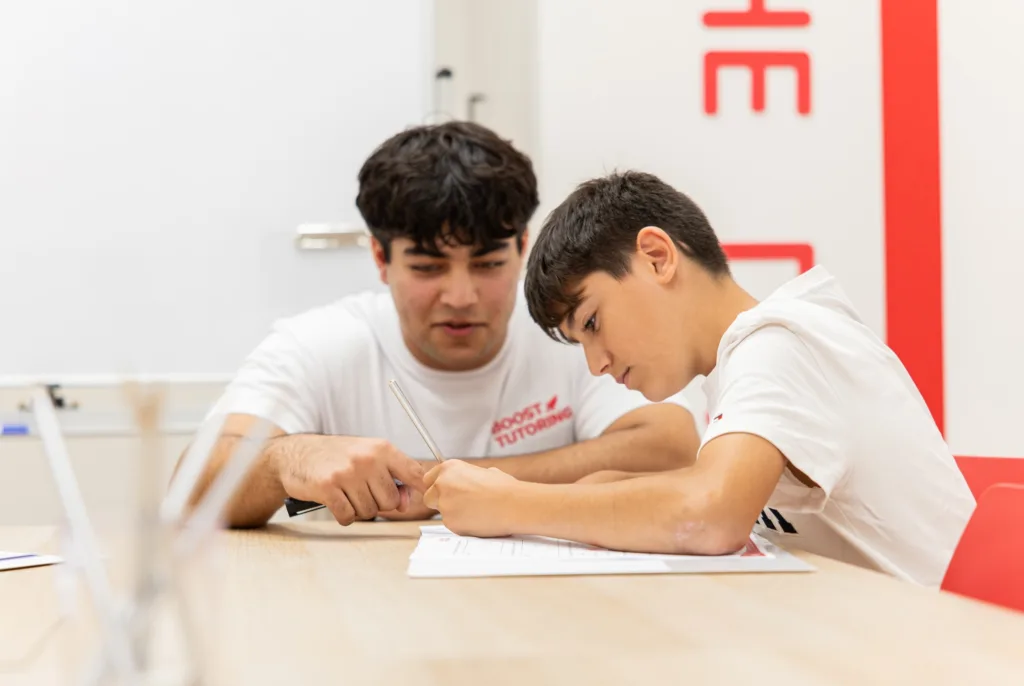
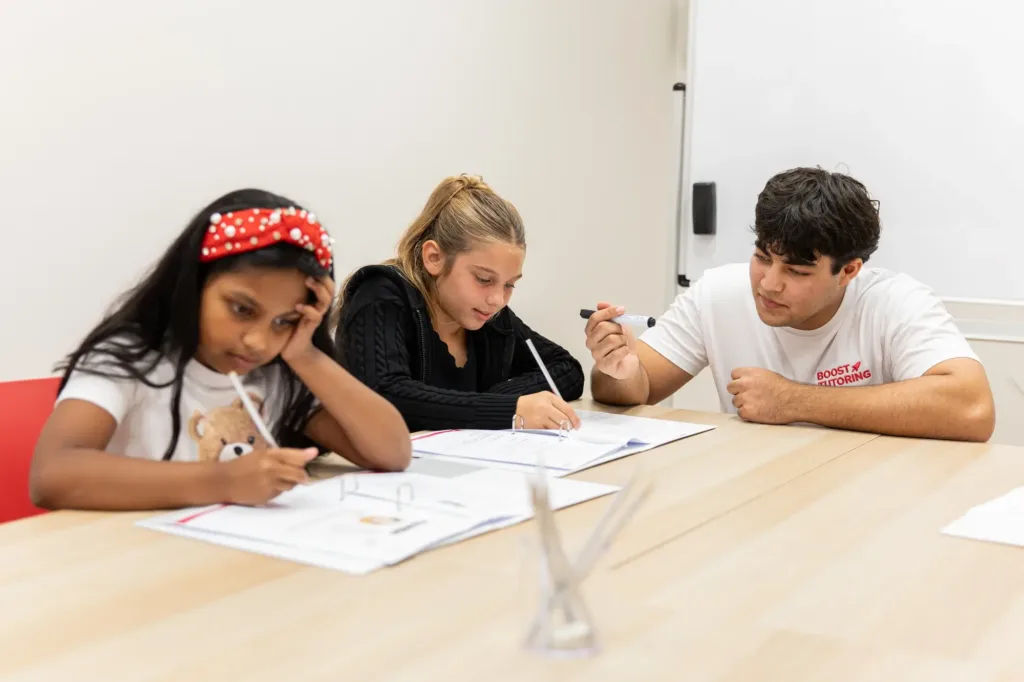
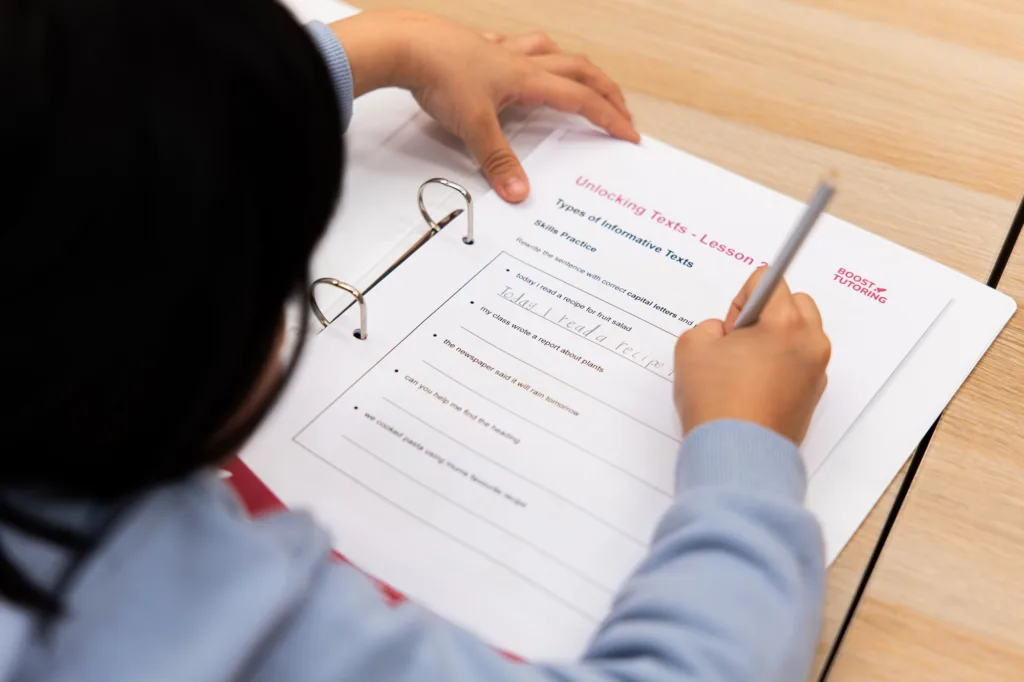
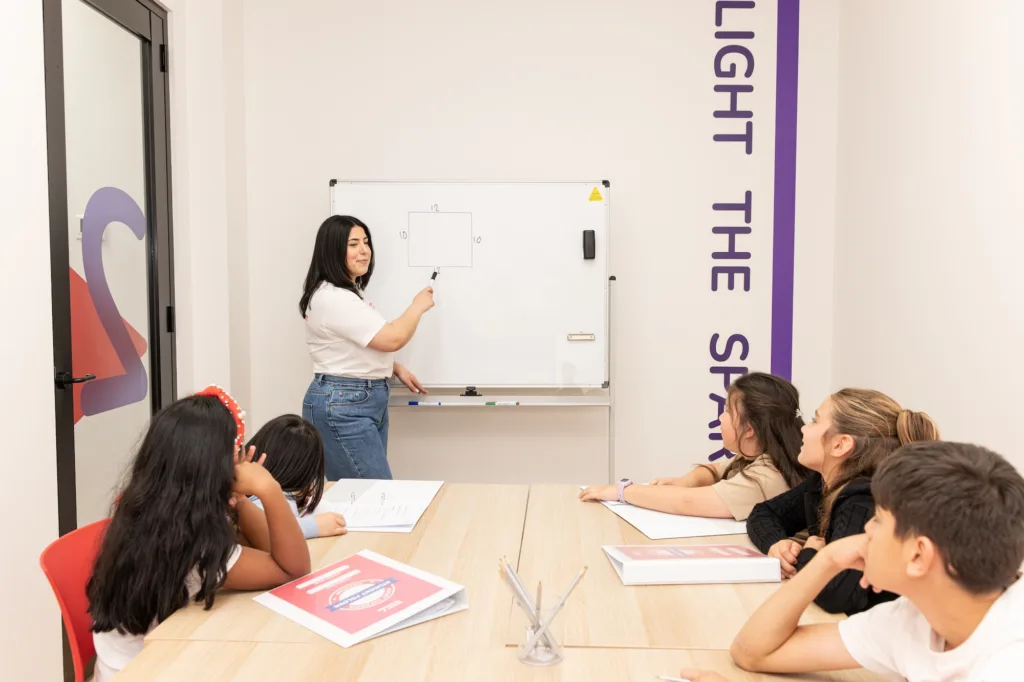
We built Boost for exactly this kind of parent. Someone who wants a good answer without turning it into a research project. Sessions run in small groups of six to eight, with the same tutor each week, aligned to the NSW syllabus. Each hour is built around Prime, Train and Retain: a few minutes of skills work to start, real teaching in the middle, then students repping the content themselves until it holds. The work then carries on at home through a short daily worksheet, so progress doesn’t stall between sessions.
You don’t have to take any of that on faith, though, and you shouldn’t. The best way to find a tutor in Castle Hill isn’t to read every review on the internet. It’s to get a clear picture of what your child needs, then see a good option in action and judge it with your own eyes.
The lowest-risk way to do that is to try a week and watch how your child responds.
Book a free academic assessment and get an honest read on where your child stands.