Most families don’t sit down and decide to tutor both maths and English. They decide to tutor the one their child finds hard, usually maths, and quietly assume the other will look after itself. It’s a reasonable instinct. You fix what’s visibly broken and leave what isn’t. But it misses something, because the two subjects are far more connected than they look, and treating them as separate problems often leaves progress on the table.
If you’re weighing up tutoring somewhere in the Hills and wondering whether to focus on one subject or cover both, this is for you. Here’s how maths and English tutoring across the Hills works best in practice, and why doing them together tends to beat doing either one alone.
Why Most Families Tutor Just One Subject
There are two reasons, mostly.
The first is visibility. Maths shows its problems. A wrong answer is a wrong answer, and a report with a low maths mark is hard to ignore. English hides its problems. A child can read aloud confidently and still understand very little, and a writing gap can sit unnoticed for a year or more. So maths gets the attention, and English coasts along, right up until the moment it doesn’t.
The second is the sensible-sounding logic of fixing the weak subject and leaving the strong one. If maths is the issue, tutor maths. If English seems fine, why pay for it? Fair enough on the surface. But “fine” and “as good as it could be” are two different things, and a strong subject left entirely alone rarely gets stronger by itself.
Why Maths and English Reinforce Each Other
Here’s the part most parents don’t see. The two subjects lean on each other constantly.
Reading sits underneath maths far more than people realise. A large share of maths marks, in class tests, in NAPLAN, and in the Selective and OC tests, comes from worded problems. A child who can do the calculation but misreads the question loses marks on maths they genuinely know. Strengthen their reading and comprehension, and their maths results often lift without touching a single extra sum.
It runs the other way too. The structured thinking that maths builds, breaking a problem into steps and working logically toward an answer, is the same discipline that produces a clear, well-structured piece of writing. And the habits good tutoring builds in one subject, the focus, the regular practice, the willingness to attempt something hard rather than give up, carry straight across to the other.
Then there’s confidence, which refuses to stay in its lane. A child who starts feeling capable in maths tends to walk a little taller in English too, and a quiet weakness in one subject can drag on a child’s belief in the other. Maths and English are the two subjects that everything else is built on, the load-bearing ones. They’re worth treating as a pair rather than a choice.
Doing Both Without Overloading Your Child
The fair worry here is time. Won’t two subjects mean too much, another couple of commitments piled onto an already full week?
It doesn’t have to. Done well, this is two focused hours a week, not a second school. The aim isn’t to fill your child’s evenings with more work. It’s to make the work they’re already doing actually land. A good structure can take pressure off at home, replacing the nightly homework battle with something calmer and more consistent. The thing that moves a child forward across a year isn’t intensity. It’s consistency, in both subjects, week after week.
The one rule worth keeping is balance. The goal is a child who’s steadily on top of both subjects and still has a childhood, not one who’s been scheduled into the ground. Two well-run hours and a few quiet minutes of practice a day does far more, and costs far less in stress, than a crammed weekend ever will.
How We Run Maths and English Tutoring Across the Hills
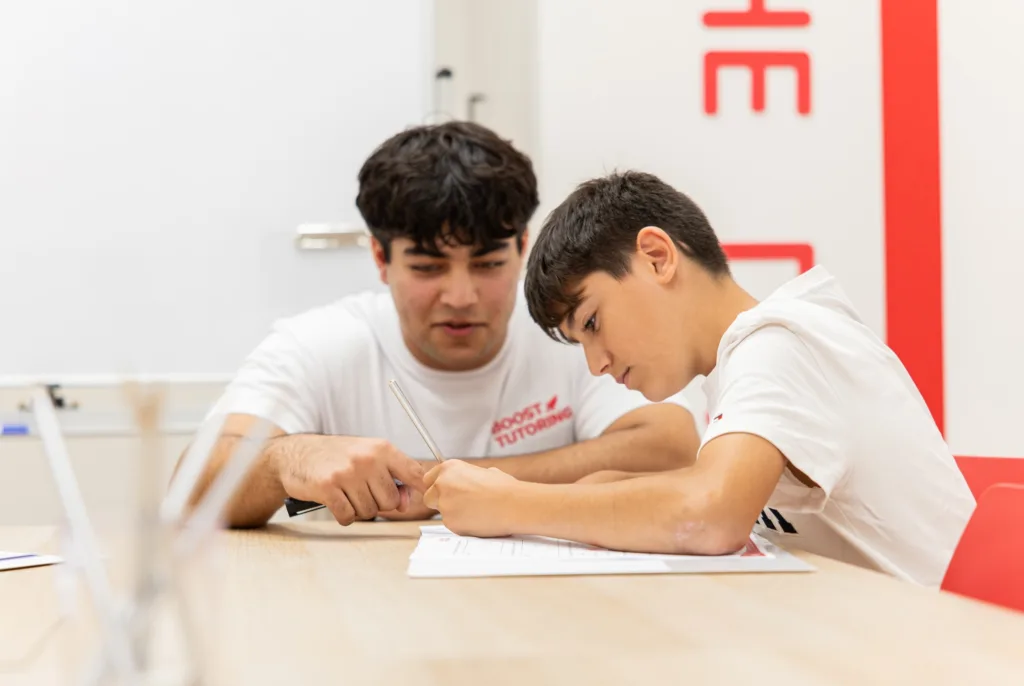
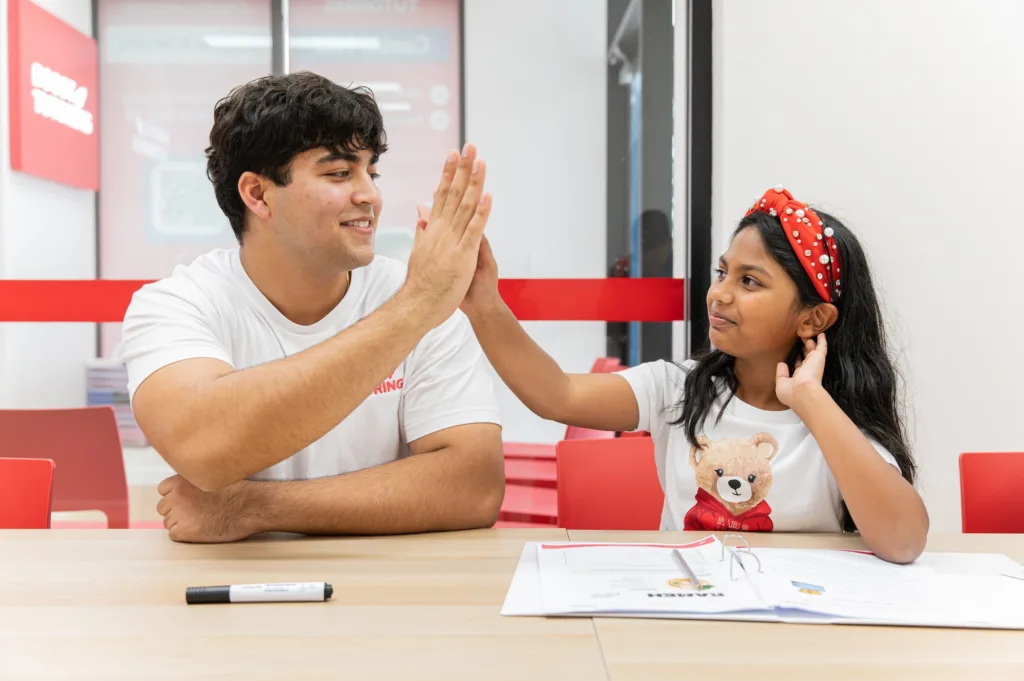
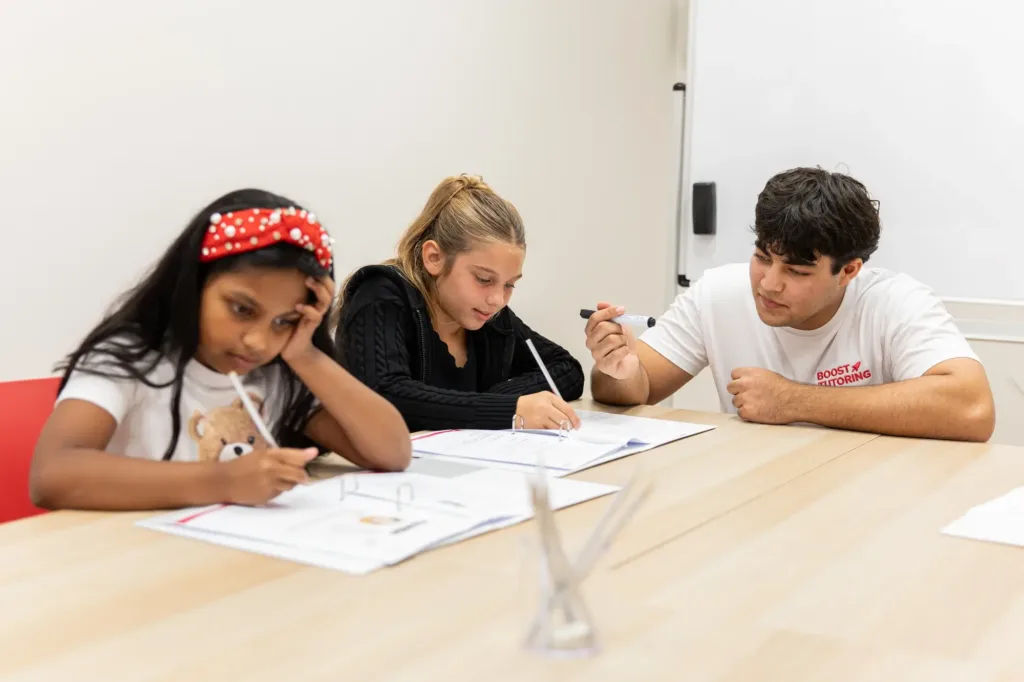
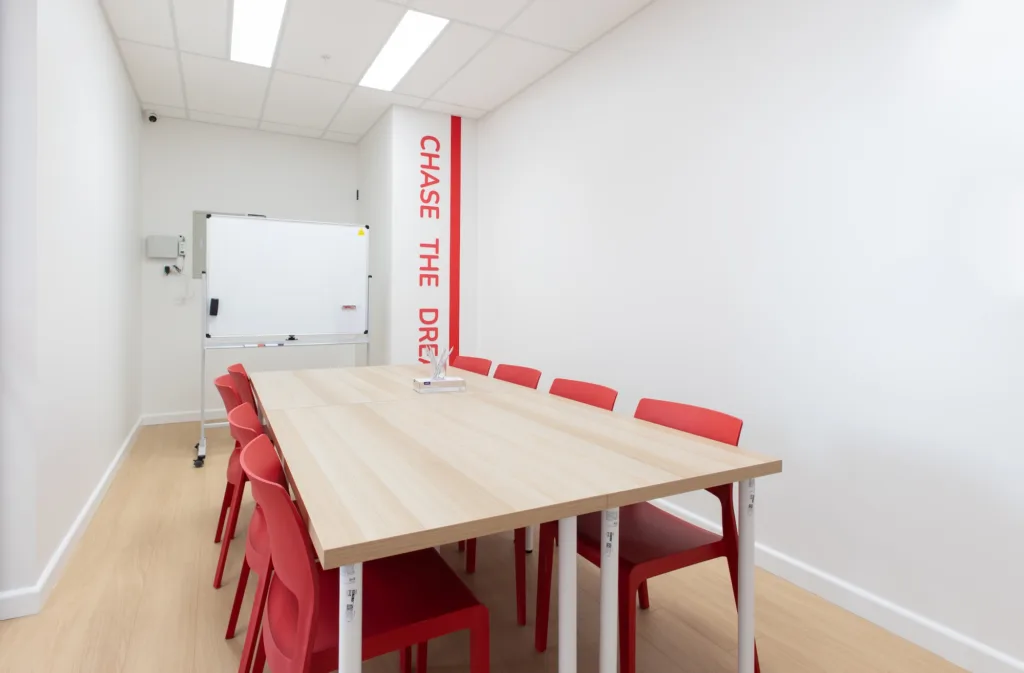
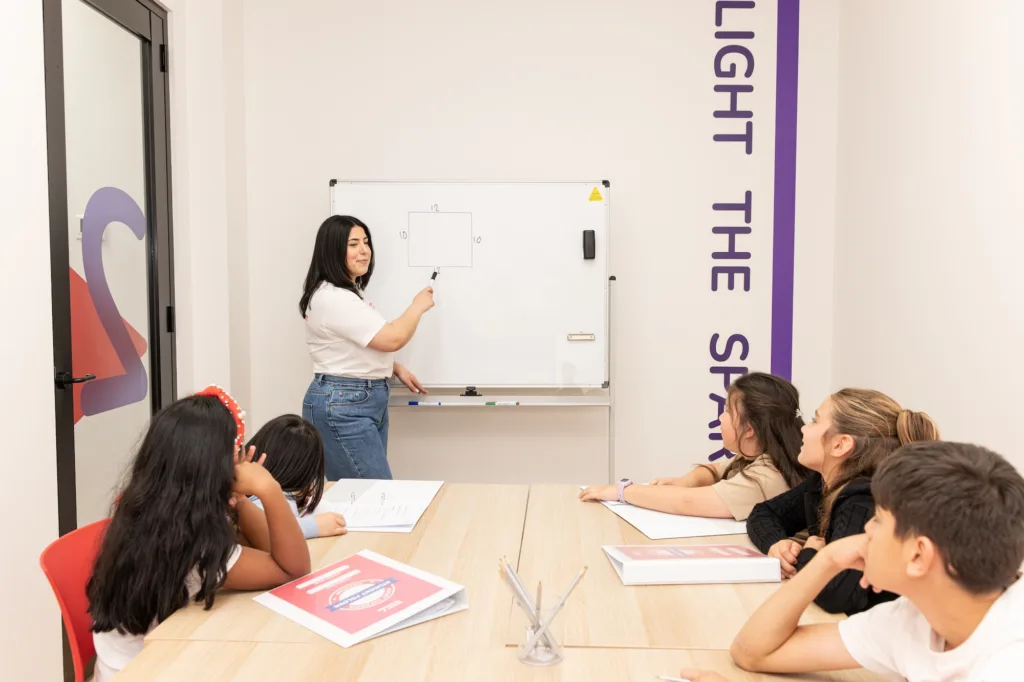
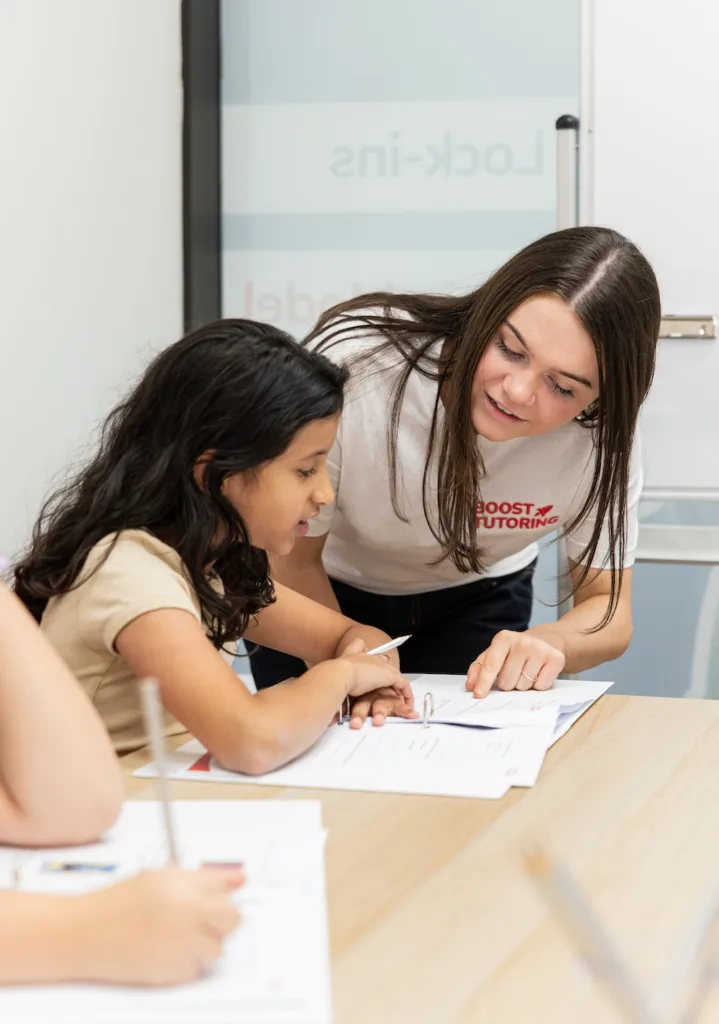
This is exactly why Boost is built the way it is. Membership covers both subjects, one hour of maths and one hour of English each week, because we think the two belong together rather than being chosen between. Sessions run in small groups of six to eight, with the same tutor each week, aligned to the NSW syllabus, for students from Kindergarten through to Year 10.
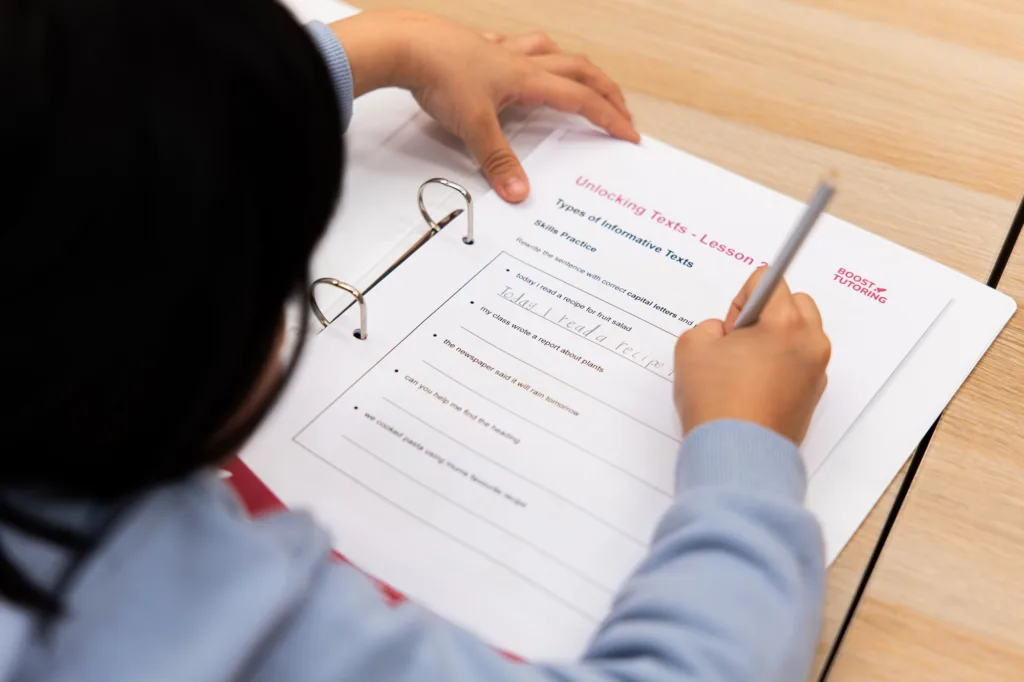
Each hour follows the same shape. A few minutes of skills work to start, real teaching in the middle, then students repping the content themselves until it holds. Prime, Train, Retain. It carries on at home through a short daily worksheet in both subjects, which is where consistency quietly does most of its work. And it runs for families right across the Hills, from Castle Hill and Beaumont Hills through Kellyville, Bella Vista and beyond, with the same approach wherever you are.
If you’re not sure whether your child needs help in one subject or both, the simplest way to find out is to look at both properly. A clear read on where they sit in maths and in English tells you exactly where to put your effort, and it often turns out the “fine” subject had a bit more room in it than you thought.