
You’ve worked out that your child needs help with maths. Maybe a teacher mentioned it at parent-teacher night. Maybe a test came home with a number that surprised you. Or maybe homework has slowly turned into a nightly standoff. Whatever tipped you off, you’ve arrived at the same place every parent reaches eventually: knowing something needs to change, and having no real idea where to begin.
That second part is the hard bit. There’s no shortage of maths tutoring in Beaumont Hills, but a list of options isn’t a starting point. The starting point is working out what your child actually needs, and that’s worth getting right before you spend a cent. Here’s where to start.
Start With Where Your Child Actually Is
The instinct is to start by choosing a tutor. The better first move is to understand the problem.
Two children in the same maths class, with the same low mark, can need completely different things. One might have a single shaky topic dragging everything else down. Another might be coping fine with the content but losing marks to careless errors and rushed work. A third might be quietly behind across the board, holding on by memorising steps rather than understanding them. Same symptom, three different causes, three different plans. Pick a tutor before you know which one you’re dealing with, and you’re guessing.
So before you compare centres or book anything, the real first step is a clear read on where your child sits. What’s solid, what’s shaky, and, just as importantly, why. A good assessment does exactly this. It turns “they’re not great at maths” into something specific you can act on, and it stops you paying for the wrong kind of help to fix the wrong problem.
Why the Real Starting Point Is Often Two Years Back
Here’s the thing about maths that catches most parents off guard. The place your child is struggling is rarely the place the problem actually started.
Maths is cumulative. Almost every topic is built on an earlier one. Fractions lean on times tables. Algebra leans on a confident grasp of fractions and operations. Worded problems lean on reading as much as on number. So when a child hits a wall in Year 6, the crack usually runs back to something in Year 4 or 5 that never quite locked in. They’ve been building on a soft spot ever since, and it finally gave way under the weight of harder content.
This is why “just helping with the current homework” so often fails. You can drag a child through this week’s worksheet, but if the foundation underneath it is missing, next week’s brings the same struggle, and the week after that. Real progress means going back to find the soft spot, firming it up, then moving forward from there. It feels slower at first. It’s far faster in the end.
Knowing this changes where you start. You don’t start at your child’s year level just because that’s what the calendar says. You start where the gaps actually are, even if that’s a year or two back, and build up from there. A child can’t run on ground that won’t hold their weight, and no amount of effort on the current topic fixes a problem that lives underneath it.
When to Start, and What to Expect Early On
A lot of parents ask when the right time to start is. For foundations, the honest answer is that earlier is almost always better. The primary years are where confidence in maths is either built or quietly lost, and it’s far easier to keep a child on track than to rebuild after they’ve decided they’re “just not a maths person.” You don’t have to wait for a problem to appear. Steady support that keeps the foundation solid is worth more than emergency help later on.
That said, if a problem has already shown up, the right time to start is now, not next term. Maths gaps don’t wait politely while life gets less busy. They widen.
As for what the early weeks should look like, expect them to feel more like settling in than racing ahead. A good tutor spends the first stretch getting to know your child, confirming where the gaps really sit, and rebuilding a little confidence before pushing into new content. If a child has spent months feeling lost in maths, the first job is simply convincing them they can do it at all. Marks tend to move later. Confidence and effort move first, and they’re the leading indicators worth watching, the early signs that the rest will follow.
How We Approach Maths Tutoring at Boost
At Boost, we start every child the same way, by working out exactly where they are before anything else begins. Not their year level on paper, but what they can actually do and where the ground gets shaky. That picture decides where we begin, which means no two children necessarily start in the same place even if they’re in the same grade.
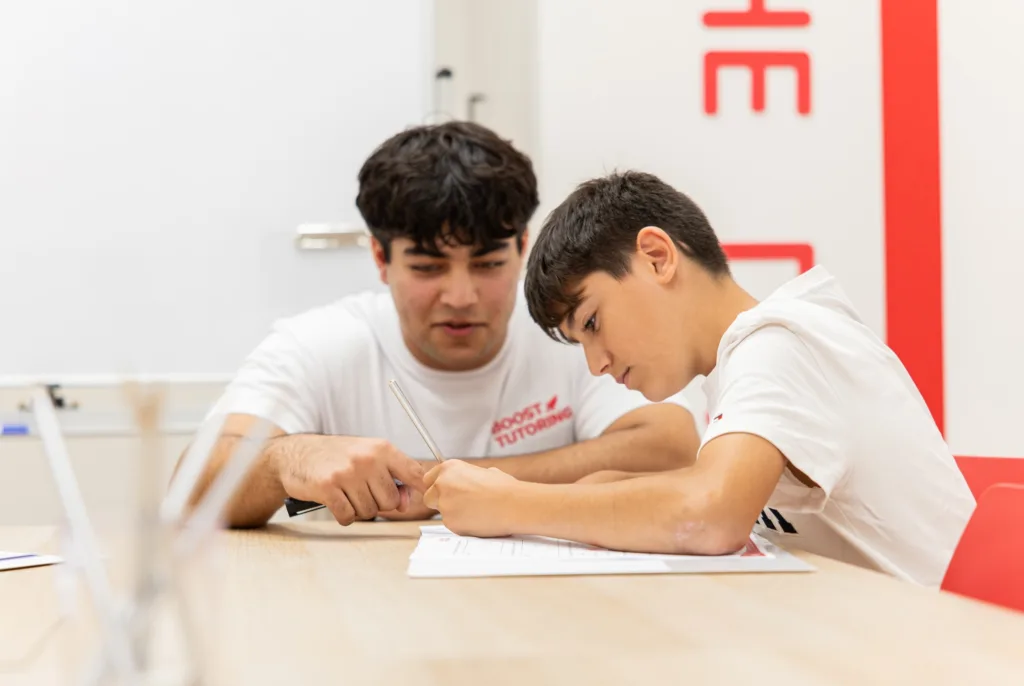
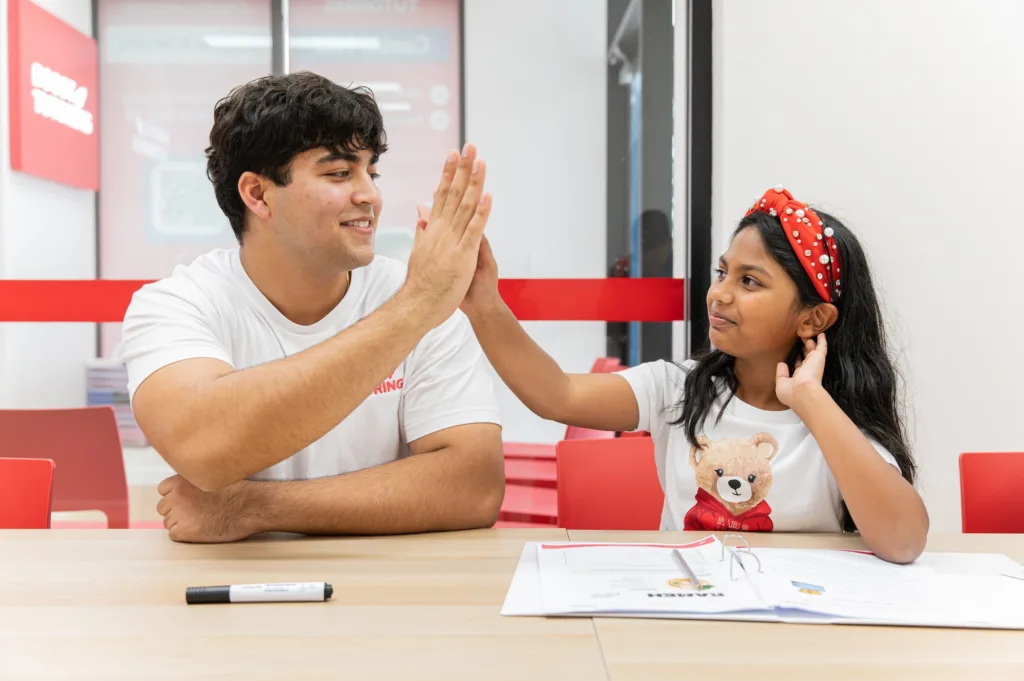
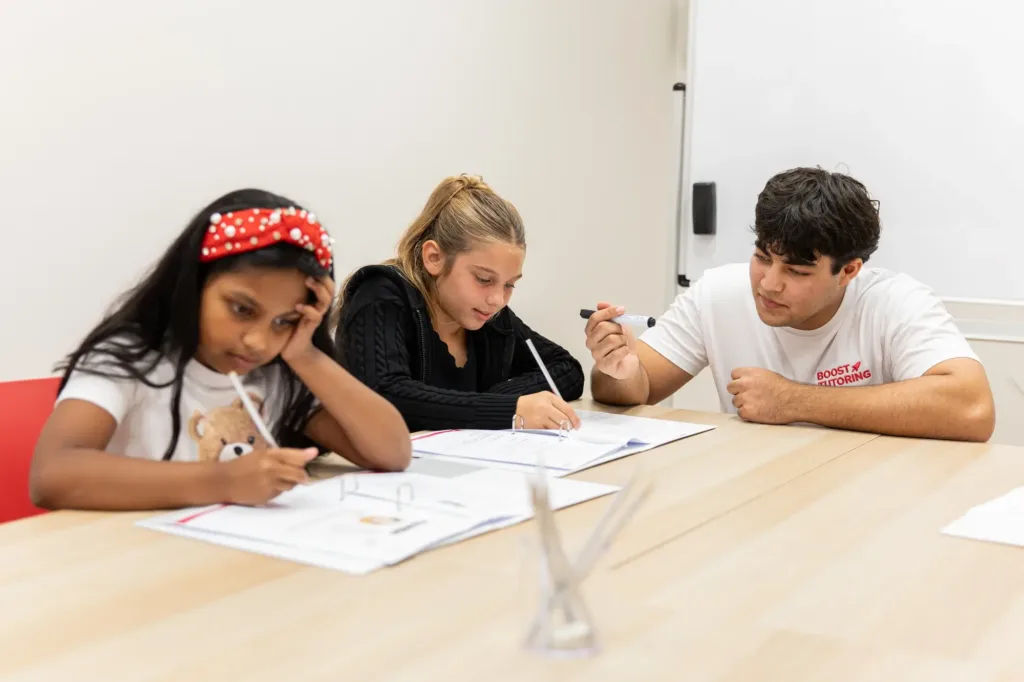
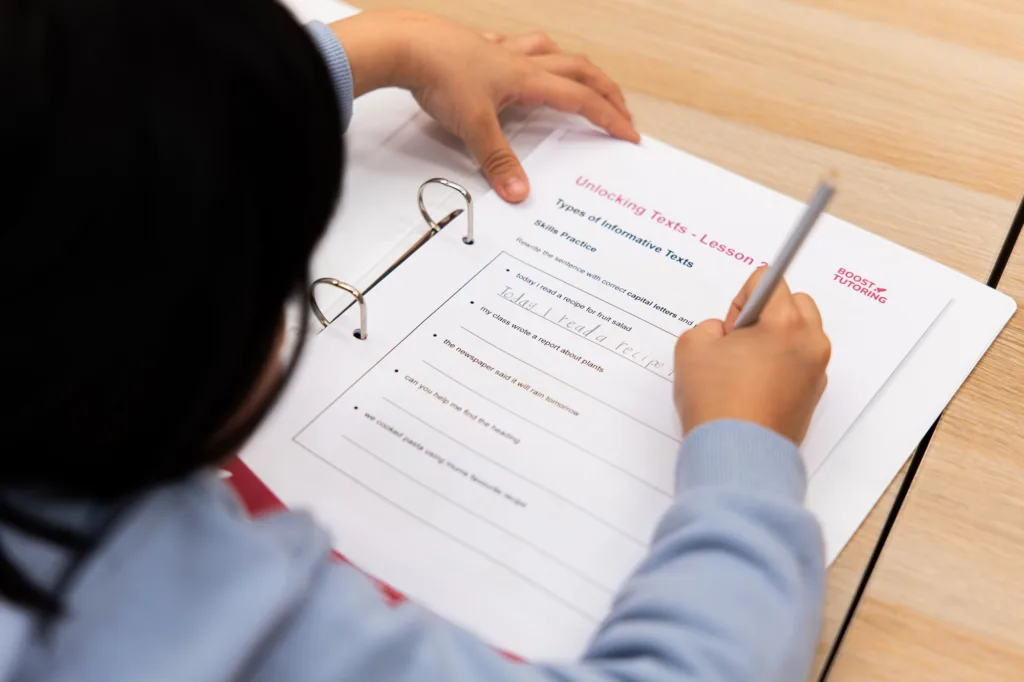
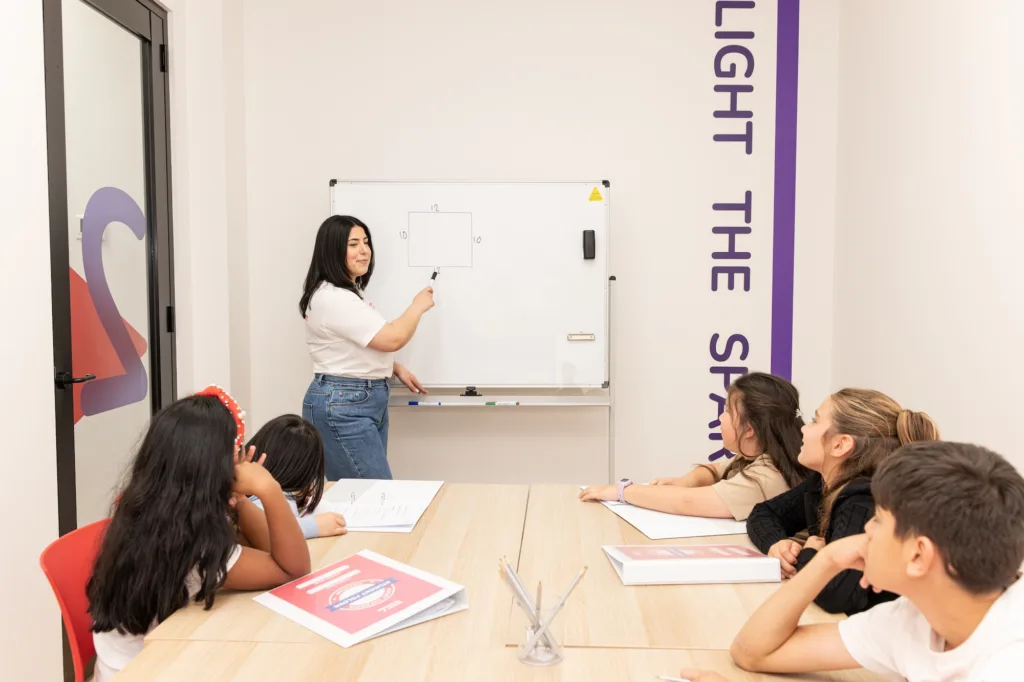
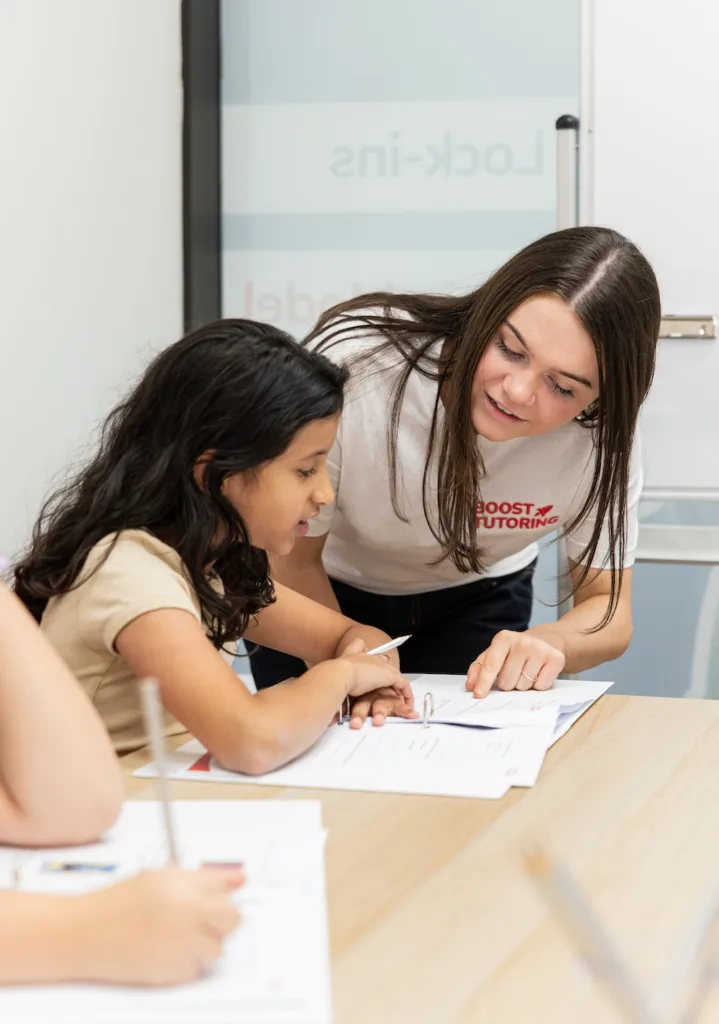
From there, maths runs in small groups of six to eight with the same tutor each week, aligned to the NSW syllabus, for students from Kindergarten through to Year 10. Each session opens with five minutes of skills work, the times tables and mental maths so much else depends on, then real teaching with worked examples, then the student working through it themselves until it holds. Prime, Train, Retain. It carries on at home through a short daily worksheet, because maths is built on reps, and reps only work when they’re regular.
The point of all of it is simple. Meet the child where they actually are, firm up whatever’s underneath, then move forward on solid ground.
Where to start with maths tutoring isn’t really a question of which centre has the slickest website. It’s a question of where your child genuinely stands today, because that’s the only place any real progress can begin.
Book a free academic assessment and see where your child really sits.