English is the subject most parents feel they should to be able to help with. We all read. We all write, at least emails and texts and the occasional note to the teacher. So when a child finds English hard, there’s a particular frustration to it. Surely this is the one I can sort out at home?
Sometimes you can. Often you can do more than you’d think. But English is slippery in a way maths isn’t, and knowing where your own help ends and where something more structured begins is half the battle. This is a parent’s guide to English tutoring in Castle Hill: what you can genuinely do yourself, when it’s worth bringing in help, and how to tell whether that help is actually working.
It helps to be clear on what English asks of a child in the first place. Reading, and truly understanding what’s read. Writing clearly and with structure. A vocabulary that keeps growing. And, as the years go on, the ability to analyse a text and build an argument. Those are the threads running underneath every English report, and most of them respond well to the right attention.
What You Can Do at Home
More than for almost any other subject, English responds to what happens at home, and most of it is simpler than it sounds.
Reading is the foundation, and the single most useful thing you can do is keep your child reading, and reading widely. Not only school books. Whatever holds their interest counts. A child who reads regularly builds vocabulary, absorbs how good sentences are put together, and strengthens comprehension without it ever feeling like work. With younger children, reading together still matters well past the age you’d expect. With older ones, it’s enough that they’re reading something most days.
Talking about what they read is the quiet multiplier. Asking what a character wanted, what might happen next, why someone did what they did, this builds the exact comprehension and inference skills that English leans on later. It costs nothing, and it works.
Vocabulary grows the same way, through reading and through conversation. You don’t need flashcards. You need a household where interesting words get used and explained rather than skipped over. And writing improves with low-stakes practice: a journal, a letter to a grandparent, a story written purely for fun, anything that makes putting words on the page feel normal rather than a test.
None of this requires you to be an English teacher. It requires time and consistency, which is its own challenge, but it’s real, and it’s worth doing whether or not you ever engage a tutor.
When Home Help Stops Being Enough
There’s a point, though, where the home version runs into limits, and it’s better to recognise it than to push against it.
The first limit is technical. Reading with your child is one thing. Teaching them how to structure an analytical essay, how to build an argument with evidence, how to answer a high-school English question with a clear line of thinking, that’s a different skill, and most of us never learned how to teach it even when we can do it ourselves.
The second limit is the one nobody likes to admit. Many children simply won’t take instruction from a parent the way they’ll take it from someone outside the family. The homework table becomes a standoff, patience wears thin on both sides, and the relationship takes the hit. If helping with English has turned into a regular source of friction at home, that friction is itself a good reason to hand the teaching to someone else.
The third is the high-school jump. From Year 7, English asks for analysis and structured writing that primary rarely demands, and a child who sailed through on natural fluency can suddenly need teaching they’re not getting enough of in a class of thirty. It’s one of the most common moments for families to bring in support, and rarely a sign anything has gone wrong.
None of these mean you’ve failed at home. They mean the job has changed shape, and a different kind of help now fits it better.
How to Tell English Tutoring Is Working
Here’s the challenge unique to English, and the reason a parent’s guide has to deal with it directly. With maths, you can read progress in the marks. With English, the signs are quieter, so it’s worth knowing what to look for, otherwise you’re flying blind for months.
Watch comprehension first. Is your child getting better at explaining what they’ve read, at picking up on what a text implies but doesn’t say outright? That’s the core skill, and it shows up in conversation as much as in any test.
Watch their writing for structure, not just neatness. Is there a clearer shape to it now, an opening that sets things up, a middle that develops, an ending that lands? Structure is the most teachable part of writing, and often the first thing to improve when teaching is good.
Watch their willingness, too. A child who starts reading more by choice, or who complains a little less about a writing task, is telling you something real. Confidence in English usually moves before the report card does.
And expect it to take a little time. English builds slowly because it’s cumulative and broad. Be wary of any tutoring that promises a fast transformation. The honest version is steady and visible across a term, not a fortnight.
How We Approach English Tutoring in Castle Hill
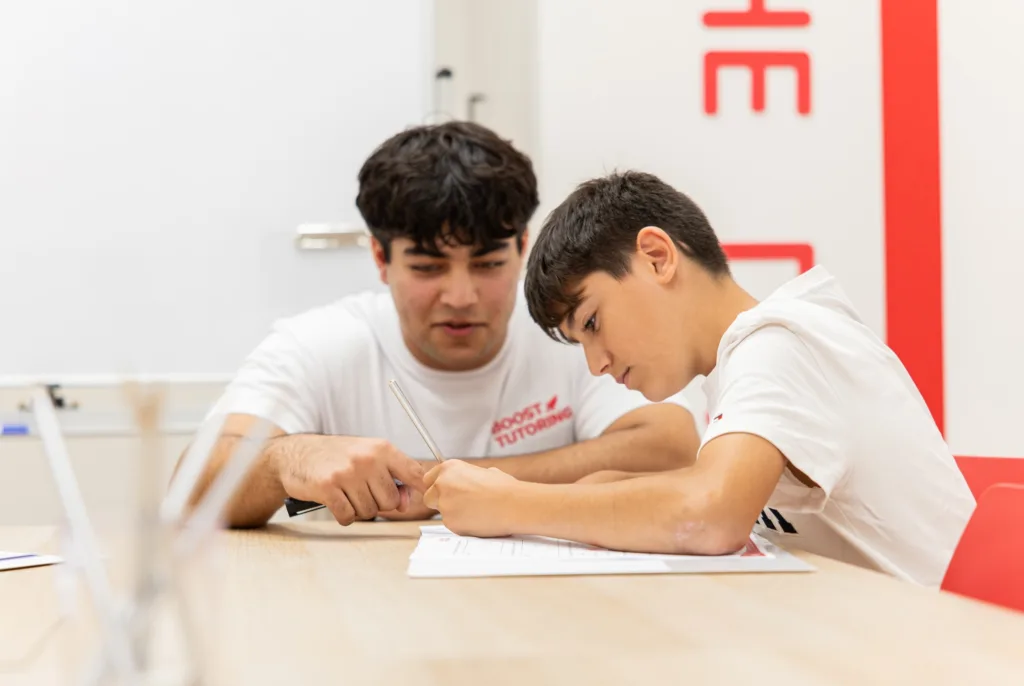
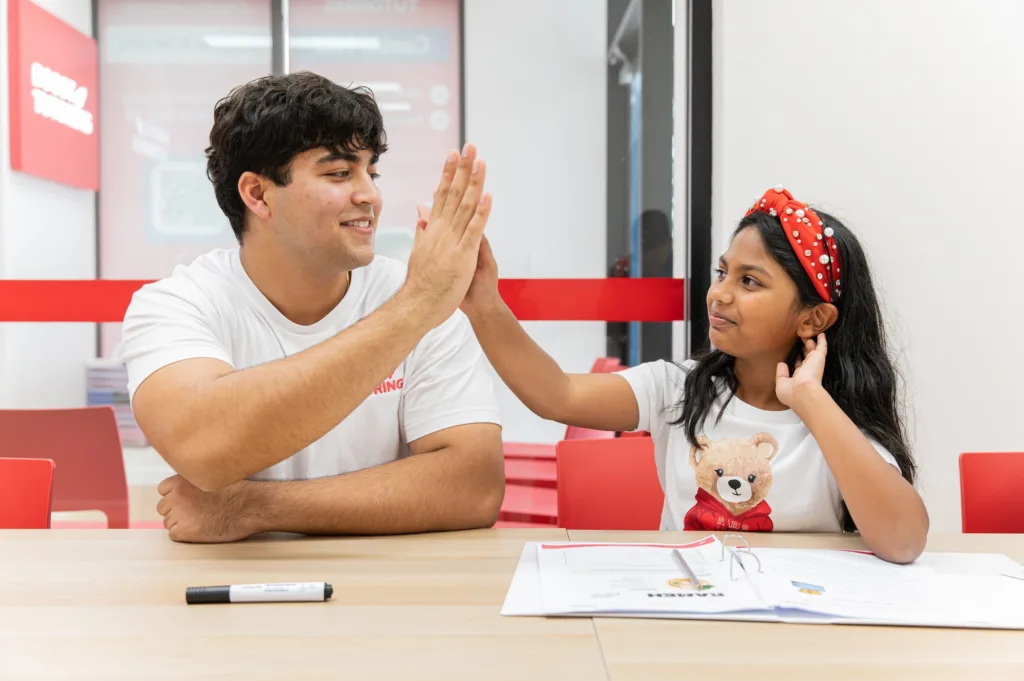
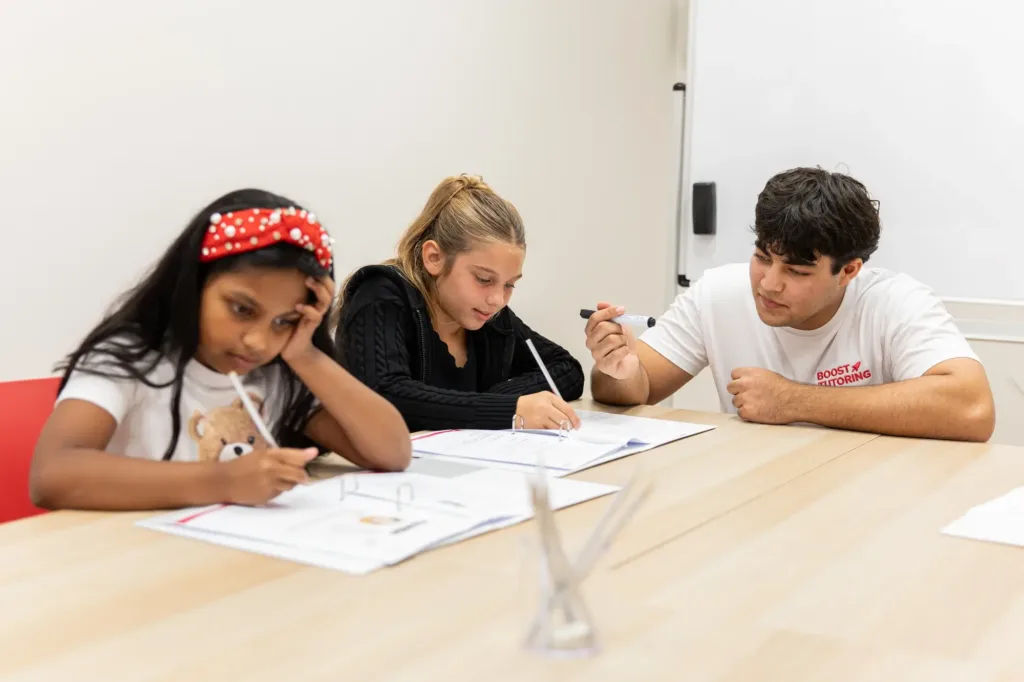
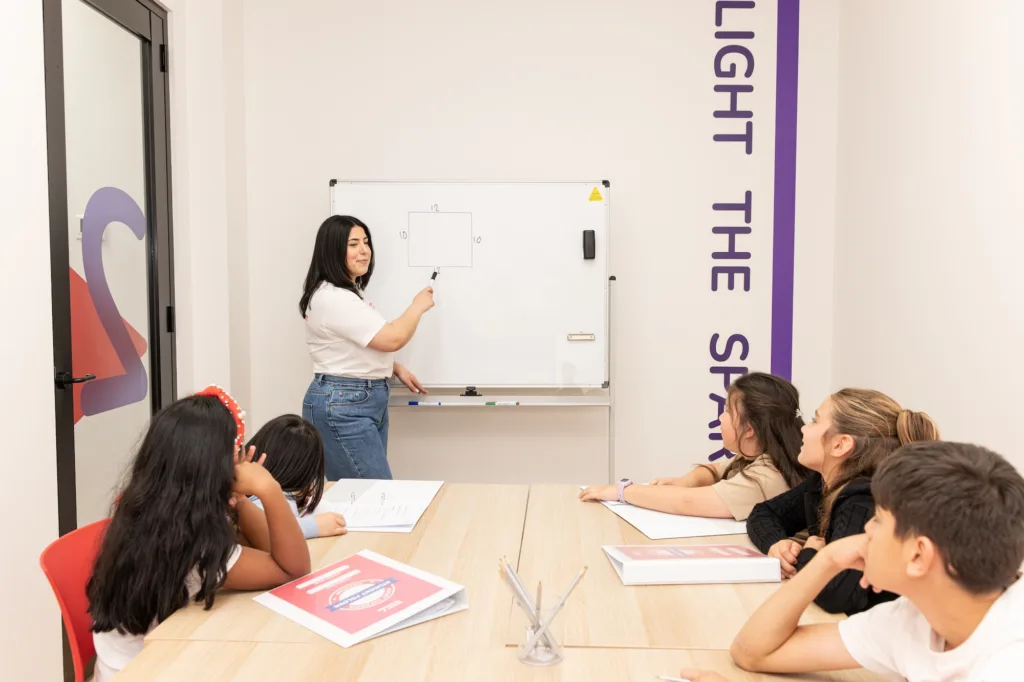
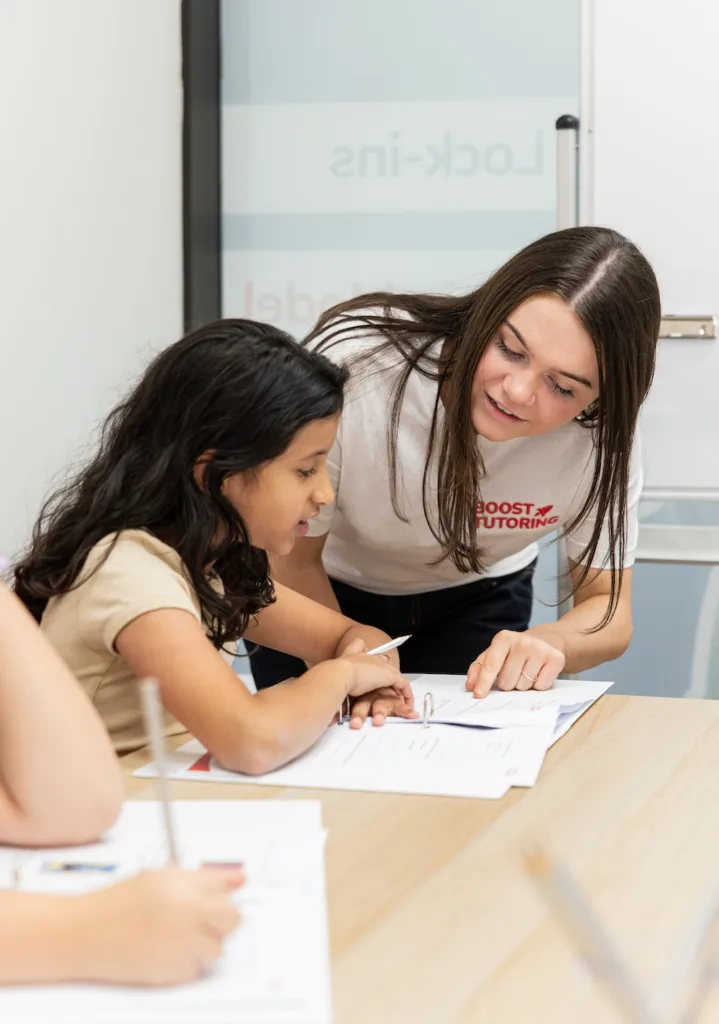
At Boost, English runs in small groups of six to eight with the same tutor each week, aligned to the NSW syllabus, for students from Kindergarten through to Year 10. Each session opens with five minutes of skills work, usually vocabulary or comprehension, then real teaching, then the student working through it themselves until it holds. Prime, Train, Retain.
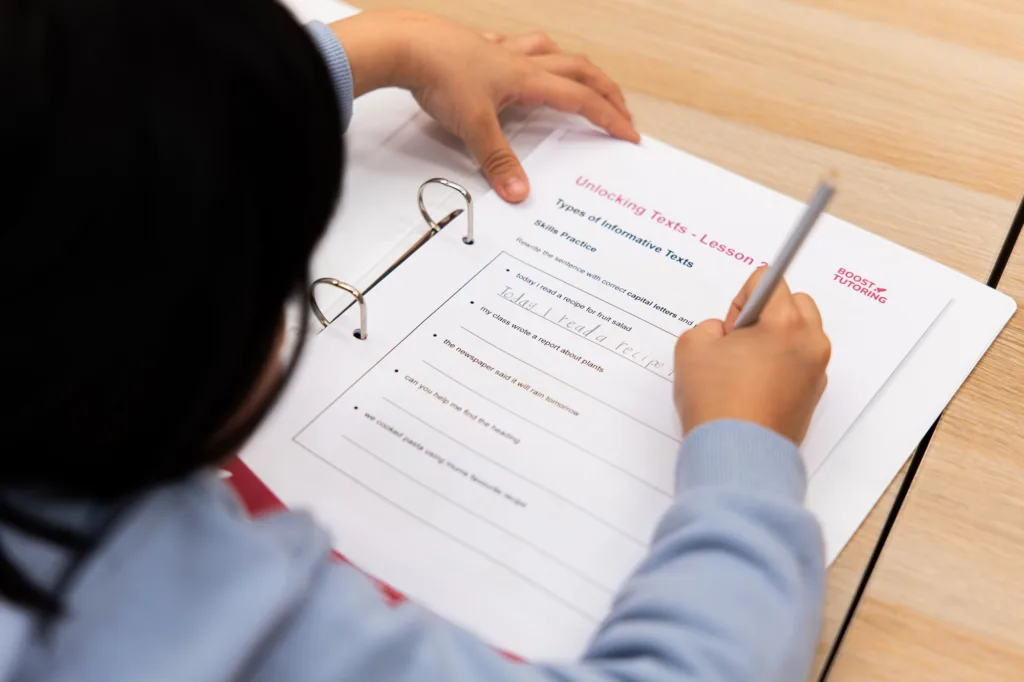
We focus on the parts of English that are hardest to cover at the kitchen table: reading for deep understanding, building vocabulary on purpose, and treating writing as a structure that can be learned rather than a talent you either have or you don’t. And because reading and writing only improve with regular reps, it carries on at home through a short daily worksheet, the kind of small, consistent practice that’s easy to intend and hard to keep up alone.
The home reading, the conversations, the everyday encouragement, keep all of that going. It genuinely matters. We just take on the teaching part and the consistency part, so the two add up rather than pulling against each other.
Good English isn’t a mystery, and it isn’t a fixed talent. It’s reading, understanding, and learning to put a clear idea on the page, built steadily over time. The more of that habit a child has, both at home and in their learning, the further it carries them.
Book a free academic assessment and see where your child really sits.