It rarely arrives as a single moment. There’s no alarm, no obvious failure. It’s quieter than that. A comment on a report you end up reading twice. Homework that’s taking longer than it used to. A child who’s gone a little quiet about school, or who’s started saying “I’m just not good at maths” with a shrug. Nothing you can quite point to, but a feeling that’s hard to shake: is my child falling behind?
If that’s where you are, the first thing worth saying is that the worry itself is a good sign. It means you’re paying attention. The second is that falling behind is common, rarely permanent, and almost always easier to deal with than the worry makes it feel. Here’s how to work out what’s actually going on, and what to do about it.
What Falling Behind Actually Looks Like
The mistake most parents make is waiting for bad marks. By the time the marks slip, a child has usually been behind for a while. The earlier signs are quieter, and they show up more in behaviour and confidence than in scores.
Watch for avoidance. A child who suddenly finds reasons not to start homework, or who rushes through it carelessly, is often avoiding something that’s become uncomfortable rather than simply being lazy. Watch the language they use about themselves, too. “I’m bad at this.” “I don’t get it.” “Everyone else is smarter than me.” These throwaway lines matter, because a child who’s quietly decided they can’t do something stops trying, and stopping trying is exactly what turns a small gap into a real one.
Watch the time things take. Homework that drags on far longer than it should, or that needs you sitting beside them the entire way, can mean the work has moved ahead of where the child actually is. And watch for the quiet withdrawal: less talk about school, less interest, a kind of flatness around learning that wasn’t there before.
None of these on their own means a child is behind. Every child has off weeks. But a pattern of them, building across a term, is worth taking seriously.
Why It Creeps Up Quietly
Falling behind is hard to catch early, and there are good reasons for that.
Maths is the clearest example. It’s cumulative, so a gap doesn’t announce itself. It hides inside the next topic, and the one after that, until something harder finally exposes it. By then the original gap might be a year or two back. The child isn’t really behind on this week’s work, they’re behind on something that was never quite locked in earlier.
English hides even better. A child can read aloud fluently and still understand very little, and a weakness in writing can sit unnoticed for a long time because there’s no clear right-or-wrong answer to flag it. Nothing looks broken. There’s just less understanding underneath than there should be.
School makes early detection harder too, through no fault of the teachers. In a class of thirty, the child who’s quietly slipping but not causing any trouble is the easiest one to miss. And children are good at hiding it. Nobody wants to be the one who doesn’t understand, so they go quiet, copy down the answers, and hope they don’t get asked. The result is that falling behind tends to be a slow drift rather than a sudden drop, which is precisely what makes it so easy to overlook until it’s grown.
What to Do If You Think Your Child Is Behind
First, don’t panic, and don’t let your child feel your worry as pressure. A child who senses you’re anxious about their schoolwork often becomes more anxious themselves, and anxiety makes everything harder. Staying calm is genuinely useful here, not just kind.
Second, get a clear picture. Vague worry isn’t much to act on. What you want is specifics: where exactly is the gap, how big is it, and is it really this year’s content or something earlier? This is the single most useful step, because it turns “I think they’re behind” into an actual plan, and it often reveals the problem is smaller and easier to put right than it felt from the outside.
Third, act sooner rather than later. Gaps widen, and confidence erodes, the longer they’re left to sit. The good news is that the reverse is true as well. Caught reasonably early, most children catch up faster than their parents expect, especially once the confidence starts to come back.
That confidence point is the one to hold onto. The real damage in falling behind isn’t the missed content, because content can always be taught. It’s the spiral: falling behind knocks a child’s confidence, low confidence kills effort, and less effort means falling further behind. Break that spiral early and the academic side tends to follow on its own. A child who believes they can do it will put in the work that gets them there.
How We Help at Boost
When a child comes to us behind, we don’t start with this week’s homework. We start by working out exactly where they actually sit, because that’s the only way to find the real gap rather than chasing the symptom. Often it’s further back than anyone expected, and simply naming it is half the relief.
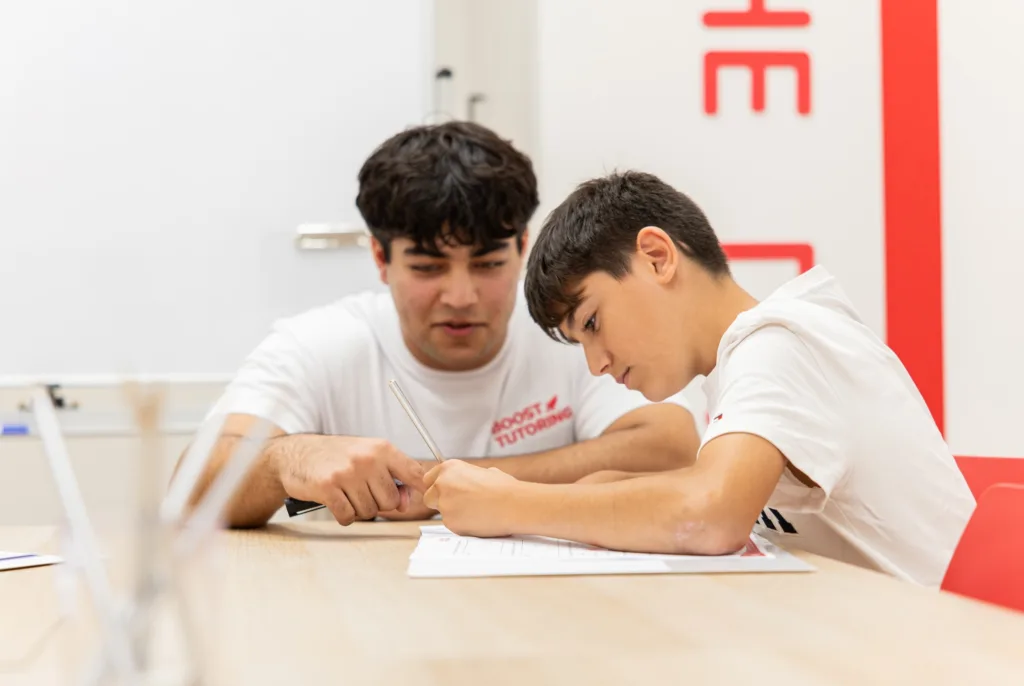
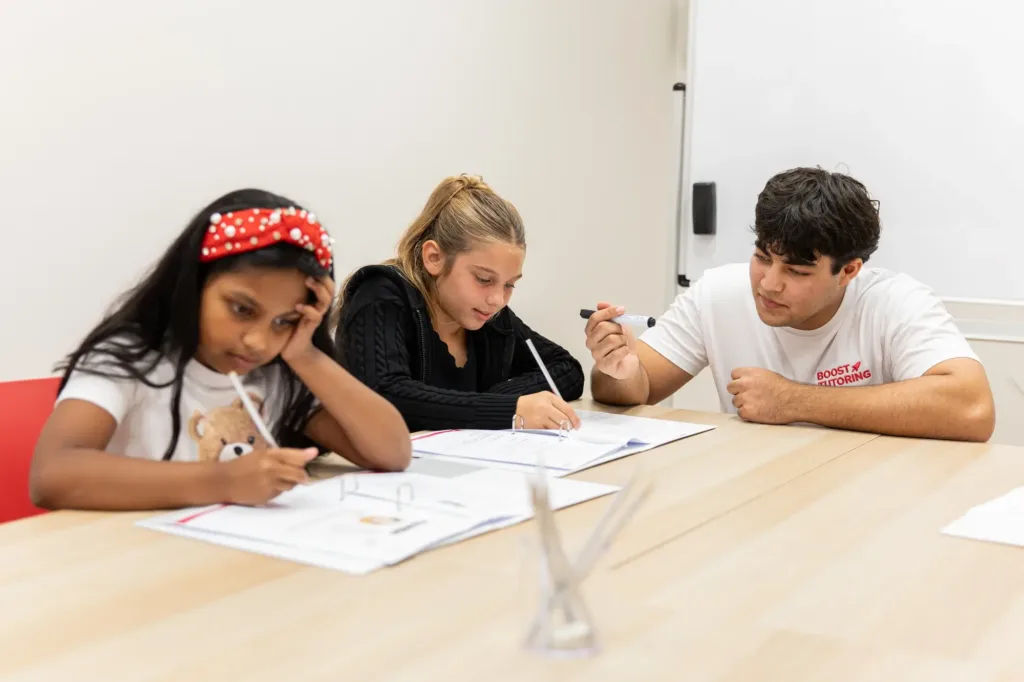
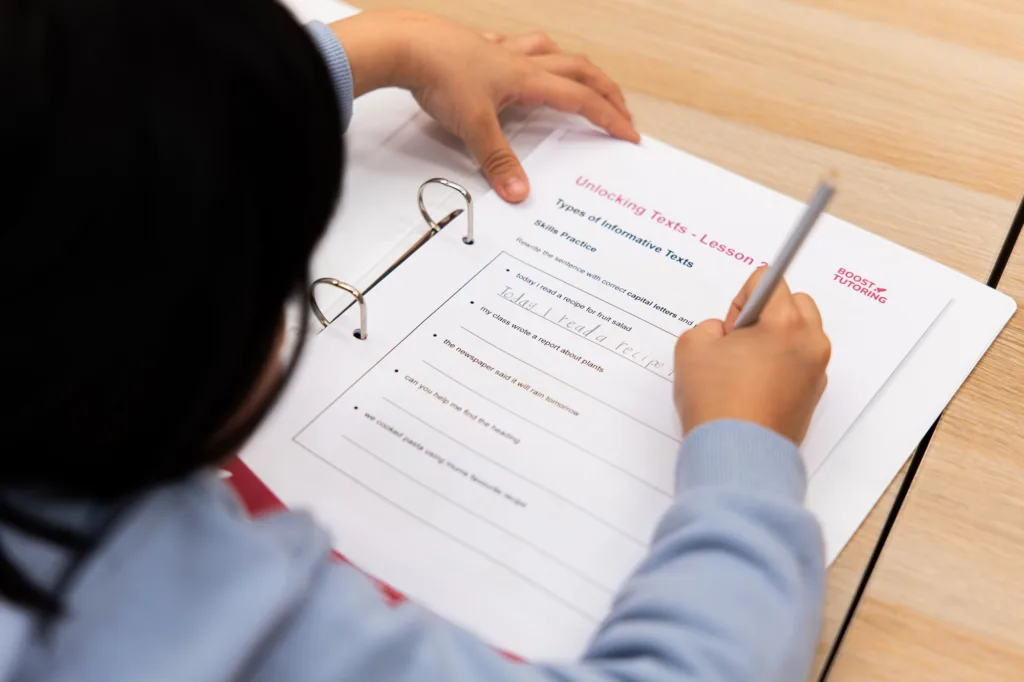
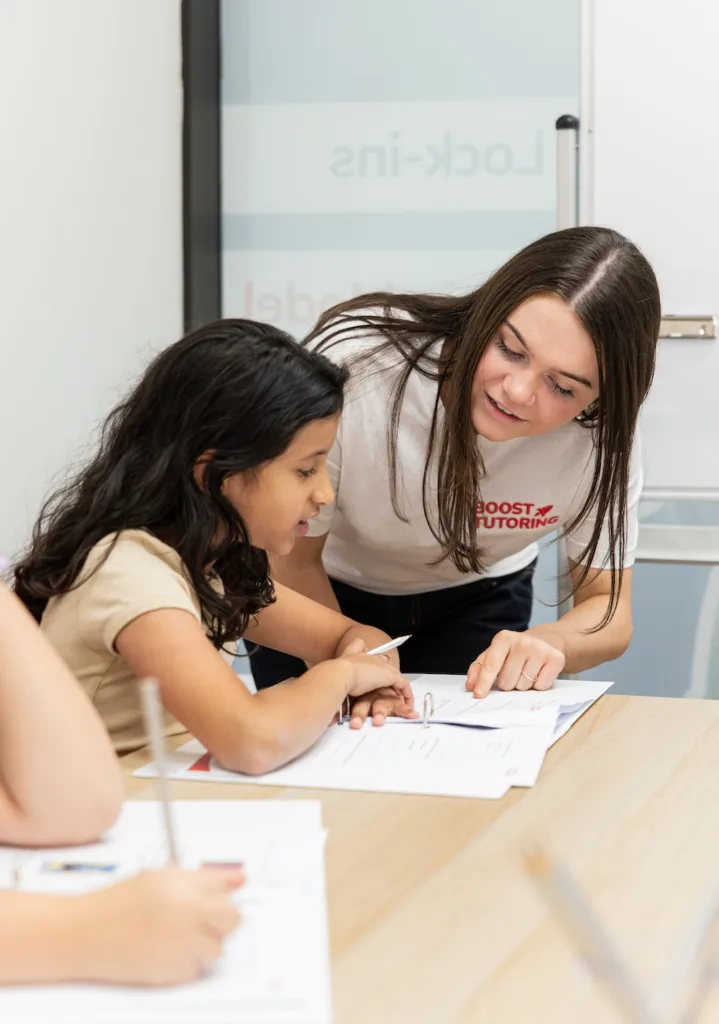
From there, we meet the child where they are, not where the calendar says they should be. Small groups of six to eight, the same tutor each week, aligned to the NSW syllabus, with each session built around a few minutes of skills work, real teaching, then the child working through it themselves until it holds. Prime, Train, Retain. We firm up the foundation first, rebuild a bit of confidence, then move forward on solid ground. It carries on at home through a short daily worksheet, because steady reps are what close a gap for good rather than papering over it.
A child who’s fallen behind hasn’t failed, and neither have you. They’ve just been building on a soft spot, and soft spots can be firmed up.
The hardest part of falling behind is usually the not knowing. Once you can see clearly where your child actually stands, the worry tends to shrink to something manageable, and the way forward gets a great deal clearer.
Book a free academic assessment and see where your child really sits.