
The start of a new school year can bring a surprising mix of emotions.
There’s excitement, of course. New teachers, new classes, a fresh start. But for many parents, there’s something else sitting quietly in the background.
A little uncertainty.
Maybe last year’s maths report wasn’t quite what you hoped for. Maybe homework became harder than it should have been. Or maybe your child is moving into a year level where you’ve heard maths starts getting noticeably more challenging.
Whatever the reason, many families find themselves asking the same question before Term 1 begins:
Is there anything we should be doing now to help our child succeed in maths this year?
The answer is yes, but probably not in the way most people imagine.
Preparing for a successful year isn’t about filling the holidays with worksheets or trying to race ahead of the curriculum. It’s about making sure the foundations underneath this year’s learning are strong enough to support what’s coming next.
Why Maths Problems Rarely Appear Overnight
One of the difficult things about maths is that struggles often stay hidden for longer than parents expect.
A child doesn’t usually wake up one day unable to understand algebra. More often, a small gap from an earlier topic has been quietly travelling with them for months, sometimes years.
Fractions are a common example. A student can appear to manage them well enough in primary school, only to run into problems later when those same concepts start showing up inside percentages, ratios or algebra.
The challenge isn’t that they’re struggling with today’s topic. It’s that something underneath today’s topic never became fully secure.
That’s why the beginning of the school year is such a useful opportunity. There is less pressure, fewer assessments and more room to identify small gaps before they grow into larger ones.
Looking Back Before Looking Forward
Many parents assume preparation means getting ahead.
In reality, the most useful place to start is usually by looking backwards.
Previous reports, assessments and teacher comments often reveal far more than parents realise. Patterns tend to repeat themselves. A topic that caused problems in Term 2 often reappears in Term 4 and then again the following year.
The goal isn’t to dwell on weaknesses. It’s simply to understand where your child actually sits.
Once you know that, it becomes much easier to work out what kind of support, if any, they might need.
Confidence Often Matters More Than Marks
Parents naturally focus on results.
Children tend to focus on how those results make them feel.
Listen carefully to the language your child uses when maths comes up.
“I’m just bad at maths.”
“I’ll never get this.”
“Everyone else understands it except me.”
Comments like these are easy to dismiss, but they often tell you something important.
A child who has lost confidence starts approaching maths differently. They hesitate more. They avoid difficult questions. They expect mistakes before they’ve even started.
Over time, confidence and performance begin feeding into each other. Struggling damages confidence. Lower confidence affects effort. Reduced effort creates more struggle.
The cycle becomes hard to break.
The encouraging part is that the reverse is true as well. When children start experiencing success again, confidence often returns much faster than parents expect.
What Actually Helps Before School Starts
Most children don’t need a holiday packed with maths revision.
What tends to help more is consistency.
A few short sessions each week usually achieve far more than one long study marathon before school returns. Revisiting key concepts, practising basic skills and keeping maths familiar helps students start the year feeling prepared rather than overwhelmed.
The goal isn’t perfection.
The goal is to remove unnecessary obstacles before they appear.
Small habits have a way of compounding across a term.
When Home Support Stops Being Enough
Many parents do a wonderful job helping their children with maths.
But there are limits.
Sometimes the content becomes more complex. Sometimes identifying the real gap is harder than it looks. And sometimes the biggest challenge isn’t the maths itself.
It’s the tension that develops around homework.
Most families know the feeling. What begins as helping can quickly become frustration for everyone involved. Children become defensive. Parents become exhausted. Nobody enjoys the experience.
When that starts happening regularly, bringing in outside support can be helpful, not because anyone has failed, but because learning often feels different when it comes from someone outside the family.
This is one reason many families begin exploring maths tutoring in Castle Hill options before the school year becomes busy. It’s often easier to build confidence and momentum early than to try and recover it later.
How We Approach Maths Tutoring at Boost
At Boost, we see a lot of students who aren’t actually struggling with the topic they’re currently learning.
They’re struggling with something that came before it.
That’s why we start by understanding where a student really sits academically rather than focusing only on this week’s homework.
Often the gap is smaller than anyone expected. Sometimes it’s simply a concept that was never fully locked in.
From there, we meet students where they are.
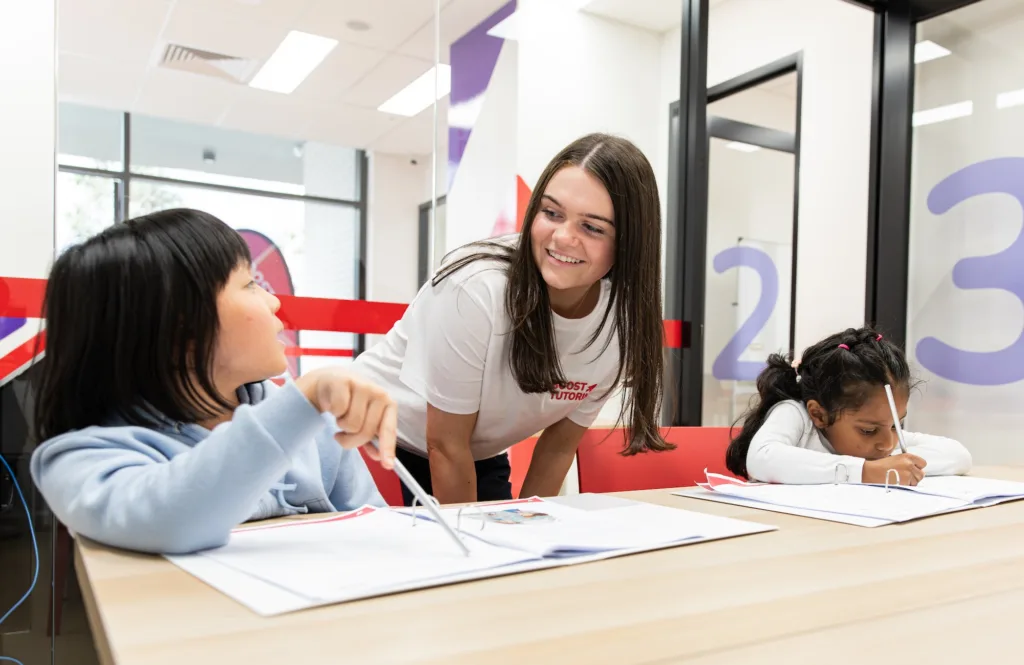
Our maths tutoring programs in Castle Hill run in small groups of six to eight students with the same tutor each week, aligned to the NSW syllabus and designed to build both understanding and confidence.
Each session follows our Prime, Train, Retain approach. Students review key skills, receive direct teaching and then apply the concept themselves until it sticks. The learning continues at home through short daily worksheets that help turn understanding into long-term retention.
The focus isn’t simply getting through the next test.
It’s building foundations strong enough to support the rest of the year.
A Strong Start Doesn’t Require Perfection
Parents sometimes feel pressure to have everything sorted before the first day of school.
The reality is much simpler.
A child doesn’t need to begin the year knowing everything. They simply need a foundation that allows them to keep moving forward.
A few gaps are normal. A temporary dip in confidence is common. Neither determines how the year will end.
What matters is recognising challenges early and addressing them before they have a chance to grow.
The school year arrives quickly. Fortunately, confidence and capability can grow quickly too when students receive the right support at the right time.
If you’re considering trusted math tutoring to help build strong foundations for the year ahead, a clear understanding of where your child currently stands is always the best place to start.
Book a free academic assessment and discover where your child currently stands.











