At pickup, someone mentions their child got a Selective offer. Someone else is still waiting on an OC reserve number. A third parent asks the question everyone’s been quietly wondering but nobody’s actually answered properly: how do these places get decided? Is it just the raw test score? Does the school get a say? Is there a secret cut-off nobody tells you about?
The honest answer is more straightforward than the group chat makes it sound, but it isn’t identical for the two programmes, and the Department doesn’t publish every last detail of the formula. Here’s how OC and Selective places are allocated in NSW, in plain terms — what’s confirmed, what’s changed in recent years, and what still isn’t made public.
“How much NAPLAN practice is enough” is one of the most common questions Hills parents ask us this time of year, and it’s rarely really about the number of papers. It’s about not knowing where the line is between preparing your child properly and putting them through something that does more harm than good. There is a sensible answer, and it’s smaller and calmer than most families expect.
What The Two Tests Actually Measure
Opportunity Class placement is for Year 5 and Year 6, in a small number of primary schools that run OC classes. The test is sat in Year 4 and covers three sections: reading, mathematical reasoning and thinking skills. Selective placement is for Year 7, the test is sat in Year 6, and it adds a fourth section — writing — on top of reading, mathematical reasoning and thinking skills.
Both tests are computer-based, and both are run across multiple test versions so that no child gets an advantage from sitting on a particular day. That’s an important detail, because it means the raw number of questions a child gets right isn’t the number that decides anything. What matters is how that raw result compares once it’s been adjusted for the difficulty of the specific version they sat.
It also explains why two children who sit the same number of practice papers can come away with very different results. One child spent that time reinforcing a genuine gap in fractions or inference. The other spent it re-doing questions they already knew how to answer, because the paper happened to be the thing in front of them. Same hours, very different return.
How A Score Actually Becomes A Ranking
This is the part most families skip past, and it’s worth understanding because it changes how you should think about preparation. Raw scores are converted into a scaled score using statistical analysis of each question’s difficulty, so a child who sat a slightly harder version of the test isn’t disadvantaged compared with one who sat an easier version on a different day. The scaled results from each section are then combined into a single placement score, and every applicant is ranked against that number.
For Selective, families list up to three preferred schools in genuine order of preference. A student doesn’t receive offers from every school they’ve qualified for — they receive one offer, from the highest-ranked school on their list that they’ve qualified for. Ranking a school first doesn’t make a child more competitive for it; the placement score does all of that work, regardless of preference order.
One thing worth knowing: before 2022, part of the placement score came from assessment marks submitted by the student’s own school. That component was substantially reduced in a redesign of the process, and the placement test itself now drives most of the outcome. The Department hasn’t published the exact current weighting or any school cut-off marks, so it’s worth treating any precise percentage you see quoted online as an estimate rather than an official figure — including in this article.
The Equity Places Most Families Don’t Know About
Not every place is filled purely by rank order. Up to 20 per cent of places at each school are set aside for equity groups, roughly split across low socio-educational advantage, Aboriginal and Torres Strait Islander students, students from rural and remote areas, and students with disability. These places still go to students scoring within a defined range of the general offer threshold — it isn’t a separate, lower bar, it’s a reserved allocation within a similar band. If an equity place in a given category isn’t filled, it reverts to the general applicant pool rather than going unused.
This matters less as a strategy to plan around and more as context, because it explains why two children with seemingly similar scores can end up in different positions on results day. The ranking isn’t a single flat ladder for absolutely everyone.
What A Reserve List Position Really Means
Selective and OC results aren’t a simple pass or fail. Every applicant who doesn’t receive an initial offer is placed on a ranked reserve list, and offers continue moving down that list as places open up — most often because a family further up declines an offer at one school in favour of another. The Department publishes reserve bands each year as a rough guide to how far down the list offers reached previously, and movement can continue well into the following term.
A reserve position isn’t a euphemism for no. It’s a real, ranked number with a genuine chance attached, and where a child sits on it tells you far more than the word “unsuccessful” ever will.
What This Means For How You Prepare
Because the process scales each section and combines them into one score, there’s no single shortcut section a family can lean on while ignoring the rest. A child who’s strong in mathematical reasoning but weak in thinking skills, or fluent at writing but shaky on inference in reading, is still carrying a gap that shows up in the combined result. And because scaling adjusts for difficulty rather than rewarding raw speed or lucky guessing, the preparation that actually moves the needle is the same preparation that helps a child in the classroom generally: solid understanding across all four skill areas, built steadily, not crammed in the final weeks.
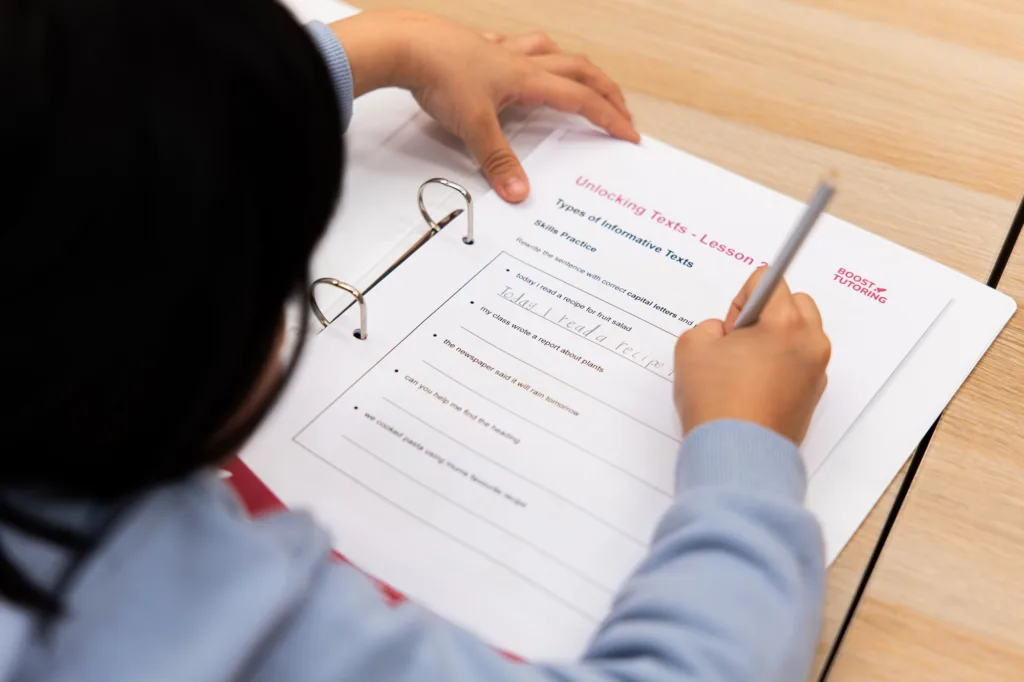
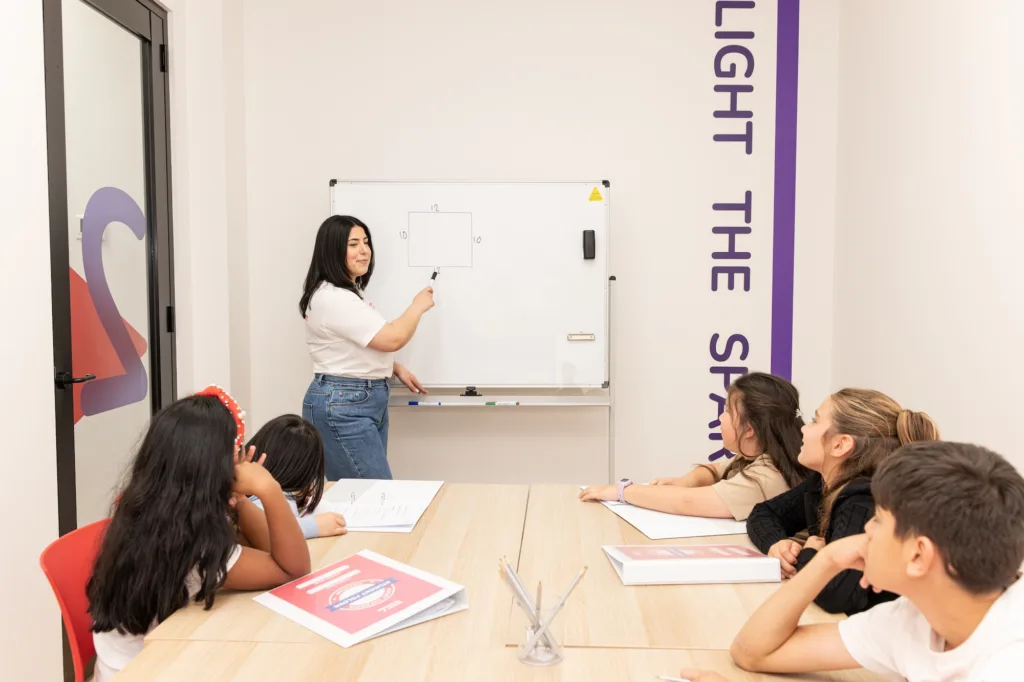
This is the thinking behind how we structure preparation at Boost. Rather than drilling one section intensively before a test date, every session opens with a short block of skills work, then moves into real teaching, then gives the student a chance to rep the content themselves. It’s built for the kind of steady, cross-the-board development that a scaled, combined placement score actually rewards — not a last-minute push on whichever section feels weakest that week.
Making Sense Of Where Your Child Stands
None of this is designed to make the process feel more mysterious than it needs to be. Both OC and Selective placement come down to a ranked score built from clearly defined test sections, with a portion of places set aside for equity groups and a genuine, moving reserve list for everyone else. What isn’t public is the exact formula and the cut-off marks, so the most useful thing a family can do isn’t trying to reverse-engineer a percentage — it’s understanding where their own child’s skills actually sit across reading, reasoning, thinking skills and writing, well before test day.
If you’re not sure where that is for your child yet, that’s the easiest place to start.If you’re not sure where your child’s gaps actually are, that’s the easiest place to start.
Book a free academic assessment and see exactly where your child’s foundations sit