Your child is clever. Everyone agrees on that, the teachers, you, probably your child too. And yet the assessment they had three weeks to do somehow got done between nine and midnight the night before. The study notes never got made. The project was a scramble. It isn’t that they can’t do the work. It’s that the work keeps arriving in a last-minute panic, and the results don’t reflect what they’re actually capable of.
If that’s familiar, the problem isn’t ability. It’s time management, and it’s one of the most common reasons capable Hills District students underperform. The good news is that time management is a skill, which means it can be taught. Here’s why students find it hard, and what actually helps.
Time Management Is a Skill, Not a Trait
It’s tempting to see a disorganised child as just “bad with time,” as though it were a fixed part of who they are. It isn’t. Managing time, planning ahead, breaking a big task into pieces, starting before the last minute, is a set of learnable skills, no different from learning to write an essay or solve an equation.
The trouble is that school largely assumes these skills rather than teaching them. High school in particular expects students to manage their own time, track assessments across many subjects, and work steadily toward deadlines weeks away, yet very little class time is spent actually teaching them how. Students are left to work it out for themselves, and plenty of bright ones simply don’t, not because they can’t, but because nobody ever showed them.
Which means the answer isn’t nagging a child to be more organised. It’s teaching them a system.
Why Students Come Unstuck
A few specific things trip students up, and they’re worth understanding.
The jump to planning ahead is the big one. In primary, homework is usually due tomorrow, so there’s nothing to plan. In high school, assessments land weeks in advance, and a student has to work backwards from a deadline that feels comfortably far away, right up until it isn’t. Working toward a distant deadline is a genuine skill, and it’s new.
Juggling subjects adds to it. Suddenly there are eight subjects, each with its own teacher, homework and assessments, and no single person keeping track of the whole load. A student has to hold the full picture themselves, and it’s easy to drop something.
Then there’s the appeal of the last minute. Leaving things late feels, in the moment, like freedom, and the panic of the night before produces a kind of focus that feels productive. But it’s a trap, because last-minute work is worse work, and it teaches nothing except how to survive on adrenaline.
And distraction makes all of it harder. A phone within reach fragments the time a student does sit down to work, so an hour of “study” becomes twenty real minutes spread thinly across sixty.
What Actually Helps
The answer is a system simple enough that a teenager will actually use it.
A planner that’s genuinely used, not just owned. Every assessment and deadline written down in one place the moment it’s known, so the whole load is visible rather than carried around in a stressed head. The act of seeing it all written down is half the battle.
Starting early, by breaking big tasks into small ones. A project due in three weeks isn’t one terrifying task; it’s six small ones spread across the weeks. Teaching a child to break work down and start the first piece early is the single most powerful antidote to the last-minute scramble.
A routine, because routines beat willpower. A student who has a set time and place for work each day doesn’t have to summon the motivation to start every single time. The habit carries them, especially on the days they can’t be bothered, and there are always those days.
Prioritising, so the most important or most urgent thing gets done first, rather than whatever happens to be easiest or most appealing.
And protecting focus by removing the phone from the room during work. Not on silent, not face-down, but genuinely elsewhere, so the time spent working is actually spent working. None of this is complicated. The difficulty is consistency, which is exactly where most students need outside help.
How We Help at Boost
A lot of what makes Boost work is that it supplies the structure a student’s own organisation can’t yet provide.
The weekly session is a fixed, routine commitment, the same time each week, which anchors a student’s schedule whether or not they feel like studying that day. And the daily worksheet through Boost Accelerator builds exactly the habit time management depends on: a small amount of work, done at a regular time, every day. That daily rhythm is the foundation of every other time-management skill, and it’s far easier to build with a structure around it than through willpower alone.
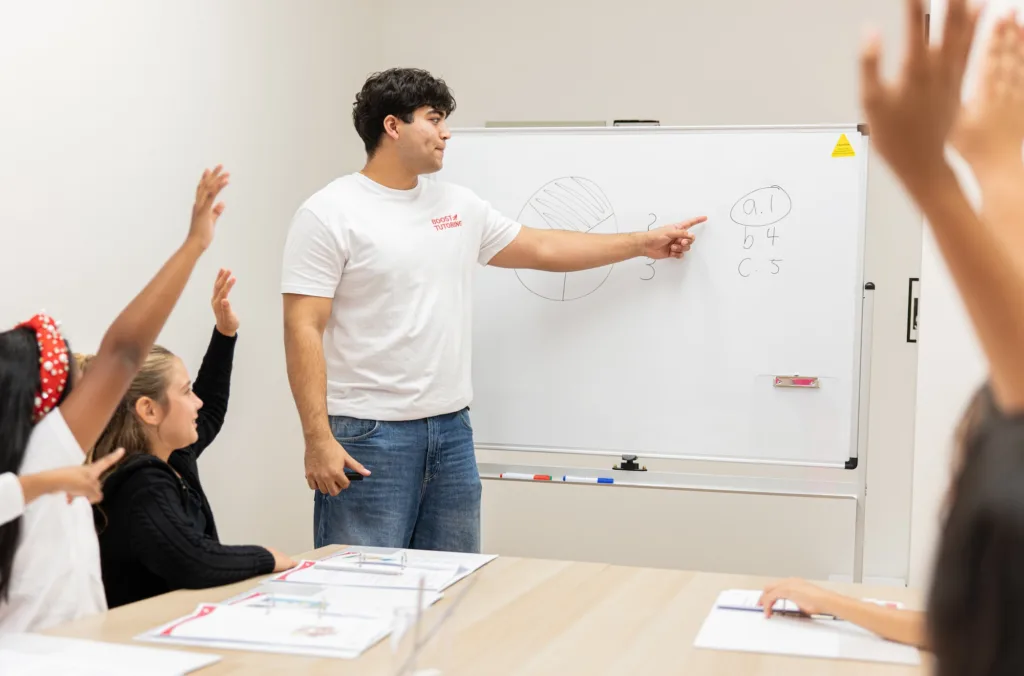
Beyond the habit, the small-group sessions model how work actually gets done, planned, worked through steadily, finished properly, rather than crammed. For a capable but disorganised student, seeing that modelled week after week, by the same tutor who knows how they work, does more than any lecture about getting organised ever could.
A capable child who’s disorganised isn’t a lost cause, and they’re certainly not lazy. They’re missing a skill nobody has taught them yet, and it’s an entirely teachable one. Build the system, make it a habit, and the results start to match the ability. The first step is simply knowing where your child stands.
Book a free academic assessment and see how the right structure could help your child