There’s a moment in a lot of children’s maths lives where it all changes, and for most of them it’s called algebra. One term they’re working with numbers, confident enough, and the next there are letters in the maths, equations that look like code, and a child who was doing fine suddenly isn’t. For many Castle Hill parents, algebra is the first time their child comes home and says maths has stopped making sense.
It doesn’t have to be the wall it’s become known as. If you’re looking into algebra tutoring in Castle Hill, the useful thing to understand first is that algebra trips students up for specific, understandable reasons, and once you know what they are, it’s far more manageable than it looks. Here’s what algebra actually is, why it catches so many students out, and what helps.
What Algebra Actually Is
Strip away the intimidating look of it, and algebra is really one idea: using a letter to stand for a number you don’t know yet.
That’s genuinely the heart of it. Where arithmetic deals in specific numbers you can see, algebra deals in general relationships, where a letter holds the place of a value that could be anything, or that you’re trying to find. “x plus three equals seven” is just asking which number, plus three, makes seven. The letter isn’t code. It’s a placeholder.
This is a real shift in thinking, and it’s worth naming, because it’s the actual source of the difficulty. Maths stops being about calculating with numbers and starts being about reasoning with symbols and relationships. It’s a step up in abstraction, and a child who’s never had that leap explained properly is left trying to memorise rules for shuffling letters around without any sense of what the letters mean.
Why Algebra Trips Students Up
A few things combine to make algebra the sticking point it is.
The first is that abstraction itself. A child who is perfectly good at arithmetic can find the jump to symbols genuinely hard, because being quick with numbers is a different skill from reasoning about unknowns. This catches out plenty of capable students, which is exactly why it comes as such a shock to families.
The second is memorising instead of understanding. Because algebra comes with a lot of rules, change the side and change the sign, collect like terms, do the same to both sides, a child can try to memorise the rules without grasping why they work. This holds up for simple questions and collapses the moment a question looks slightly unfamiliar, because there’s no understanding underneath to adapt from. A student who’s memorising algebra is always one odd question away from being stuck.
The third, and the one most parents don’t see, is weak foundations underneath. Algebra leans heavily on things that came before it, and it ruthlessly exposes any that aren’t solid. A child shaky on fractions, or negative numbers, or the order of operations, will look like they can’t do algebra, when really they can’t do the arithmetic buried inside the algebra. The algebra is fine. The foundation isn’t.
The Foundations Algebra Needs
This last point is worth taking seriously, because it’s where a lot of algebra trouble actually lives.
To cope with algebra, a few things need to be genuinely solid first. Times tables and basic number facts, because a child slowed down by seven eights can’t spare the attention for the harder thinking on top. Operations with negative numbers, which turn up constantly in algebra and trip up anyone unsure of them. Fractions, because algebra is full of them, and a shaky grasp of fractions quietly becomes a shaky grasp of algebra. And the order of operations, which algebra assumes at every single step.
When a student is lost in algebra, the useful question is rarely “how do we do more algebra?” It’s “which of these foundations isn’t solid?” Firm up the real gap and the algebra often steadies on its own, because the problem was never really the algebra. Drill more algebra on top of a cracked foundation and you just get a frustrated student and very little progress.
How We Approach Algebra Tutoring in Castle Hill
Algebra is exactly the kind of topic the Boost approach is built for, because it rewards understanding over memorised rules, and it punishes shaky foundations.
We start by working out where a student actually sits, which for algebra usually means checking the foundations underneath it as much as the algebra itself. Very often the wall a student has hit traces back to fractions or negative numbers from an earlier year, and there’s no sense pushing on with algebra until that’s been sorted out.
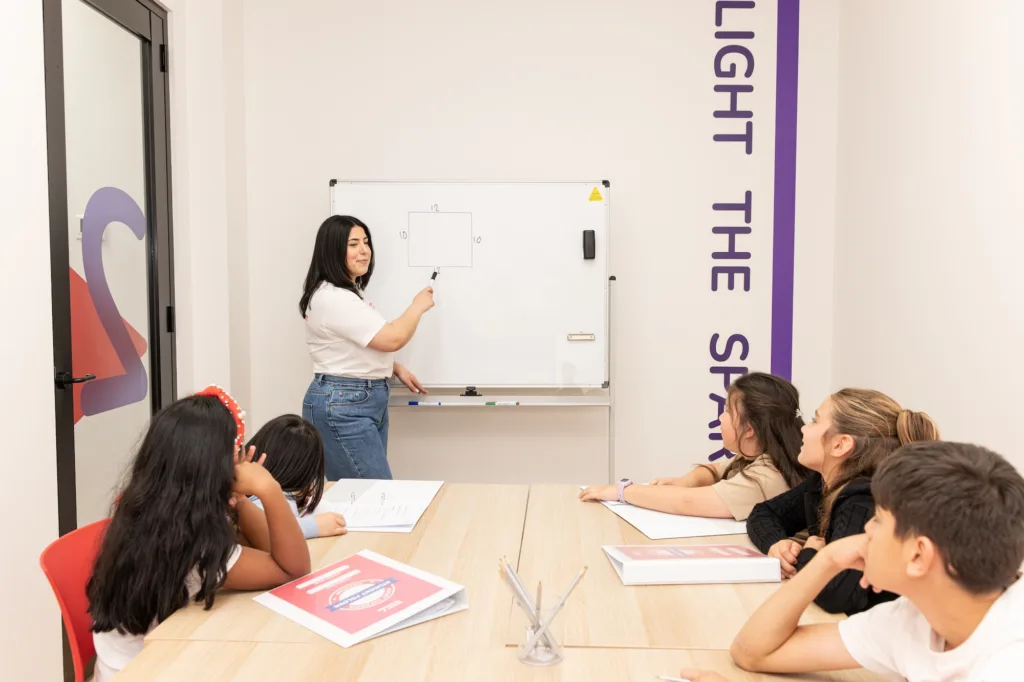
From there, maths runs in small groups of six to eight with the same tutor each week, aligned to the NSW syllabus. The teaching makes the reasoning visible, so a student understands what algebra is doing and why the rules work, rather than collecting a bag of steps to copy. Each session opens with a few minutes of skills work to keep the number fluency sharp, then real teaching, then the student working through it themselves until it genuinely holds. Prime, Train, Retain. It carries on at home through a short daily worksheet, because the fluency algebra sits on is built through regular reps.
Algebra isn’t the wall it’s made out to be. It’s one genuine leap in thinking, sitting on a set of foundations that have to be solid, and most of the trouble comes from one of those two things rather than from algebra being impossibly hard. Work out which, and it steadies. The clearest place to start is finding out exactly where your child’s maths sits, foundations and all.
Book a free academic assessment and find out where your child’s maths actually sits