Your daughter pulls out her maths homework and asks for help with question four. You lean in, ready to explain, and then you see it: a grid of boxes, arrows, a method with a name you’ve never heard. You did long division a different way. You did subtraction a different way. Whatever this is, it isn’t what you learned, and for a second you feel something close to panic. If you can’t even follow the method, how are you supposed to help your child with maths tonight, let alone every night this term?
This moment plays out at kitchen tables everywhere, and it has very little to do with whether you’re actually good at maths. Plenty of parents who did well at school themselves freeze at a Year 3 worksheet, because primary maths today is taught differently to how most of us were taught it. The good news is that helping your child with maths was never really about reteaching the content or knowing every method by name. It’s about a handful of habits that any parent can run at home, regardless of how confident they feel with numbers themselves.
How to Help Your Child With Maths Without Reteaching the Method
The instinct when you don’t recognise a method is to swap it for one you do know. Resist it. If the class is using a grid method for multiplication and you show your child the way you were taught, you haven’t given them a second option, you’ve given them a conflict. Now they have two methods in their head at the same time their teacher is testing them on one, and the result is usually more confusion, not less.
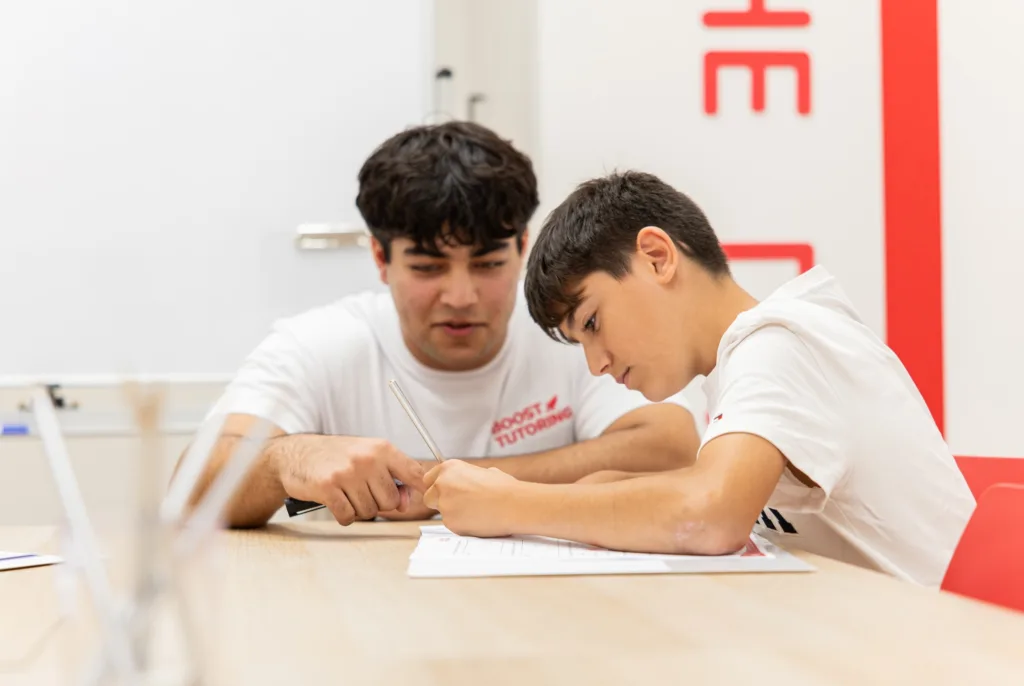
Your job isn’t to become fluent in every method a NSW primary syllabus currently uses. It’s to let your child be the expert in the room. Ask them to walk you through it: what does this box represent, why do the arrows go that way, what happens next. If they can explain it to you, they understand it. If they get stuck explaining it, you’ve found the actual gap, and that’s worth more than you correcting their working, because now you both know exactly what needs practice.
Consistency Matters More Than Content
Here’s the part that gets missed: the parents whose kids make steady progress in maths aren’t usually the parents who are strongest at maths. They’re the parents who show up at the same time, most days, for ten or fifteen minutes. A regular slot after dinner, before screen time, whatever fits your household, does more for a child’s number skills than an hour of stressed, sporadic help squeezed in before a test.
This is genuinely good news if you’re time-poor or not confident with the content. You don’t need to plan a lesson. You need a chair, a worksheet or a set of times tables, and a fixed few minutes where maths happens without a fight. The structure is doing the work, not your explanation.
Ask Questions Instead of Giving Answers
When your child gets stuck, the temptation is to jump in and solve it for them, especially if you can see the answer and they can’t. Try holding back and asking instead. What do you think the first step is? Where does this look like the last one you did? Can you show me on paper what you’ve tried so far? These questions work whether you understand the maths or not, because they’re not testing your knowledge, they’re testing theirs, and they keep the thinking with the person who actually needs the practice.
It also teaches a habit that matters well beyond primary school: checking your own working before assuming you’re wrong. A child who’s used to a parent supplying the answer the moment they hesitate never builds that muscle. A child who’s used to being asked “where do you think it went wrong” starts doing that check on their own, in a test, when there’s no one next to them to ask.
Know When It’s Time to Step Back
There’s a real difference between a child who’s mildly stuck on one question and a child who dreads maths homework every single night. If your child is in tears over worksheets, avoiding homework altogether, or telling you they’re “just bad at maths,” a few encouraging questions at the kitchen table won’t turn that around on their own. At that point the gap has usually been building for a while, quietly, across several terms, and what’s needed is proper diagnosis and structured, ongoing practice, not more parental patience or another difficult evening at the table.
Recognising that point isn’t a failure on your part, and it doesn’t mean you’ve done anything wrong by trying to help at home. It’s simply the difference between a parent who keeps pushing water uphill on their own and one who gets their child the right support before the gap widens any further.
The Boost Approach to Maths at Home
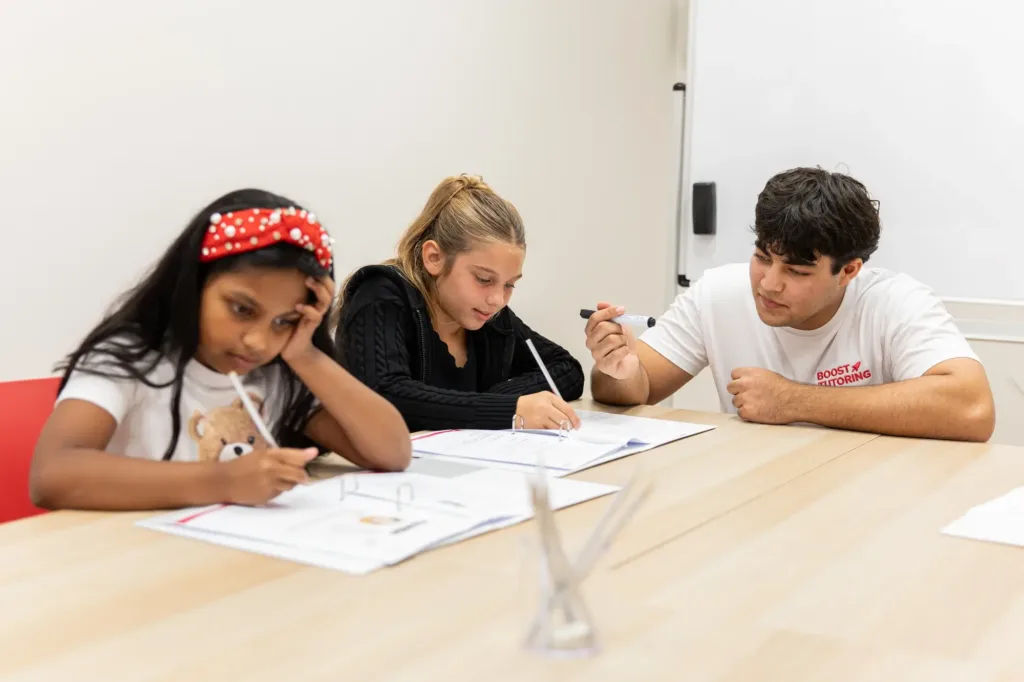
This is exactly why every Boost session opens with five minutes of skills work before the curriculum content starts, and why Boost Accelerator sends daily practice home with feedback for parents rather than a stack of worksheets and no context. The aim isn’t to turn parents into maths teachers. It’s to build the reps and the routine into the week so your child’s progress doesn’t depend on whether you remember the grid method, and doesn’t depend on you at all, beyond making sure they turn up and do the work sitting in front of them.
You can be exactly as involved as you want to be at home. The maths content itself is handled by a qualified tutor who knows the current syllabus, working inside a structure built to reinforce that content daily rather than once a week. Your job stays simple: show up, ask the questions above when your child gets stuck, and let the structure carry the rest of the load.
If you’re not sure where your child actually stands with maths right now, a free academic assessment will tell you, without you needing to work it out yourself first.
Book a free academic assessment and see exactly where your child’s foundations sit