The school holidays arrive and you have got two clear weeks in front of you. No assignments due, no bell schedule, nothing pulling your child’s attention toward Tuesday’s spelling test. It feels like the obvious window to close whatever’s been nagging at you all term, the fractions that never quite clicked, the essays that come back with more red pen than you’d like, the quiet sense that your child is treading water while classmates move ahead. So you start looking into holiday catch-up tutoring in Castle Hill, hoping two weeks of focused work can undo a term’s worth of drift.
It can help. But only if it’s built the right way. Cram a school holiday full of worksheets and your child either burns out by day three or forgets most of it within a fortnight of being back at school. Done properly, holiday tutoring gives you something more useful: a short, structured run at the exact gap that’s been building, at a pace your child can actually absorb.
Here’s what that looks like in practice, and how to tell whether the catch-up you’re considering will actually move the needle.
Why the Holidays Are a Genuine Opportunity
Term time in Castle Hill is crowded. Sport on Tuesdays, music lessons Thursdays, homework squeezed in between dinner and bath, and a subject gap competing for attention with everything else on the calendar. There’s rarely room to sit with a topic long enough to actually close it, so gaps get patched rather than resolved.
The holidays remove that competition. Your child isn’t trying to learn long division while also finishing a research project due Friday. That’s what makes the break useful for catch-up, not because more hours automatically means more progress, but because the hours that do happen aren’t fighting for space with six other things.
The mistake is assuming that opportunity means intensity. A child who’s spent a term feeling behind in maths doesn’t need three-hour holiday maths marathons; they need short, consistent sessions that rebuild the specific skill that’s missing, repeated often enough to stick.
What Good Holiday Catch-Up Tutoring Looks Like
The tutoring that works over the break shares a few features, regardless of which centre or tutor is running it.
It targets something specific. “Getting better at maths” isn’t a holiday goal, it’s a slogan. “Getting comfortable with fractions before next term starts” is a goal you can actually build sessions around and measure progress against.
It’s short and regular, not long and occasional. Four sessions of 45 minutes across two weeks beats one three-hour cram on the Sunday before school goes back. The spacing lets the skill settle between sessions instead of evaporating the moment the pen goes down, and it fits around whatever else the family has planned for the break, whether that’s a holiday away or just a slower pace at home.
It includes low-stakes repetition. Kids don’t lock in a skill by hearing it explained once, even well. They lock it in by doing it again, and again, in slightly different forms, until it stops requiring conscious effort. A good holiday programme treats this reps stage as just as important as the explanation stage, not an afterthought squeezed in at the end. This is the part parents often skip when they try to run catch-up themselves at the kitchen table: the explaining is easy, the patient repetition afterwards is what actually takes time.
It ends with something concrete for the new term. A worked example your child understands, times tables they can now recall without counting on fingers, a paragraph structure they can reuse. Vague reassurance that “we covered a lot” isn’t the same as your child walking back into class with a skill they didn’t have three weeks earlier.
Signs the Catch-Up Is Actually Working
You will know holiday tutoring is doing its job if your child can explain, in their own words, what they have gotten better at. Not recite it back the way they were told, explain it, in a way that shows they understand why it works and not just what the steps are.
Watch for less obvious signs too. Does your child attempt the harder version of a problem without being asked? Do they catch their own mistake before you point it out? Are they less likely to say “I don’t get it” and more likely to say “wait, let me try that again”? These are the markers of a skill that’s actually settled, not just performed for a session and then forgotten.
If, after the break, your child is back to the exact same hesitation they had before it started, the holiday programme wasn’t the wrong idea. It was probably run at the wrong intensity, or without enough repetition built in to make it stick, and that’s worth knowing before you commit to a similar approach again next holidays.
The Boost Approach Over the Holidays
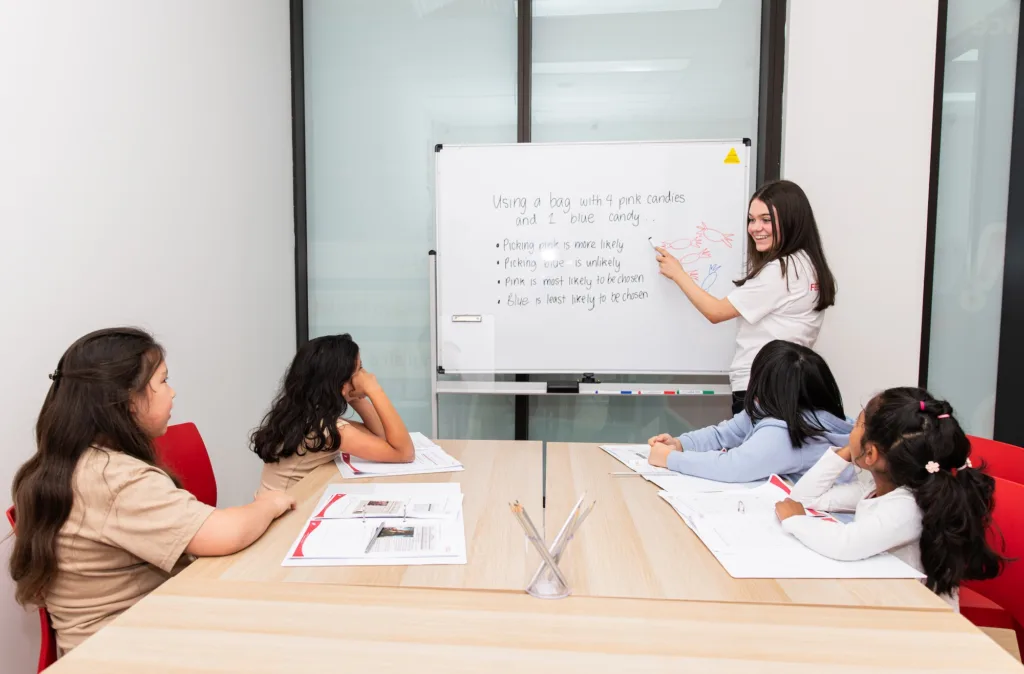
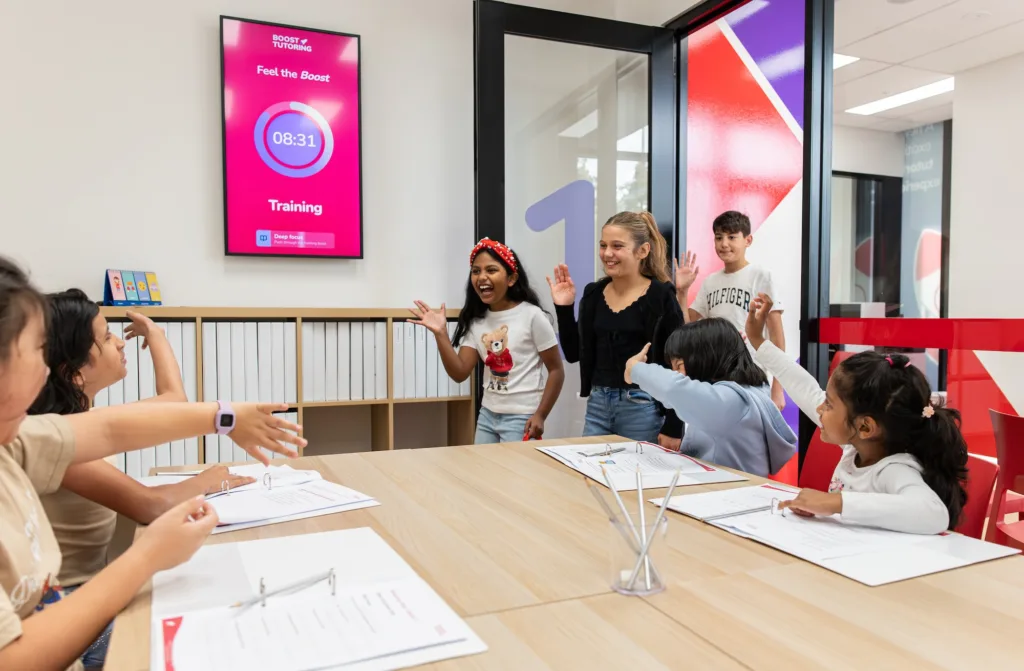
This is exactly why our holiday sessions in Castle Hill don’t try to cram a term’s worth of content into two weeks. Every session opens with five minutes of skills-based warm-up, the Prime stage, before moving into focused teaching on the specific gap we’re closing, then time for your child to rep the content themselves so it actually sticks. It’s the same structure we run all year, just aimed squarely at whatever’s been holding your child back this term, so the progress made over the break doesn’t quietly disappear once school routines take back over.
Small groups keep it social rather than another one-on-one grind that can feel like more schoolwork stacked on schoolwork, and because there’s no lock-in beyond the holiday block itself, it’s an easy way to test whether structured, consistent catch-up actually suits your child before committing to anything longer.
If your child’s finishing this term with a gap you can see clearly, whether that’s a maths topic that never fully clicked or writing that isn’t where it should be, the holidays are a genuinely good window to close it. Just make sure whatever programme you choose is built around repetition and a specific target, not just hours logged.
Book a free academic assessment and see exactly where your child’s foundations sit