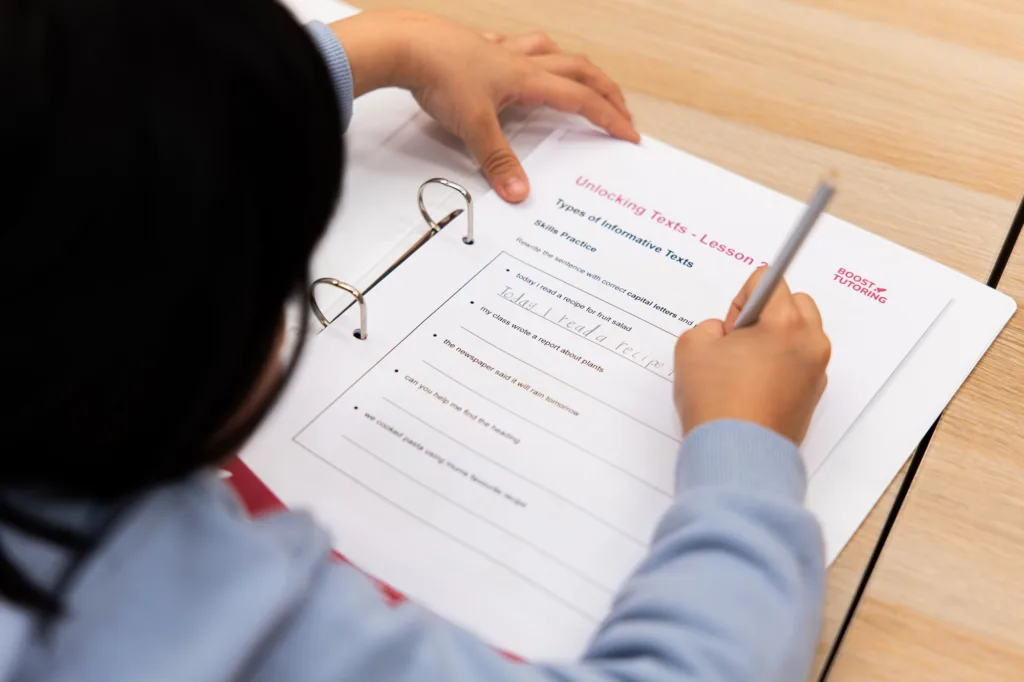
The homework routine that worked beautifully when your child was in Year 3 has a way of falling apart by Year 8. The quick afternoon session with you nearby, once the whole job, now covers barely a fraction of what a high schooler has to manage. That’s not a failure of the routine. It’s that homework routines aren’t one fixed thing. A good one looks very different at seven than it does at fifteen, and it has to grow as your child does.
So rather than a single formula, here’s what actually goes into a homework routine, and how it should change across the school years, for Castle Hill families trying to make the evenings work.
What a Good Homework Routine Actually Includes
The first thing to get straight is that a homework routine isn’t just “do the set homework.” The set homework is only part of it, and on plenty of nights there isn’t any. A routine built only around what the school sends collapses the moment nothing’s sent.
A good routine has three ingredients. The set work, when there is some. Reading, every day, whatever your child enjoys, because it’s the single highest-value thing a child can do and it shouldn’t depend on the school requiring it. And a bit of regular practice, times tables and number facts in primary, revision and consolidation later, because these only stick through repetition.
Thinking of the routine as those three things, rather than just the homework, is what keeps it running on the nights the school sets nothing, and what makes it actually build something over time rather than just getting tasks ticked off.
Primary Routines: Keep It Short and Supported
In the primary years, a homework routine should be short, supported and gentle.
Short, because a young child’s capacity for focused work after a full school day is genuinely limited. Fifteen to thirty minutes is plenty, and a routine that demands more will break and take the child’s goodwill with it.
Supported, because a young child can’t yet manage themselves. You’re nearby, helping them get started and keeping them on track, though the goal across primary is to gradually step back so they’re doing more of it alone by the end.
And focused on the basics: reading, number facts, and the set work when there is any. At this age the routine is really about building the habit itself, the simple expectation that there’s a time each day when a bit of work happens. Get that habit established early and it carries a child for years. The content matters less than the consistency.
High School Routines: Longer, Independent, Planned
By high school, the routine has to change shape, because the demands have.
Longer, because there’s simply more work, across many subjects, and it won’t fit into fifteen minutes anymore. A high school routine needs a real block of time most days.
Independent, because nobody is going to sit beside a teenager, and high school assumes they can work alone. The routine has to be something your child owns and runs themselves, with you stepping back to oversight rather than supervision.
And planned, which is the big new ingredient. In primary, homework is due tomorrow, so there’s nothing to plan. In high school, assessments land weeks in advance across eight subjects, so the routine has to include looking ahead, breaking big tasks into pieces, and working on things before they’re due. A routine that only handles tonight’s homework leaves a high schooler ambushed by the assessment they forgot was coming.
A high school routine that works usually has a fixed daily block, a planner that’s actually used to track what’s coming, and the phone in another room so the time is real. The principles are the same as primary, consistency, a set time and place, but scaled up and handed over.
How Boost Fits Into the Routine
Part of what Boost does is give a homework routine a reliable backbone, at any age.
Boost Accelerator is a short daily worksheet in maths and English, which slots straight into the routine as the daily-practice ingredient, the reps that keep the fundamentals sharp. It’s deliberately short, so it fits a tired primary child’s routine, and it builds exactly the daily-habit muscle a high schooler needs. And because it’s the same shape each day, it drops into the routine without a fresh decision every evening.
The weekly session adds a second fixed anchor, the same time each week with the same tutor, built around Prime, Train, Retain. Between them, they give a family two steady points to build the week’s routine around, rather than generating it from willpower every night.
A homework routine isn’t one thing you set up once. It’s something that grows with your child, short and supported early, longer and independent later. Get the ingredients right and let it evolve, and the evenings get a lot easier.
The best homework routine is the one that fits your child’s age and actually runs, most days, without a nightly fight. Keep it short and supported while they’re young, longer and independent as they grow, and anchored around daily reading and practice at every stage. That’s what quietly builds a strong student over the years.
Book a free academic assessment and see how Boost can anchor your child’s homework routine