Word problems are where a child who can do the maths often comes undone. Hand them a page of sums and they fly through it; wrap the same calculation in a sentence or two and they stall, staring, unsure where to even begin. It’s one of the most common frustrations in primary and early high school maths, and the good news is that there’s a reliable method for tackling any word problem, one a child can learn and apply every time.
Here’s a step-by-step guide to solving maths word problems, the method that works, the mistakes to avoid, and how to make it second nature.
The Method: A Step-by-Step Approach
Most children approach word problems by grabbing the numbers and guessing at what to do with them. The method below replaces that with a reliable sequence, and taught properly, it works on almost any word problem a child will meet.
Read it twice, slowly. The single most common error is rushing the reading. The first read is to get the gist; the second is to actually understand the situation. A word problem is a situation described in words before it’s a sum, and you can’t solve a situation you haven’t understood.
Find the question. Before touching any numbers, work out what the problem is actually asking you to find. Underlining it or saying it aloud helps. A child who’s clear on the question is solving the right problem; a child who isn’t is often solving a plausible wrong one.
Pull out what matters, and ignore what doesn’t. Word problems often include numbers or details that aren’t needed, deliberately. A child has to identify the information that’s actually relevant to the question, and set the rest aside.
Decide what to do. Now, and only now, work out which operation or operations will answer the question. This is the translation step, turning the words into maths, and it’s the one schools often assume rather than teach. Thinking about whether the answer should be bigger or smaller than the numbers given is a useful check here.
Solve it. This is the part the child could always do, the actual calculation, now applied to the right problem in the right way.
Check it makes sense. Finally, look at the answer against the question. Is it sensible? If a problem asks how many buses are needed and the answer is 3.4, something’s gone wrong. This final sense-check catches a surprising number of errors.
The Mistakes to Avoid
A few habits sink children on word problems, and naming them helps.
Grabbing the numbers and guessing the operation is the big one, usually a symptom of not reading properly. If a child’s first move is to start calculating, they’ve skipped the thinking.
Rushing. Word problems reward slowing down, and most word-problem errors come from going too fast through the reading.
Ignoring the sense of the answer. A child who writes down whatever the calculation produces, without asking whether it’s plausible, misses the easiest check there is.
And giving up at the first difficulty. A word problem can look intimidating as a block of text, and some children freeze before they’ve even started. The method helps here too, because having a sequence of steps to follow turns an intimidating problem into a series of small, doable ones.
Why Practising the Method Matters
Knowing the method and using it automatically are two different things, and the gap between them is practice.
A child who’s walked through this sequence many times stops needing to think about the steps; they just do them, which is exactly what you want under the pressure of a test. And word problems are everywhere worth being ready for, they make up a large share of NAPLAN numeracy, the OC and Selective maths sections, and ordinary class tests, precisely because they test reasoning and comprehension rather than just calculation.
It’s also worth knowing that word problems sit at the meeting point of maths and reading. A child whose reading comprehension is shaky will find word problems hard no matter how good their arithmetic is, which is why strengthening reading often lifts word-problem results. The method above helps, but it works best alongside solid reading.
How We Teach Word Problems at Boost in Beaumont Hills
Word problems are exactly the kind of thing the Boost approach suits, because we teach both maths and English, and word problems sit right where the two meet.
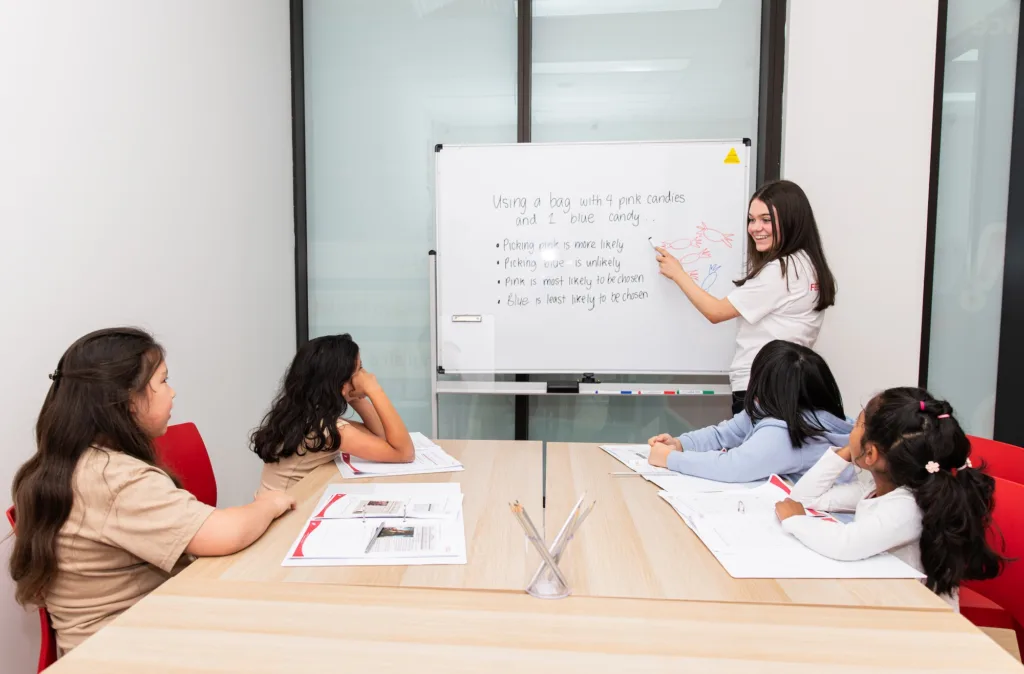
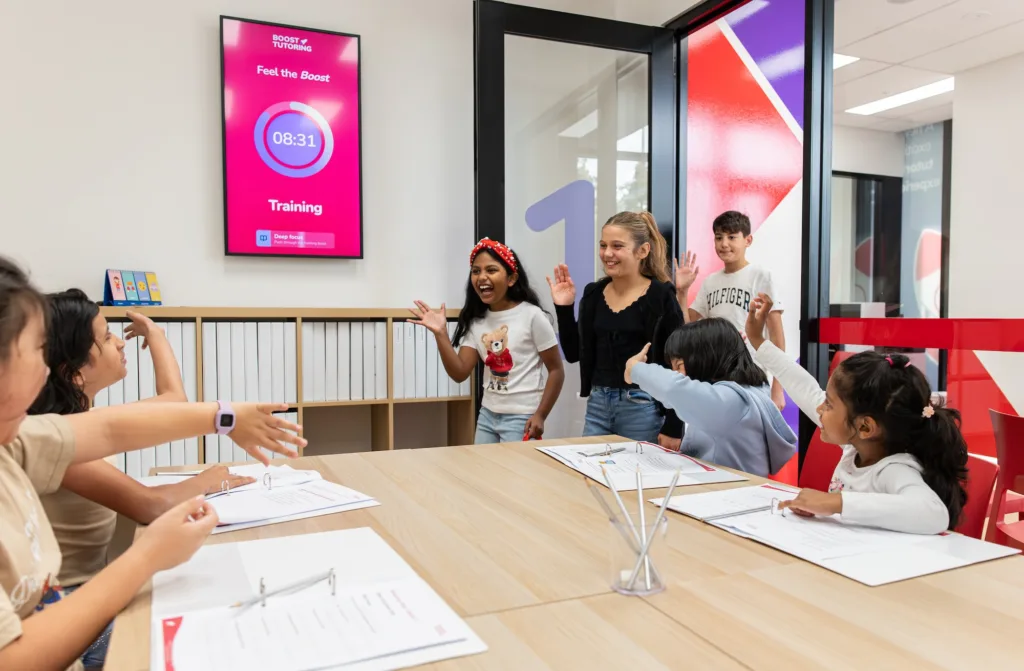
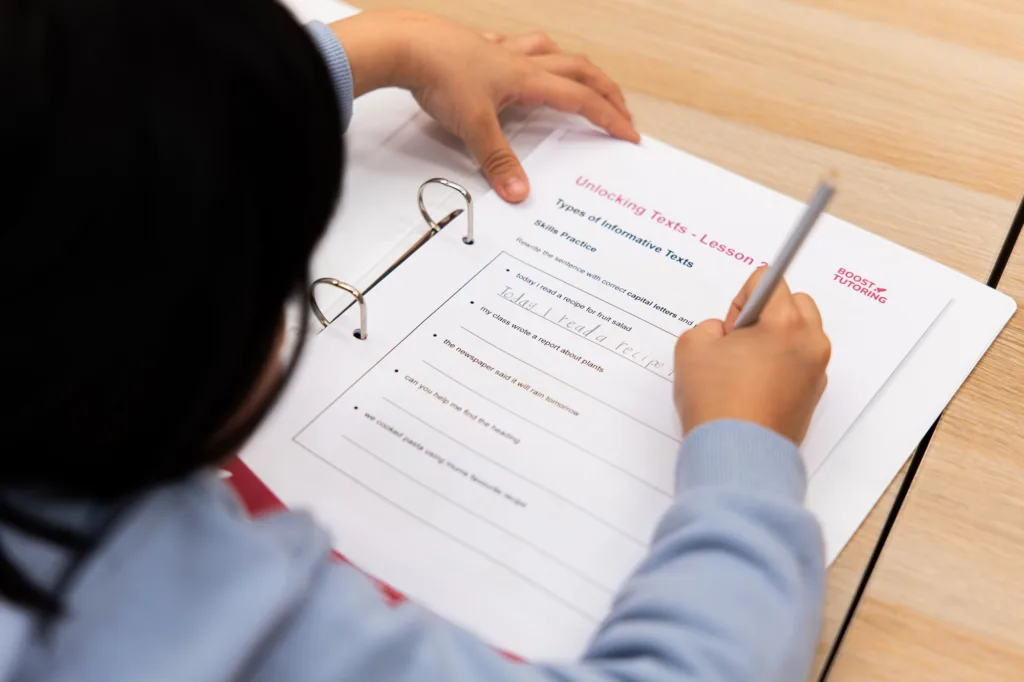
Sessions run in small groups of six to eight with the same tutor each week, aligned to the NSW syllabus, built around Prime, Train, Retain. We teach the method explicitly, read carefully, find the question, work out what’s being asked, then calculate and check, and students practise it until it’s automatic. And because Boost students work on reading as well as maths, the comprehension that underpins word problems is being strengthened at the same time.
The result is a child who, faced with a word problem, has a reliable way in, rather than grabbing numbers and hoping.
Word problems stop being a wall once a child has a method: read it twice, find the question, pull out what matters, decide what to do, solve it, and check it makes sense. Practise that sequence until it’s automatic, keep the reading strong underneath it, and the maths your child can already do finally gets its chance to show. The daily reps are where that method becomes second nature.
See how Boost Accelerator builds the daily maths and reading practice that makes word problems click