It’s a question most Castle Hill parents ask themselves at some point, usually after a report card, a parent-teacher night, or a particularly grim hour at the kitchen table. Does my child actually need a tutor? Or am I overreacting to a wobble that’ll sort itself out?
Both are possible, which is what makes the question hard. Plenty of children get tutoring they don’t need, and plenty go without it far longer than they should. Here’s how to tell the difference honestly, including the reasons that aren’t good enough on their own.
The Real Signs
Start with the ones that matter.
Gaps that aren’t closing on their own are the clearest signal. Every child has a topic they find hard. The question is whether they’re getting past it. A child who was shaky on fractions in term one and is still shaky in term three isn’t having a bad week. They have a gap, and gaps in maths in particular don’t sit still. They compound.
Confidence dropping is the second, and it’s often the earliest. Listen for the language. “I’m bad at maths.” “I don’t get it.” “Everyone else is faster than me.” A child who has decided they can’t do something stops trying, and stopping trying is what turns a small gap into a real one. This is worth acting on quickly, because the belief hardens faster than the gap does.
Homework taking far longer than it should is the third. If a task that ought to take twenty minutes is eating an hour, or if it only gets done with you sitting beside them the whole way, the work has probably moved ahead of where your child actually is.
A report that genuinely surprised you is the fourth. Not a mark you were unhappy with, but one that didn’t match your picture of your child. That mismatch usually means something has been happening quietly that you weren’t seeing.
And the fifth is avoidance. A child who suddenly finds reasons not to start, who rushes carelessly through work, or who’s gone quiet about school altogether, is often avoiding discomfort rather than being lazy.
The Reasons That Aren’t Enough on Their Own
Now the honest part, because Castle Hill has a particular culture around this.
“Everyone else is doing it” is not a reason. Tutoring works when it’s solving a real problem or building toward a real goal. It doesn’t work as insurance against a vague sense that other families are getting ahead. If you can’t name what you’re actually trying to achieve, it’s worth pausing until you can.
One bad mark is not a reason either. Children have off days, and a single disappointing result in an otherwise steady picture is usually just noise. Look for a pattern over a term, not a single data point.
A child being average is not a reason. Average is, by definition, where most children sit, and a child tracking along steadily at their year level is not behind. They may still benefit from support if you want to stretch them, but that’s a choice about ambition, not a response to a problem, and it’s worth being clear with yourself about which one you’re making.
And your own anxiety is not a reason, though it’s an understandable one. If the worry is yours rather than a response to something in your child, the first useful step is information, not enrolment.
The Good Reasons That Aren’t Problems
Worth saying: not all good reasons involve something being wrong.
A capable child who’s coasting can do more with the right structure. A family aiming at OC or Selective is working toward a genuinely high bar, and preparation for that is a legitimate goal rather than a rescue mission. And a child heading into high school with foundations you want firmed up first is a sensible, proactive case.
None of these mean your child is behind. They mean you’ve got a goal, which is a perfectly good basis for getting help.
How to Actually Decide
Here’s the shortcut, and it’s simpler than agonising over it.
Vague worry is hard to act on. Specific information isn’t. So rather than trying to reason your way to an answer from the outside, get a clear read on where your child actually sits. Which topics are secure, which are shaky, and whether the wobble you’ve noticed is a blip or a gap.
That one step resolves the question for most families, and it cuts both ways. Sometimes it reveals a gap that’s bigger and further back than anyone realised, and you’re glad you looked. And sometimes it confirms your child is tracking fine, and you can stop worrying, which is worth something too.
How We Approach This at Boost
We’d rather tell a family their child is doing fine than enrol a child who doesn’t need us. So the first thing we do, before anything else, is work out exactly where a child sits. Not a chat at the front desk, but a proper look at what’s solid and what isn’t.
If there’s a gap, you’ll see it clearly, along with where it actually started, which is often further back than expected. If there isn’t, you’ll know that too.
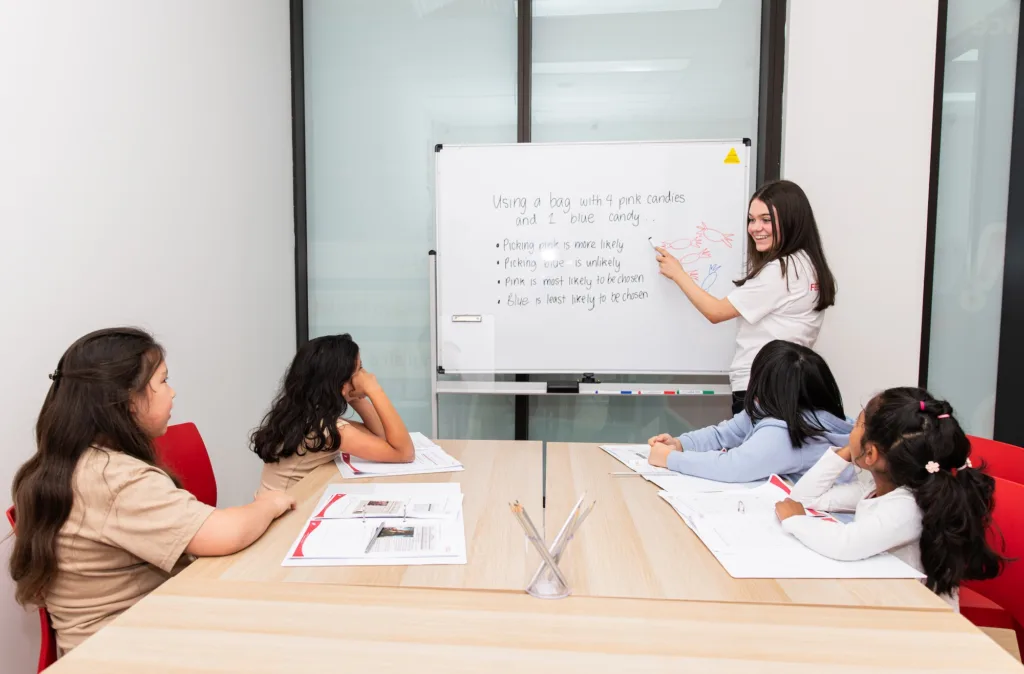
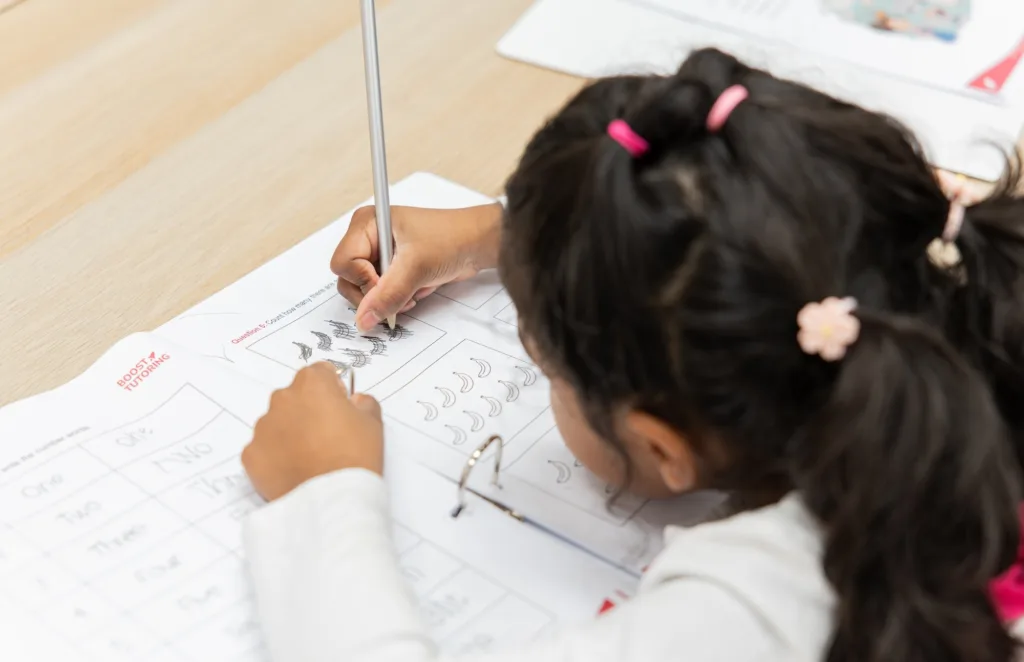
For families who go ahead, sessions run in small groups of six to eight with the same tutor each week, aligned to the NSW syllabus, built around Prime, Train, Retain, with a short daily worksheet at home to keep the reps ticking over.
The question isn’t really whether your child needs a tutor. It’s what your child actually needs, and you can’t answer that from the outside. Find out where they stand, and the decision usually makes itself.
Book a free academic assessment and see exactly where your child’s foundations sit