When your child needs help with maths, the search turns up the same thing everyone else sees. Dozens of options in Castle Hill, all qualified, all confident, all promising results. And most advice about choosing between them is generic: check the reviews, ask about class sizes, meet the tutor. Useful enough, but it misses something. Choosing a maths tutor in Castle Hill isn’t quite the same as choosing any tutor, because maths has a few specific traps that generic advice sails right past.
The reason comes down to one fact about the subject. Maths is cumulative. Almost every topic is built directly on an earlier one. Fractions lean on times tables. Algebra leans on fractions. Nothing stands alone, and a gap anywhere underneath quietly undermines everything above it. That single fact changes what a good maths tutor has to do, and it’s the thread running through everything below. Get these right and you’ll find someone who actually moves your child forward. Miss them and you can pay for months of help that keeps your child busy without building anything.
They Find Where It Actually Went Wrong
Here’s the thing most parents don’t expect. The place your child is coming unstuck is almost never where the problem began.
A Year 6 student lost in fractions is often really stuck on something from Year 4. A Year 8 student drowning in algebra is often missing something from Year 5. The current topic is just where the gap finally became visible, not where it lives.
A good maths tutor knows this and goes looking for the real starting point before teaching anything. They work out what’s genuinely solid and what only looks solid, because a child can get answers right for a while by memorising steps they don’t understand. Finding that soft spot is the single most valuable thing a maths tutor does, and it’s the thing a plain homework helper never gets to, because they’re too busy helping with tonight’s questions to notice the problem sitting two years below.
So when you’re choosing, ask a simple question: how will you work out where my child actually sits before you start? A good maths tutor has a real answer. A weak one talks about getting straight into the current topic, which tells you they’re about to build on the same ground that’s already cracked.
They Teach Understanding, Not Tricks
This is the big one, and it’s specific to maths.
Maths is full of shortcuts that produce right answers without any understanding. Flip and multiply. Move the decimal. Cross-multiply. A tutor can teach a child a stack of these, and tonight’s homework will come back correct, and everyone will feel like progress has been made. It hasn’t. A child who has memorised a trick can apply it to questions that look exactly like the ones they practised, and comes unstuck the moment a question is worded differently or combines two ideas.
A good maths tutor resists the quick win of a trick and teaches the child to understand what’s actually going on. Why the method works, not just how to do it. It’s slower at first, and it looks less impressive than a child suddenly getting ten questions right. But it’s the difference between a child who can only repeat and a child who can think, and only the second one keeps progressing when the maths gets harder.
This is hard to spot from the outside, so watch for the tell. A tutor focused on understanding talks about whether your child gets it. A tutor focused on output talks about marks and finished worksheets. Both sound positive. Only one is building something that lasts.
Good at Maths Isn’t the Same as Good at Teaching It
One more trap worth naming. Plenty of people are excellent at maths and poor at teaching it to a ten-year-old who’s lost confidence. The two are genuinely different skills.
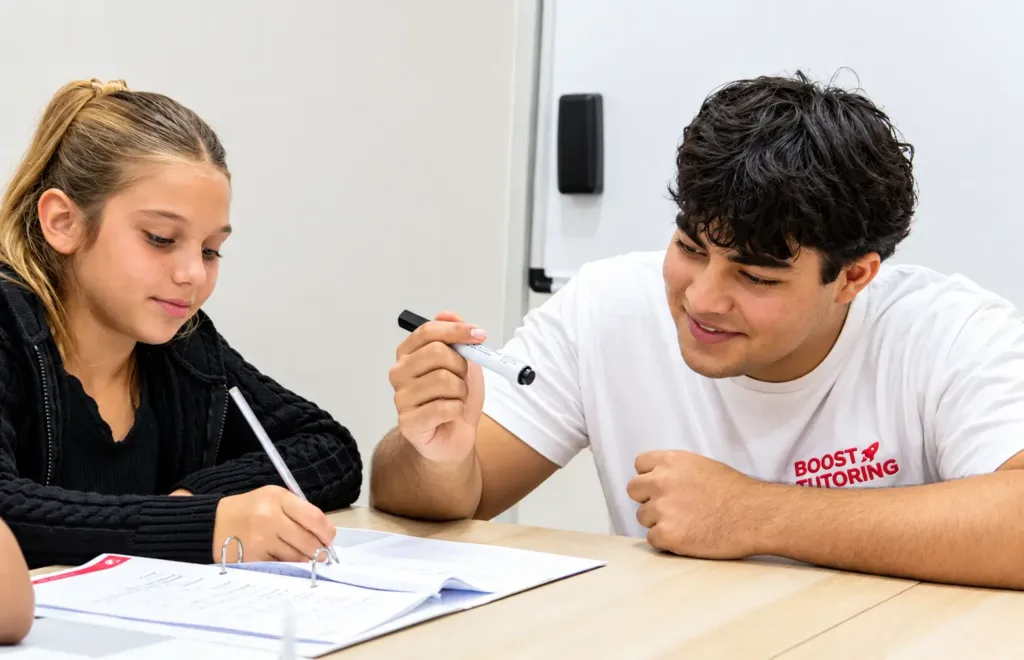
A brilliant maths student who can’t explain their thinking simply, or who gets impatient when a child doesn’t follow, can do more harm than good, especially to a child who’s already decided they’re not a maths person. What you want is someone who can meet a child where they are, explain the same idea three different ways until one lands, and keep the child’s confidence intact while they do it.
Qualifications tell you someone knows maths. They don’t tell you whether they can teach it, and for your child, the second one matters far more. A tutor your child trusts and understands will always beat a more decorated one your child is quietly afraid to ask questions of.
How We Approach Maths Tutoring in Castle Hill
This is the thinking we built Boost around. Every child starts by working out exactly where they sit, because a maths wall in Year 6 so often traces back to Year 4, and there’s no sense teaching this year’s content on top of last year’s missing piece.
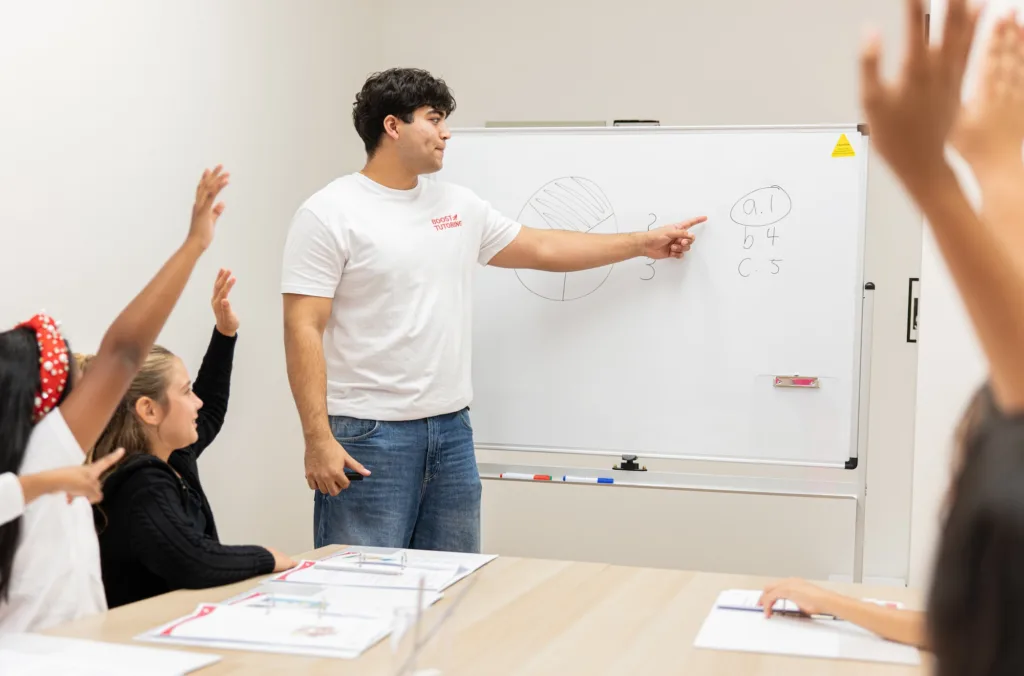
From there, maths runs in small groups of six to eight with the same tutor each week, aligned to the NSW syllabus. Each session opens with a few minutes of skills work to keep the times tables and mental maths automatic, because fluency in the fundamentals frees a child’s mind to think about the harder problem on top. Then comes real teaching, with the reasoning made visible rather than a bag of tricks, and then the student works through it themselves until it genuinely holds. We call it Prime, Train, Retain. It carries on at home through a short daily worksheet, because maths is built on reps.
Our tutors are chosen for both things that matter: they know their maths, and they can actually teach it to a child.
Choosing a maths tutor isn’t about finding the most qualified person in Castle Hill. It’s about finding someone who’ll locate the real gap, teach understanding rather than tricks, and keep your child’s confidence intact while they build. The first step is simply finding out where your child actually stands.
Book a free academic assessment and find out exactly where your child’s maths sits