
Every tutoring centre looks good on its website. The photos are bright, the reviews are five stars, the promises are confident, and the qualifications are listed in full. None of it tells you whether the place is actually any good, because none of it can be checked from your kitchen table. The only thing that reliably tells you whether a centre is right for your child is seeing it in person, and getting straight, specific answers from the people who’d be teaching your child.
The catch is that a visit is only as useful as your ability to read it. Most parents go in without quite knowing what they’re looking at. So here’s how to choose a tutoring centre in Castle Hill the way that actually works: by seeing it for yourself, and knowing exactly what to watch for before, during and after.
Why Seeing It in Person Is the Real Test
Websites and reviews are marketing. They’re written to win you over, and even the honest ones can’t tell you the thing that matters most: how this particular centre will work for your particular child. A glowing review from another family tells you the centre suited their child, not that it’ll suit yours.
Seeing it in person cuts through all of that. When you visit, meet the people who run it, and watch how they talk about your child, you get the real thing rather than the polished version. Ask whether you can come in, look at the space, and meet whoever would actually be teaching your child. That’s worth more than every testimonial combined. But only if you treat it as a genuine evaluation rather than a formality. Walk in knowing what good looks like and a short visit tells you almost everything. Walk in unprepared and you’ll come away with a vague good feeling, which isn’t much to base a decision on.
Before You Visit: Know What “Good” Looks Like
The work starts before you arrive. Two things are worth sorting out first.
Know what your child needs. Are you after help with a specific weak spot, ongoing support to keep foundations solid, or preparation for an exam? You can’t judge whether a centre fits your child if you haven’t decided what fit even means. A few minutes of honesty here makes the whole visit sharper.
Know the questions you want answered. A handful are worth asking up front, and the answers matter enormously. How do you work out where my child sits before starting? How many children are in a class? Will my child have the same tutor each week? What happens between sessions, and how will I hear how they’re going? At a strong centre these come back quickly and specifically. At a weak one they come back slowly and vaguely, and that vagueness is itself an answer.
During and After the Visit: What to Watch and How to Decide
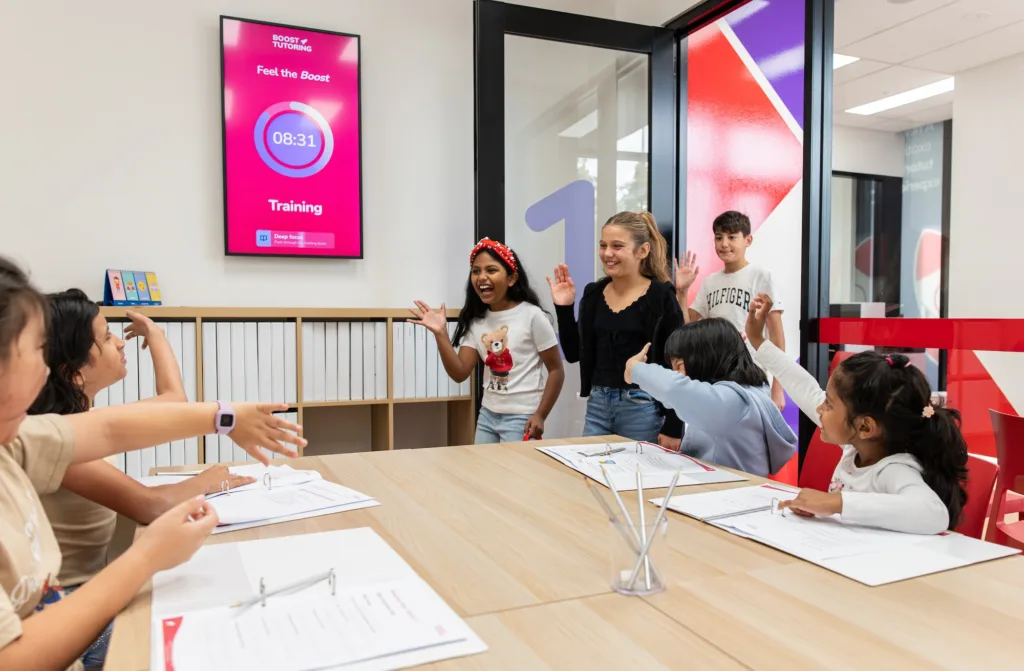
If you get the chance to see a session, watch the tutor more than the worksheet. A good tutor moves between the children, knows them by name, and notices the quiet one who’s gone still rather than only helping the loud one with their hand up. You want to see teaching, not just supervision, a tutor explaining and guiding rather than a room of kids working silently while an adult watches the clock. And if your child is with you, keep half an eye on how they respond to the place. Comfort and curiosity tell you about fit, which no website ever can.
Afterwards, two things decide it. The first is what the centre tells you about your child. A good one will assess where your child sits and have something specific to say: what they noticed, where the gaps seem to be, what they’d work on first. A shrug and a “she’ll be fine” suggests nobody really looked. The second is your own read on the people and the place. Did they ask about your child, or just talk about themselves? Were they straight with you, or all sales? You can usually feel the difference.
Then decide on what you saw, not on what you read beforehand or what the brochure promised. If the people were specific, the answers were clear, and the place felt right for your child, that’s a real signal worth acting on. If something felt off, trust it. There are plenty of centres around, and the wrong one isn’t worth settling for just because it was convenient.
How to Choose a Tutoring Centre in Castle Hill, the Boost View
We’d want you to put Boost through exactly this. The free academic assessment is the natural first step, because it’s where you see how we actually work and get a clear, specific read on your child before any commitment at all.
Here’s what you’d find. We work out where your child sits before they start, so the teaching is matched from day one. Classes are small, six to eight, with the same tutor each week, so your child is known rather than processed and you’re not handed a different face every term. Sessions are built around real teaching, Prime, Train, Retain, not silent worksheet time. You hear how your child is going between sessions. And it runs as a weekly membership with no large upfront term fee and no lock-in, because we’d rather earn each week than bind you to a contract before you’ve seen a thing.
But none of that should be taken on trust, which is rather the whole point of this piece. The best way to choose is to see for yourself, and the most useful thing you can do first is get a clear picture of what your child actually needs, so you know exactly what you’re looking for.
A good website proves nothing. Seeing a centre properly, with the right questions in hand, proves almost everything. Decide what your child needs, watch the right things, and trust what’s in front of you over what’s on the screen.
Book a free academic assessment and see where your child really sits.