Report cards land, or a run of test results comes home, and something in your child shifts overnight. The kid who used to have a go at maths homework now says “I’m just bad at it” and closes the laptop. The one who used to read out loud at the dinner table goes quiet when you ask how school was. A rough term does more than dent a mark. It can quietly convince a child that this is just who they are now, and learning how to rebuild confidence after a term like that is the part that actually takes work.
Most parents can tell when a term hasn’t gone well. What’s harder to see is what it’s done underneath the marks. A single bad result rarely knocks a child’s confidence on its own. It’s the pattern that forms afterwards: avoiding the subject, downplaying effort so a low mark doesn’t sting as much, or quietly deciding they’re “not a maths person” or “not a writing person.” By the time a parent notices, the child has often already rebuilt their whole approach to a subject around not trying, because not trying protects them from finding out they tried and it still wasn’t enough. Improving the next result is the easy part. Undoing that logic is the real work.
A Bad Term Is a Data Point, Not a Verdict
The first job is language, and it starts with you. “You’re behind” and “you’re falling behind in maths” sound like permanent conditions. A term of results is one data point, not a diagnosis. Kids absorb the framing adults give them faster than they absorb the actual content, so if the term gets talked about at home as a crisis, your child will treat it as one. If it gets talked about as one patch of the year that needs a plan, they’re far more likely to treat it that way too.
This doesn’t mean pretending the results were fine. It means being honest about the term while being just as clear that a term isn’t a verdict on your child, and that a clear plan going forward matters more than the mark that’s already been and gone.
Start With Something They Can Already Do
After a rough term, the instinct is often to go straight back over the hardest material, the exact topic that went wrong. That’s usually the wrong order. A child whose confidence is already low needs an early win before they’re asked to stretch again, not another attempt at the thing that just knocked them down.
Open with a question, a page, or a task you know they can complete without help. Let them finish it, notice it, and only then move into the harder content. Confidence is rebuilt in that order: small success first, difficulty second, not the other way around. It sounds simple, but most catch-up efforts skip straight to the hard part and wonder why the child disengages within ten minutes.
How to Rebuild Confidence With Consistency, Not a Pep Talk
Pep talks feel good in the moment and fade by the next morning. What actually moves a child from “I can’t do this” to “I can do this” is repetition: the same type of question, attempted regularly, until it stops being frightening. This is where a lot of well-meaning support goes wrong, one big catch-up session on the weekend, then nothing until the next scare.
A short, consistent routine, even ten minutes a few times a week, builds momentum in a way that occasional effort never does. Structure beats intensity here, every time. A regular slot in the week, at the same time, with the same low-key expectation, does more for a shaken child than an intense one-off session ever will, because it tells them this isn’t a crisis response, it’s just what happens now.
Praise the Process, Not Just the Result
“You’re so clever” is a nice thing to say, but it puts the weight on ability, something a child either has or doesn’t. “You worked through that one properly” puts the weight on effort, something they control every time. After a rough term, this shift matters more than usual, because a child who’s just had their sense of ability shaken needs to hear that trying is what’s actually being noticed and valued, not just the mark at the end of it.
Over weeks, that reframing is what gets a child attempting hard questions again instead of quietly avoiding them, and it’s a habit parents can build into daily conversation without any extra time set aside.
Give It Time, and Watch for the Real Signs of Progress
Confidence returns more slowly than it drops, and it rarely announces itself with a big result straight away. The early signs are smaller: your child starts homework without being asked twice, has a go at a question they’d normally skip, or mentions something from class without being prompted. Those are the real markers that things are turning around, well before the next report card catches up. Watching for them, rather than only watching for grades, keeps you from writing off a plan that’s actually working just because the next test hasn’t caught up with the effort yet.
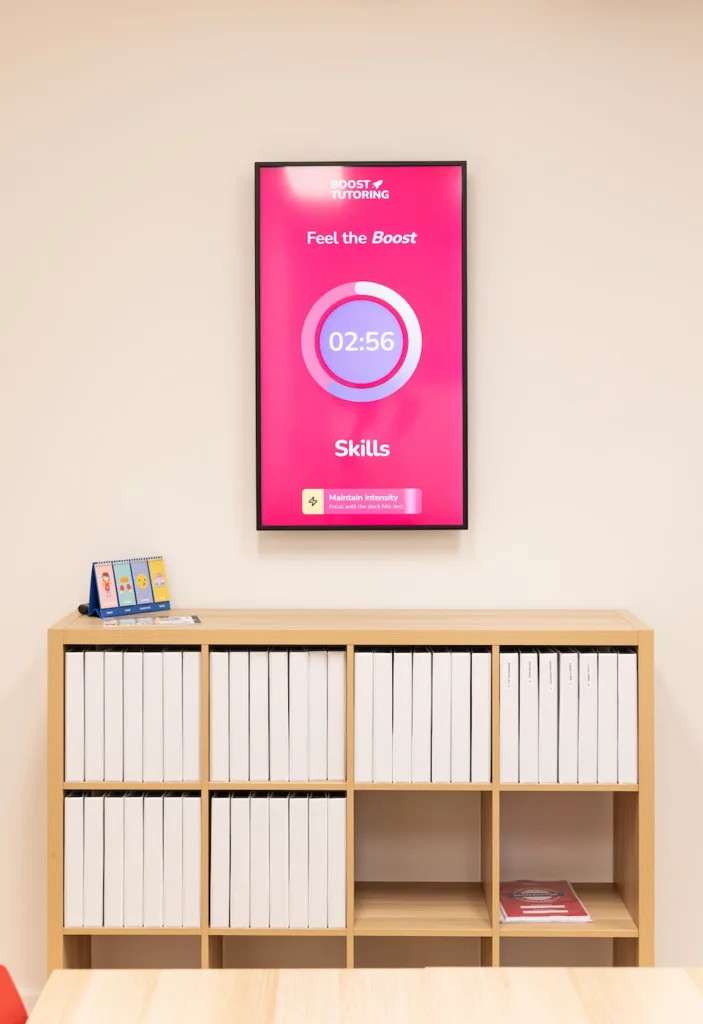
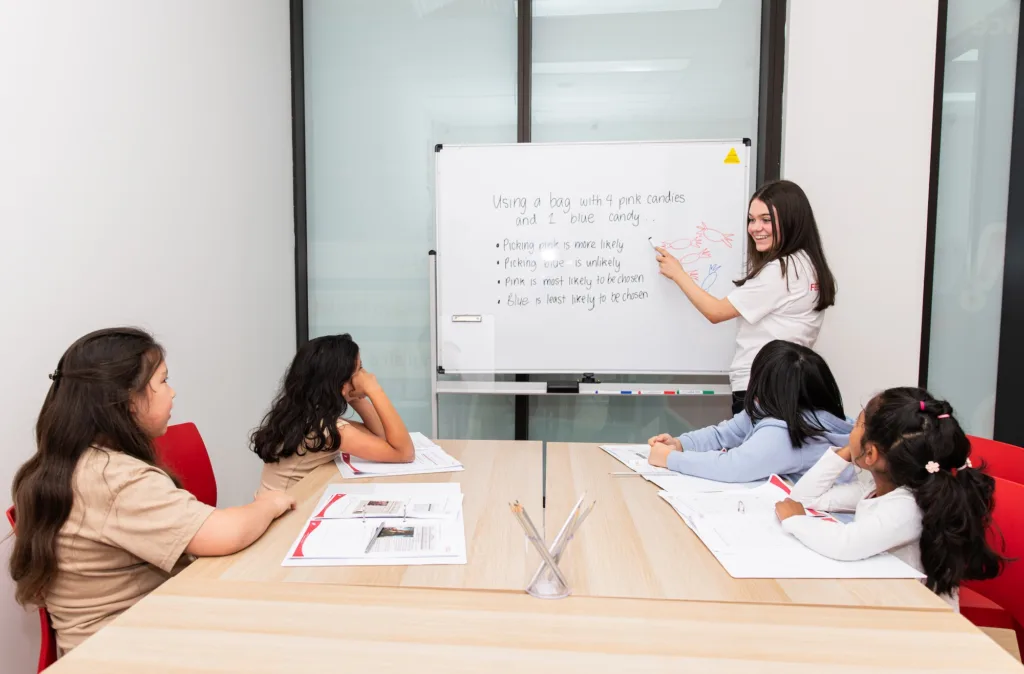
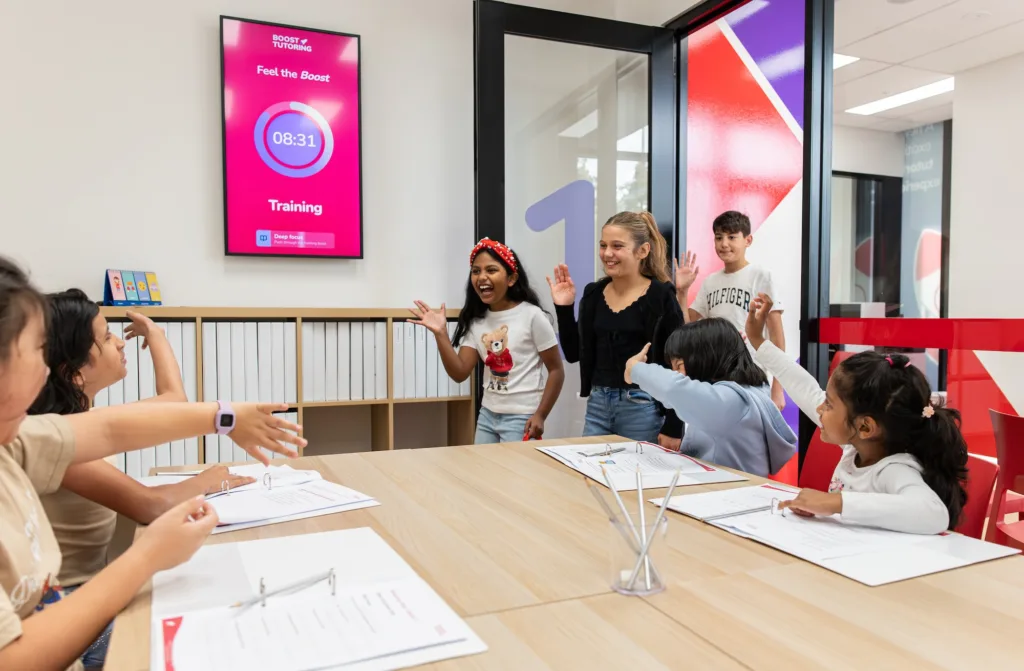
This is part of why every Boost session opens with five minutes of easy, familiar skills work before the harder curriculum content starts. It’s not filler. It’s a deliberate first win, every single session, so a child walks into the hour already succeeding at something before they’re asked to stretch. Paired with a small group of six to eight students, there’s no spotlight on a wrong answer and no one waiting to watch it happen. Confidence gets rebuilt the same way it was lost: in reps, consistently, at a size where a child can be seen without being singled out.
If your child has had a rough term and you’re not sure whether it’s a blip or the start of something bigger, a free academic assessment is a straightforward way to find out. It gives you a clear, honest read on where they actually sit, not just where the last report card said they landed.
Book a free academic assessment and see exactly where your child’s foundations sit