
Most advice about NAPLAN preparation falls into one of two camps: panic and buy every practice book going, or relax because “it doesn’t really matter.” Neither is much help to a Castle Hill parent who just wants to know two practical things. What’s actually on this test, and how can I sensibly help my child with it?
So that’s what this is. A plain walk through the four parts of NAPLAN, where children tend to lose ground in each, and the genuinely useful ways to prepare, without turning your term into a grind. Here’s NAPLAN preparation in Castle Hill, the practical version.
What NAPLAN Actually Tests
NAPLAN runs in Years 3, 5, 7 and 9, is held in March, and covers four areas: Reading, Writing, Language Conventions, and Numeracy. It’s a snapshot of literacy and numeracy against national expectations, not a pass-or-fail exam, and not an entry test for anything.
The useful insight hiding in that list is that the four areas reward quite different things, which means “preparing for NAPLAN” isn’t really one task. It’s four smaller ones. Knowing what each part rewards is what lets you help efficiently, rather than throwing practice papers at the whole thing and hoping.
Where Students Lose Ground, Domain by Domain
Reading is comprehension under time pressure. Children read a series of texts and answer questions about them, and the marks tend to be lost less on reading the words than on understanding them, especially the questions that ask a child to infer something a text implies but doesn’t say outright. The most useful preparation here isn’t a worksheet, it’s a child who reads widely and is in the habit of thinking about what they’ve read. Talking with your child about a book, asking why a character did something or what might happen next, builds the exact skill this section tests.
Writing is a single extended piece written in response to a prompt, marked against clear criteria, including structure, ideas, vocabulary, spelling and punctuation. The most common place children lose marks is structure. A piece with strong ideas but no clear shape scores below a more ordinary piece that’s well organised. So the highest-value preparation is teaching a child to plan: a clear opening, a developed middle, a deliberate ending. Practising a couple of well-structured pieces beats writing ten unplanned ones.
Language Conventions covers spelling, grammar and punctuation. This is the most directly teachable section of the four, and the one where short, regular practice genuinely pays off. It rewards accuracy with the building blocks of writing, the things that are easy to drill in small doses and hard to fake. A few minutes regularly does far more here than one long session occasionally.
Numeracy is where the surprise often hides. The maths itself is usually well within a child’s reach. The marks are lost on reading the question. NAPLAN numeracy leans heavily on worded problems, and a child who can do the calculation but misreads what’s being asked, or simply rushes, loses marks on maths they genuinely know. The most useful preparation here is as much careful reading as it is number practice: slow down, read it twice, and work out what the question is really asking before reaching for the sum.
The Smartest Way to Prepare
Pull those threads together and a sensible plan appears, and it’s lighter than the practice-book industry would have you believe.
Build the fundamentals across the year, because most of what NAPLAN tests is accumulated, not crammable. A child who reads, writes and practises maths regularly is doing the real preparation without it ever being labelled as such.
Add targeted familiarity closer to the test, a handful of practice runs so the format, the timing and the question types aren’t a surprise on the day. The goal is comfort, not exhaustion. Past a certain point, more practice papers stop helping and start building dread.
And keep the household calm. The single biggest thing that pulls down a capable child’s NAPLAN result is nerves, and nerves are contagious. Treat NAPLAN as a routine check-up rather than a make-or-break event, and your child walks in steadier, which tends to show in the result.
That’s the whole plan. Strong year-round habits, a little focused familiarity, and a calm tone. It works better than a frantic term, and it costs your child far less stress along the way.
How We Approach NAPLAN Preparation in Castle Hill
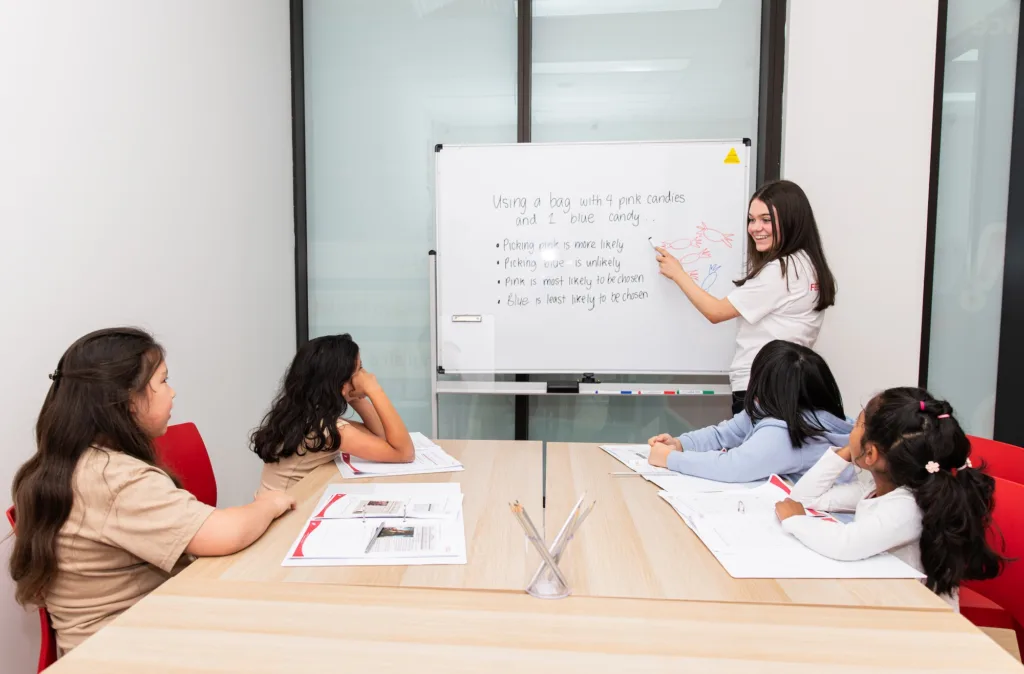
We prepare students for NAPLAN across Years 3, 5, 7 and 9, and we do it the way the test actually rewards. Most of the work is the steady, year-round kind: the reading and comprehension, the writing structure, the spelling and grammar, and the mental maths and careful problem-reading that the four sections lean on. Sessions run in small groups of six to eight with the same tutor, aligned to the NSW syllabus, built around Prime, Train, Retain, with a short daily worksheet at home to keep the fundamentals sharp.
Closer to the test, we add the targeted familiarity, practising the format and the question types so nothing on the day catches a child off guard. By the time NAPLAN week arrives, the real work is long done.
NAPLAN isn’t one big thing to fear. It’s four ordinary skills, built steadily and practised a little, in a child who walks in calm. Prepare for it that way and it stops being a source of stress and becomes what it was always meant to be: a useful check on how your child is tracking.
Book a free academic assessment and see where your child really sits.