
Your Year 4 child reads the practice passage aloud without a single stumble, then stares blankly when asked what it was actually about.
That gap between reading the words and understanding them sits at the centre of NAPLAN reading preparation, and it catches confident readers off guard.
Comprehension gets stronger in small doses: pointing to the line that proves an answer, working out tricky words from context, explaining how a choice was made. A tenth test paper adds little until then. NAPLAN flips from story to fact sheet without warning, so both get practice.
What Reading Skills Does NAPLAN Actually Test?
NAPLAN reading tests reach well past decoding words on a page, and the real target is whether your child can locate information, connect ideas and explain what they’ve read. That’s harder than it sounds, because comprehension rarely gets the classroom time it deserves.
Comprehension averaged just 23 per cent of reading and language instruction time, according to a 2024 review in Scientific Studies of Reading.
Finding Information and Connecting Ideas
Locating explicit information sounds simple, until a passage buries the detail three paragraphs in rather than stating it up front. Pulling details from different paragraphs into one main idea or purpose is the bigger job, and the first answer that looks familiar rarely gets a student there.
Making Inferences and Interpreting Meaning
That gap shows up hardest in inference questions, where the answer is implied and no sentence in the passage states it outright. A character glances at the clock and grabs her bag. She’s probably late, yet “she overslept” goes a step further than the clues allow.
What Can Primary Students Do to Improve Reading Comprehension?
These skills get built in ordinary reading time, from a bedtime chapter to a library book on the bus. An extra question, like what the character wanted, is where the change starts.
Read for Meaning, Not Just Completion
Pausing after a paragraph to summarise its key point catches confusion early, long before an entire page has slipped past unnoticed.
Main idea and vocabulary in context come first in the NSW Department of Education’s Stage 2 reading strategies, with inference layered on top. A child who can say what the author was trying to achieve has moved past retelling the plot, and that’s reading for meaning.
Prove the Answer From the Text
Why did you choose that answer? Parents can put it to a child after any answer, right or wrong. Children in control of the text usually have a finger on the page before they reply: “second paragraph, the line about the fox.” They’ve checked every option against the passage first.
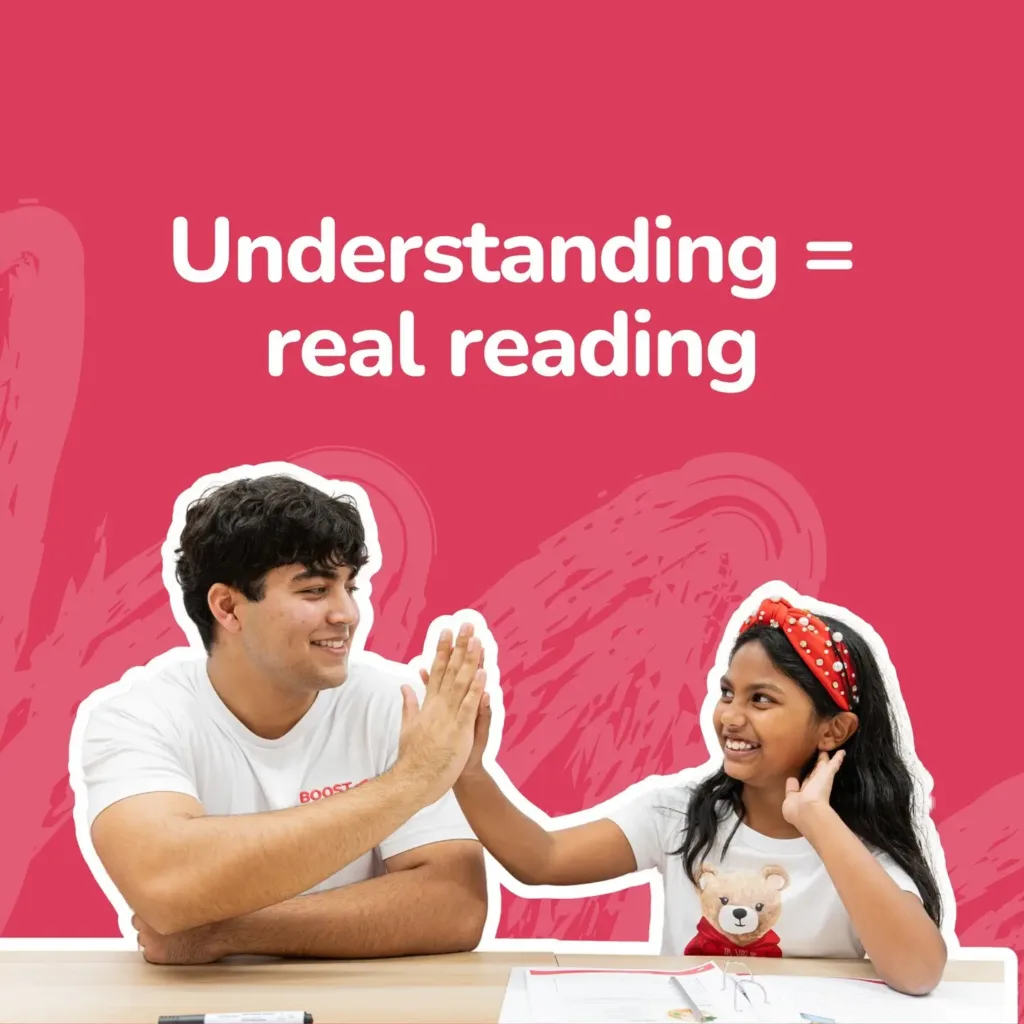
Alt text: Boost tutor and student sharing a light moment during a NAPLAN reading preparation tutoring session
File name: naplan-reading-preparation-tutoring-session.mp4
Caption: A lighter moment from a Boost tutoring session, part of the steady weekly routine behind NAPLAN reading preparation.
How Should Parents Structure NAPLAN Reading Practice?
Preparation usually swings between two extremes: barely any structure, or turning every reading session into a test. As we have explained before, cramming for NAPLAN rarely pays off, and reading is no exception.
Use Different Texts and Question Types
A steady diet of the same text type builds a narrow kind of confidence. Mixing fiction with non-fiction, and short passages with longer ones, keeps that confidence flexible.
The NSW Department of Education’s own teacher training on selecting texts stresses matching complexity to the reader, alongside genuine reading assessment, and literal, inferential and vocabulary questions each demand something slightly different.
Literal and inferential questions ask for different things, and vocabulary questions differ again. Text complexity has to suit the reader, according to the NSW Department of Education’s teacher training on selecting texts. A student who only ever practises one type will find the others unfamiliar under pressure.
Turn Mistakes Into Targeted Practice
A wrong answer usually points to one specific skill gap, whether that’s vocabulary, inference or a missed detail, and that gap is what’s worth revisiting. Working through the same skill again with a different passage tests whether it has actually closed. Prompts can be pulled back gradually as a student starts finding evidence without being asked, which is a useful sign of progress.
How to Tell the Practice Is Paying Off
Halfway through a story, the child stops and asks why a character did something, without being nudged. Answers get shorter but still hit the mark, and the second and third read-throughs before answering happen less often. That’s inference and vocabulary skills settling in.
Where Can Families Get NAPLAN Reading Support in Castle Hill?
Families in Castle Hill often come across Boost first through primary maths tutoring, then start looking for the same structured support for reading once NAPLAN gets closer.
Look for Skills-Based English Support
English support worth choosing follows the NSW syllabus and opens with a proper reading comprehension assessment, so gaps are found before any teaching begins. Boost Tutorial’s own English programs follow a simple sequence: assess where a student’s reading skills sit, plan a program around the real gaps, coach through weekly sessions, then review progress and adjust.
That cycle sits inside what we call prime, train, retain, because skills that are primed, practised and revisited stay usable once test conditions arrive. At Boost Tutoring Castle Hill, students build this up steadily across each term in small groups, and regular feedback names the specific skills that have actually moved, such as inference or vocabulary.
When Extra Support May Be Worth Considering
When the same kind of mistake keeps showing up despite genuine practice at home, that isn’t a bad week. It’s usually pointing to one specific skill worth a closer look.
Some children can’t put into words how they reached an answer, or lose marks on the same inference and vocabulary questions week after week. When NAPLAN preparation at home has turned tense or patchy on top of that, outside support starts to make sense.
Frequently Asked Questions About NAPLAN Reading Preparation for Primary Students
Parents raise the same few questions about NAPLAN reading preparation, usually at pick-up. Four come up most often, so they’re answered below.
How early should my child start NAPLAN reading preparation?
Most families start well before Year 3, simply by reading together and talking about what they’ve read. Formal, skills-based practice tends to help most in the two terms leading into testing.
Does my child need to practise NAPLAN test papers?
Test papers have their place, but only once a student can already explain how they found an answer. Practising comprehension skills first makes those papers far more useful when the time comes.
How can I tell if my child is struggling with reading comprehension?
Watch for a child who reads aloud smoothly yet can’t explain what actually happened, or who guesses at answers instead of pointing to evidence in the text.
Is tutoring worth considering if my child is already reading confidently?
Often, yes. A fluent reader can still stumble on a question that hinges on an inference or one unfamiliar word. A short assessment usually pins it down.
Is Your Child Practising Reading, or Just Answering Questions?
NAPLAN reading success belongs to the child who questions a text and can say out loud why an answer fits the passage.
If you’re unsure exactly where your child’s reading gaps sit, there’s no need to guess. A free, no-obligation English assessment at Boost Tutoring identifies the specific skills that need attention before you commit to anything ongoing. Book a free consultation with the Castle Hill team here.











