
It’s two weeks before the end-of-term maths assessment, and your Year 5 child has a worksheet of thirty near-identical sums half finished on the kitchen bench. Every time you ask how it’s going, you get the same answer: “Yep, got it.” You believe them, mostly. What you can’t tell is whether they know it well enough to handle a question that looks slightly different on the day, and that gap sits at the heart of good maths exam preparation.
A child can recite every step of a fraction method and still freeze when the question arrives in different words. The marked paper is often the first time a parent learns that an hour of revision left the child unsure, and by then there’s no clear place to start helping. Good preparation begins weeks earlier and rests on a handful of small habits. They expose gaps early and check what the child understands beyond the steps, which a stack of extra worksheets rarely does.
Why the Weak Spots Deserve Most of the Time
Given the choice, children drift back to the pages they already get right, since a tick feels better than a topic that still confuses them. About two to three weeks out, it pays to spread the term’s classwork and old assessment feedback across the table and circle each topic that still makes the child hesitate. Only the current term’s work is the target.
Classrooms use the same move under a formal name, checking for understanding. The Australian Education Research Organisation’s practice guide on monitoring progress treats it as the step that shows where students stand before feedback begins.
At home it can be as simple as asking a child to talk through one question from each topic and noticing where the explanation goes vague. A rough explanation is fine if the reasoning hangs together from one step to the next, even when the wording wobbles.
Then comes the part that feels backwards. The shaky topics get the most time, and the solid ones only a quick pass once a week. Equal time on everything sounds fair, but it quietly starves the topics that need it most: a child who’s comfortable with multiplication and wobbly on fractions gets far more from three short sessions on fractions than from a fourth pass over the times tables.
Recalling a Method Beats Rereading It
Ask your child to explain, from memory, how they’d solve a multi-step fraction question before the exercise book comes out. The pause that follows is useful information. Rereading notes produces a comfortable feeling of knowing, while pulling a method out of memory shows what’s actually stuck.
Questions answered wrongly earlier in the term make the best second attempt. Work through one together, talk through a similar one with a little less help, then let them try a third alone. That slide from guided to independent is where a method turns into a skill, which is why redoing old mistakes beats opening a fresh worksheet.
The questions themselves need to change shape. The same 48 + 27 that earns a tick on Tuesday’s worksheet can fall apart once it sits inside a story about pocket money. A worded problem slotted between calculations, with fresh numbers and a quick check on why that method was chosen, keeps the skill flexible. Ten to fifteen focused minutes on most days will outdo one long weekend session.
How to Read a Mistake Before Correcting It
A red cross shows something went wrong. Naming the cause comes before any correction: an idea that never landed, a slip mid-sum or a misread question.
Writing 0.4 × 3 = 12 gives away a place-value gap, while a neat answer to the wrong question is a reading problem. Then correct the original problem and try a similar one straight away. A running note of mistakes that return week after week is worth more than a tally of correct answers, because a repeated slip shows real readiness.
On a full practice test, the score written at the top matters least of all. It’s what comes afterwards, when you and your child work out why each mark slipped. A child who follows the work in class and still drops marks on paper is worth watching for when the marks go. Higher maths anxiety went with fewer mental strategies and fewer correct arithmetic answers in a 2024 study of 6- to 8-year-olds in the Journal of Experimental Child Psychology. Marks lost only under pressure are often nerves.
Short timed sets at the dining table let a child rehearse assessment conditions while nothing is at stake. Progress then shows up quietly: the same mistake stops appearing week to week, and a question that once drew a shrug gets a proper attempt. Some children explain a method before anyone asks, which is the clearest sign.
When Extra Support Starts to Make Sense
Some gaps survive revision at home, and a parent who can’t close one hasn’t failed. Repeated mistakes across different question types, a child who can’t work through a problem alone and revision that ends in frustration or avoidance are signs your child needs a maths tutor and are worth a closer look.
Avoidance deserves particular attention. In a 2025 study of 890 fifth-graders published in Learning and Instruction, students anxious about maths tests quit practice sessions sooner, and earlier quitting was linked to smaller gains. When a child puts the pencil down halfway through a set, encouragement restarts the work. Another worksheet repeats the stall.
A good tutor finds where each child’s gaps sit, ties sessions to current schoolwork and sends regular progress reports back to parents. Understanding travels into an unfamiliar question, which is what practice is for. Answers rehearsed until they’re memorised rarely make that trip.
Targeted maths tutoring that works this way is worth considering before an end-of-term assessment, especially when revision at home hasn’t closed the gaps.
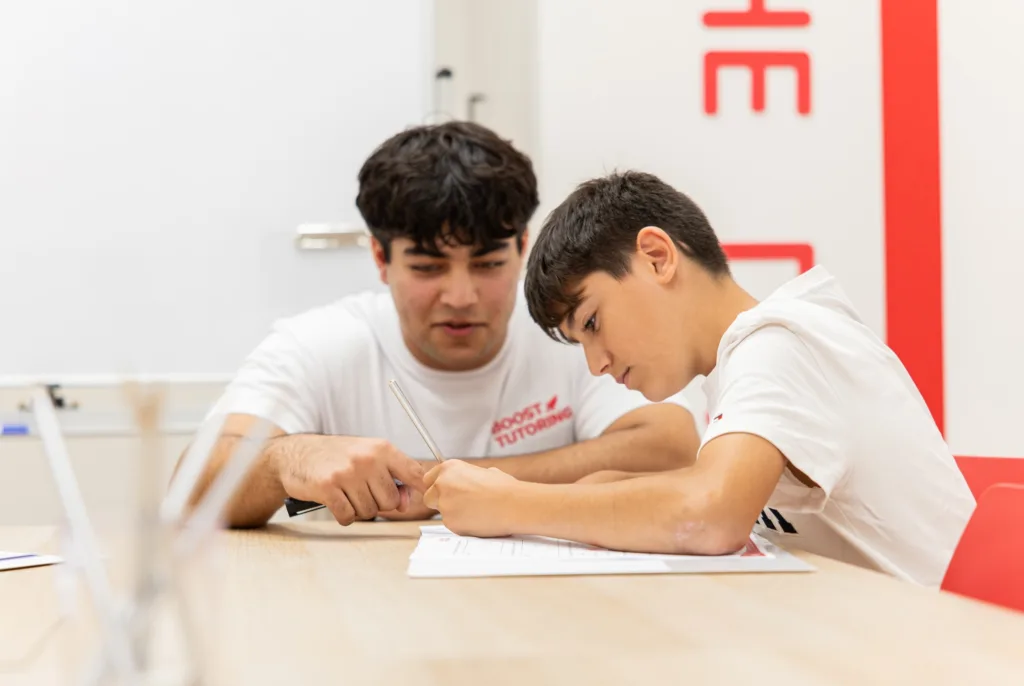
This is why every Boost Primary session at Boost Tutoring Castle Hill opens with five minutes of Prime skills work, the number facts and mental maths that free up thinking space, before moving into curriculum content in a small group with the same tutor each week.
For families after maths exam preparation in Castle Hill and across the wider Hills District, the aim of primary school maths tutoring isn’t a head start. It’s making sure the basics belong to the child when the assessment arrives.
If the same weak spots keep turning up, an assessment with Boost Tutoring Australia will show exactly where your child needs support, well before the next test finds them again.
Book a free academic assessment and see exactly where your child’s foundations sit.