Parents who’ve had a child in tutoring through primary school often assume high school will be more of the same, just harder. It isn’t, really. The jump from primary to high school changes not only what a child is learning, but what tutoring is actually for, and the approach that served a Year 4 student well can be the wrong fit for a Year 9 one.
If you’ve got children at different stages in the Hills, or one heading from primary into high school, it’s worth understanding how the two differ. Here’s what changes, what doesn’t, and why it matters.
Primary Tutoring: Building the Base
Primary tutoring is, at its heart, about foundations. The goal is to make sure the building blocks, reading, comprehension, number sense, times tables, writing a clear sentence and then a clear paragraph, are genuinely solid before the stakes rise. It’s as much preventative as remedial. You’re not usually solving a crisis; you’re making sure one doesn’t develop.
Because the students are young, the approach is different too. A primary child needs encouragement, gentleness and confidence-building as much as they need content. They work in shorter bursts. And a large part of the job is simply protecting their belief that they can do it, because a child who decides in primary that they’re “not a maths person” tends to carry that belief for years.
The content is narrower and more universal, as well. Nearly every primary child needs the same core things: to read well and understand what they read, to be fluent with numbers, and to write clearly. Get those right and almost everything in high school becomes easier, which is the quiet payoff of good primary tutoring. The base you build here largely determines how steep the climb later feels.
High School Tutoring: Coping With the Climb
High school changes the job in several ways at once.
The content gets harder and more abstract. Algebra arrives, English shifts from understanding texts to analysing them, and the pace quickens. Tutoring stops being purely about foundations and starts being about coping with genuinely demanding new material, and often about catching up on primary gaps that high school has suddenly exposed. A great deal of high school maths trouble, in particular, traces straight back to a primary foundation that was never quite finished.
The student is different, too. A teenager’s motivation is less reliable than a young child’s eagerness, and by Year 9 in particular, effort can quietly drop. Tutoring at this stage often has to supply the structure and consistency that a teenager’s own drive can’t be relied on to provide. There’s also the awkward truth that teenagers frequently won’t take instruction from a parent the way they will from a coach outside the family, which makes outside support more useful, not less, as they get older.
And independence becomes a real goal in its own right. High school expects students to manage their own time, plan ahead and work without supervision, and a lot of capable students come unstuck not on the content but on the organisation. Good high school tutoring builds those study skills alongside the subject knowledge. The stakes start to show, too: by Years 9 and 10, performance begins shaping subject selection for the senior years, so the work carries a weight primary rarely does.
What Doesn’t Change
For all the differences, a few things hold at both stages, and they’re worth knowing.
Foundations always matter. In primary you’re building them; in high school you’re often repairing them. Either way, the ground underneath is what everything sits on, and no amount of work on the current topic helps if the foundation beneath it is missing.
Understanding beats memorising at every age. A child who understands can adapt; a child who’s memorised steps comes unstuck when the question changes. That’s as true of Year 2 number work as it is of Year 10 algebra.
And consistency does the real work throughout. Little and often, week after week, beats intense bursts at every stage of school. The habit of steady practice is as valuable at seven as it is at fifteen.
How We Handle Primary and High School Tutoring in the Hills
We run both stages deliberately, because they need different things. Boost Primary covers K to 6, focused on foundations and confidence while they’re still easy to build. Boost Secondary covers Years 7 to 10, focused on coping with the step up, catching any gaps high school exposes, and building the independence the senior years will demand.
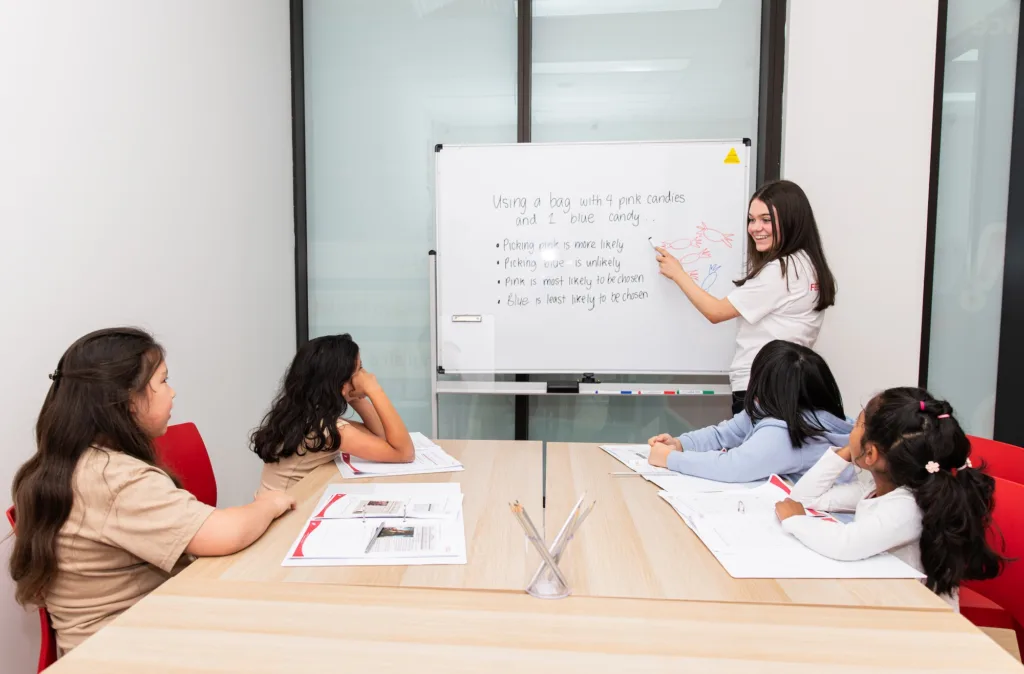
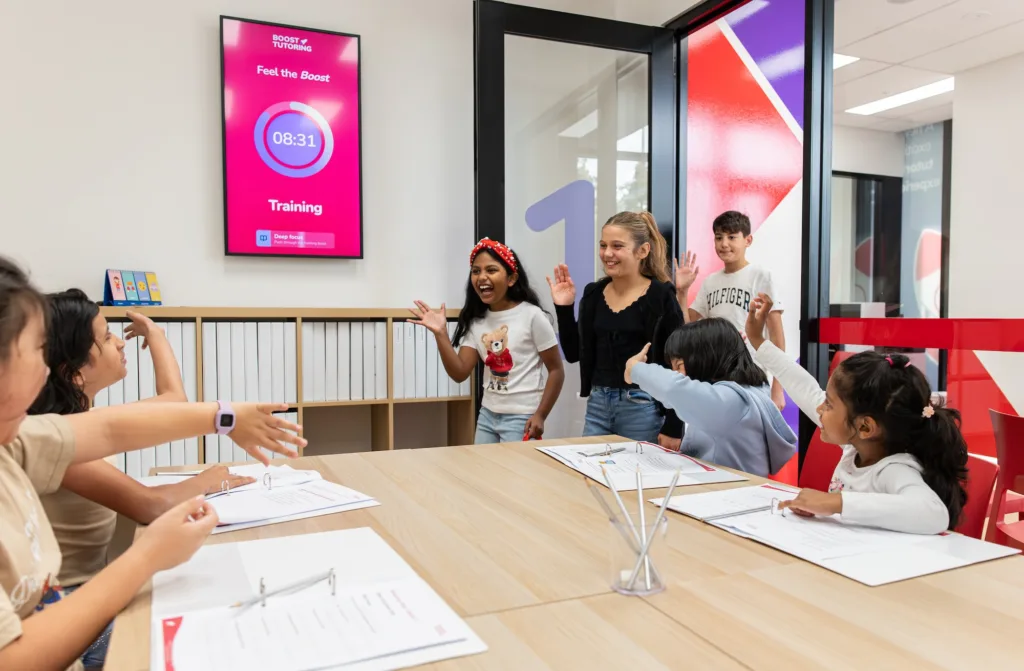
What stays constant is the method, because the principles underneath don’t change. Both run in small groups of six to eight with the same tutor each week, aligned to the NSW syllabus, built around Prime, Train, Retain: a few minutes of skills work, real teaching, then the student working through it themselves until it holds. And both start the same way, by working out exactly where a child sits, because whether you’re laying a foundation or repairing one, you have to know where the ground actually is first.
Primary and high school tutoring aren’t the same job. One builds the base; the other helps a student climb on it, and repairs it where it wasn’t finished. Knowing which one your child needs starts with knowing where they actually stand right now.
Find out exactly where your child sits, whatever stage they’re at