In the Hills, you hear “OC” and “Selective” thrown around constantly, often in the same breath, as though they’re two names for the same thing. They’re not. They’re related, both are academically selective pathways in the NSW public system, but they’re genuinely different: different ages, different tests, different schools, different timing. And confusing them, or treating them as interchangeable, leads families into mistakes.
Here’s the real difference between OC and Selective prep in the Hills, and what it means for how you prepare.
What They Actually Are
Start with what each one is, because this is where most of the confusion comes from.
OC stands for Opportunity Class. An OC is a selective class that sits inside a regular public primary school, for Years 5 and 6. A child who gets in stays at primary school but joins a class of high-potential students, with a more challenging program, for those two years. The test is sat in Year 4, for entry the following year.
Selective refers to selective high schools, and the selective streams within some high schools. These are whole schools, or parts of schools, made up of academically selected students, for Years 7 to 12. The test is sat in Year 6, for entry into Year 7.
So the simplest way to hold the difference: OC is a selective class in primary school; Selective is a selective high school. One is a stream within primary, the other is the jump to high school.
The Key Differences
Several things separate them, and they matter for planning.
Timing and age are the obvious ones. The OC test is sat in Year 4, when a child is around nine. The Selective test is sat in Year 6, around eleven or twelve. They’re two years apart, which is a long time in a child’s development.
The tests differ, too. Both share three sections: Reading, Mathematical Reasoning, and Thinking Skills. But the Selective test adds a fourth, a Writing task, which the OC test doesn’t include. So a child preparing for Selective has an extra component to build, one that happens to be worth a quarter of the Selective score.
And what you’re entering is different. OC keeps a child in their primary environment with a stronger peer group for two years. Selective is a full change of school and a new, more demanding environment for the whole of high school. The two decisions carry different weight.
One thing they now share: from the 2027 intake, both OC and co-educational selective schools allocate places equally between boys and girls, so the competition runs within each group rather than across the whole cohort.
How Preparation Differs
Because the tests and the ages differ, so does sensible preparation.
OC preparation is for younger children, and that shapes everything. A nine-year-old needs a gentler, lighter approach, more foundation-building than exam technique, because the single biggest risk at this age is over-preparing and wearing a young child out. There’s no writing task to prepare for, so the focus is reading, mathematical reasoning, and the unfamiliar Thinking Skills questions, all built mostly through strong everyday foundations.
Selective preparation is for older children, and it adds the writing component, which needs real attention because it’s a quarter of the mark and most students under-prepare it. The reasoning and reading go deeper, matching the older age group, and a child has more capacity for structured preparation than a Year 4 student does.
Here’s the useful connection, though. The foundations are the same underneath. Strong reading, confident mathematical reasoning, and comfort with the kind of thinking these tests reward serve both. A child who built solid foundations for OC in Year 4 walks into Selective preparation in Year 5 with most of the groundwork already done. This is why the two aren’t really separate projects so much as two points on the same path.
Which answers the question many Hills parents ask: should my child do both? There’s no rule either way. Plenty of families aim at OC and, whether or not it works out, keep building toward Selective, because the underlying skills carry over. And a child who never sat OC, or didn’t get in, can absolutely still sit Selective. Missing one doesn’t close the other. They’re connected, but neither depends on it.
How We Approach Selective and OC Prep in the Hills
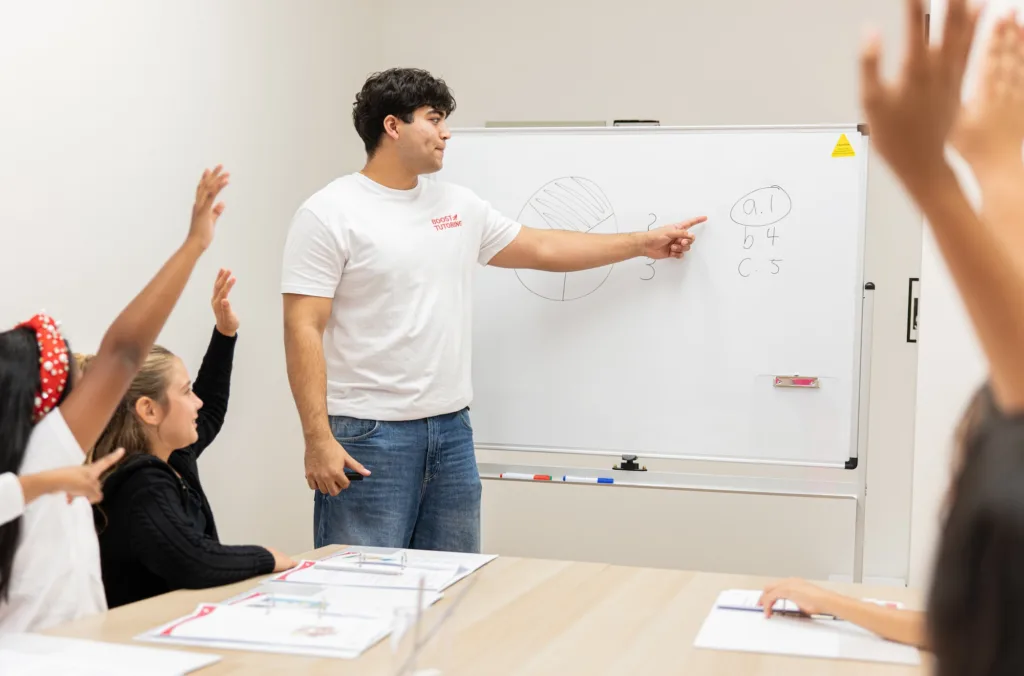
We run both, and we run them as the two stages they actually are. Boost OC is for Years 3 and 4, built around steady foundations and the reading, reasoning and mental maths the OC test rewards, without the pressure that overwhelms a young child. Boost Selective is for Years 5 and 6, building on those foundations and adding the deeper reasoning and the writing the Selective test demands.
Both run in small groups of six to eight with the same tutor each week, aligned to the NSW syllabus, built around Prime, Train, Retain. And both start by working out exactly where a child sits, because whether you’re aiming at OC, Selective, or both, the right plan begins with an honest picture of where your child actually is.
OC and Selective aren’t the same thing, and treating them as interchangeable leads to muddled planning. OC is a selective class in primary, sat in Year 4; Selective is a selective high school, sat in Year 6, with an extra writing task. But they share the same foundations, which means preparing well for one sets a child up for the other. The place to start, for either, is knowing where your child genuinely stands.