By the time their child reaches Year 4, plenty of Castle Hill parents are quietly panicking about Selective timing. A friend’s child started prep in Year 3. Someone at school swears you have to begin two years out. A coaching college brochure implies you’re already late. The result is a low hum of anxiety about a test that’s still a year or two away, and a nagging sense that whenever you start, it’s somehow either too early or not early enough.
So let’s answer the question directly. When should Selective prep in Castle Hill actually start? The honest answer comes in two parts, because there are really two different things people mean by “prep,” and they run on completely different timelines. Get that distinction clear and most of the panic simply evaporates.
The Two Mistakes: Too Late, and Too Early
Most timing errors fall into one of two camps.
Starting too late is the more common one, and the more costly. A family decides, in the term before the test, that it’s time to get serious, then tries to compress what should have been a steady build into a frantic few months. For a test that rewards deep reading, confident reasoning and skills built up over years, that rarely works, and it’s stressful for the whole household. You can’t cram a reading age.
Starting too early is the quieter mistake, and it’s especially common in an area as competitive as the Hills. Parents who begin formal, test-focused preparation when a child is eight or nine, two or three years out, often find that by the time the test actually arrives, the child is thoroughly sick of it. Motivation has a shelf life. Burn through it early and there’s nothing left for the run that counts.
The sweet spot sits between these two. But to find it, you have to separate the two kinds of preparation that “starting” can mean.
Foundations vs Test Prep: Two Different Timelines
Here’s the distinction that makes the whole timing question simple.
Foundations are the long game, and they don’t really have a start date at all. A child who reads widely, who’s quick and confident with mental maths, and who’s used to thinking problems through, is building Selective readiness every single day, years before any test. This isn’t “prep” in the brochure sense. It’s just a child learning well. And it does far more of the heavy lifting than anything that happens in a dedicated prep course, because the test largely measures these accumulated skills rather than memorised content. The earlier and more consistently they’re built, the better, and there’s genuinely no such thing as too soon for them.
Test-specific preparation is the short game. This is the familiarity work: learning the question types, practising under timed conditions, getting comfortable with the computer-based format and the particular demands of each section, including the Thinking Skills questions that schools don’t teach. This part has a much shorter useful window. A year is plenty. Begin much earlier and you’re simply stretching the pressure across more of a child’s life than there’s any need to.
Once you see prep as these two separate things, the timing answer falls out on its own. Start the foundations as early as you like, because that’s just good learning. Start the test-specific work about a year out.
A Sensible Selective Timeline
In practical terms, here’s what a calm version looks like for a Castle Hill family.
Through Year 3 and Year 4, focus on foundations, not the test. Strong reading, solid mental maths, a child who’s confident and curious. If you do nothing else in these years, do this, because it’s where most of the eventual result is quietly decided.
In Year 5, with the test about a year out, structured preparation sensibly begins. This is when the test-specific work earns its place: building familiarity with the format, strengthening the reasoning the test favours, and practising the kind of unfamiliar, multi-step problems it likes to throw up. A year gives a child time to build real skill without the process taking over their whole childhood.
In the final months before the test, the focus narrows to format familiarity and timing, so nothing on the day comes as a surprise. A handful of full practice runs, not a hundred.
And before any of it, it’s worth checking that your child is actually ready to start, and that the goal is a realistic one. A child still shaky on the fundamentals isn’t ready for test-specific prep. They need the foundations firmed up first, or the prep just sits on sand. Readiness matters more than the calendar.
How We Approach Selective Prep in Castle Hill
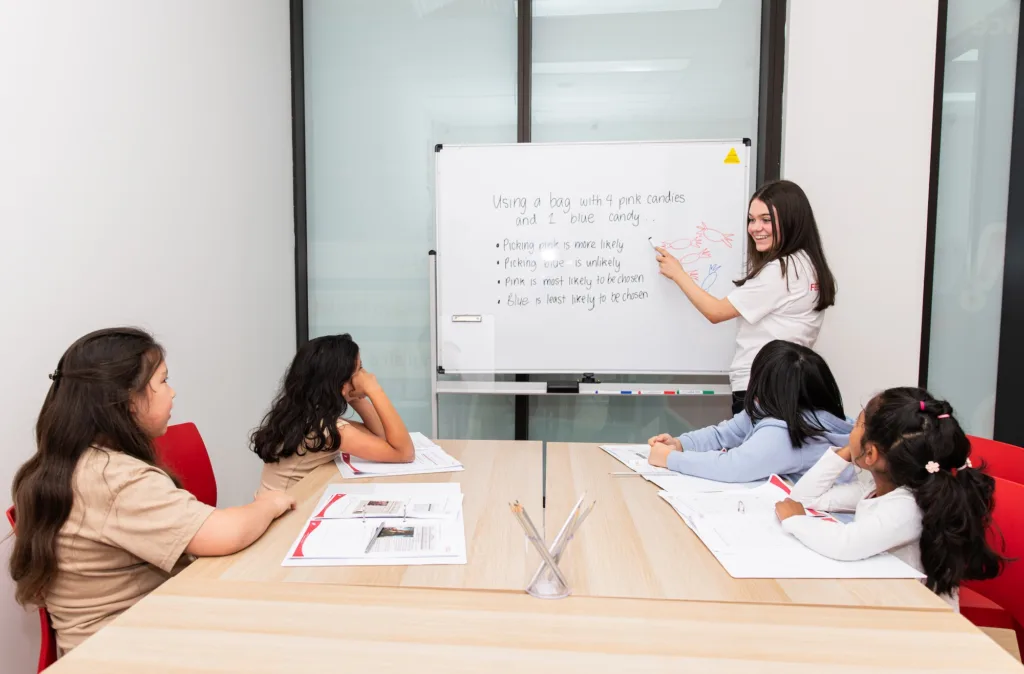
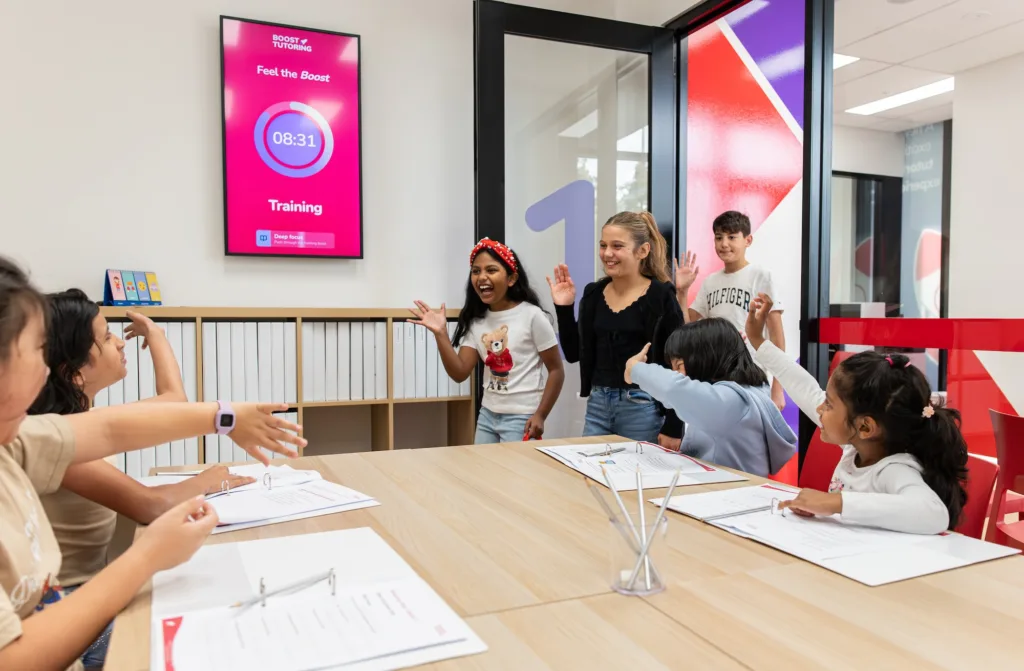
We run Boost Selective for Years 5 and 6, and we treat it as the back half of a longer build rather than a standalone sprint. The reading, reasoning and mental maths the test rewards are developed across all our sessions, week to week, for students of every age, long before Selective is ever on the table. That’s the foundation work, and it’s where the real advantage is actually won.
When the test-specific phase arrives in Year 5, it sits on top of that foundation rather than trying to stand in for it. Small groups of six to eight, the same tutor each week, aligned to the NSW syllabus, built around Prime, Train, Retain, with targeted format familiarity layered in closer to the day. It carries on at home through a short daily worksheet, because the fluency the test rewards is built through steady reps, not last-minute effort.
The short version: start the foundations early, and the test prep about a year out, and you’ll have a child who walks in ready and steady rather than drilled and exhausted.
The best Selective preparation rarely looks like Selective preparation at all. It looks like a child who reads, thinks and calculates with confidence, built one ordinary day at a time, long before the test is ever mentioned.
Book a free academic assessment and see where your child really sits.