Your daughter has spent the year on Selective test preparation. Weekend comprehension passages. Persuasive essays, redrafted twice. A folder of maths reasoning problems, worked and reworked until the working is neat and the answers are right. Then, a few nights before the test, she asks you what a Thinking Skills question actually looks like, because she has never seen one. Not once, all year. You realise, slightly too late, that a quarter of the paper has been sitting untouched while you both focused on the parts that felt like schoolwork.
This happens to more Ambitious families than admit it. The Selective test is made up of four sections, each worth an equal quarter of the final score: Reading, Mathematical Reasoning, Writing, and Thinking Skills. The first three map neatly onto things a child already does at school, so parents naturally drill them. Thinking Skills doesn’t map onto anything taught in a classroom, which is exactly why it’s the section most families discover too late to properly prepare for.
What the Thinking Skills Section Actually Tests
The Thinking Skills component is 40 multiple-choice questions in 40 minutes, and it draws on no specific subject content at all. Where the Reading and Maths Reasoning sections use concepts from the NSW curriculum, Thinking Skills is built to test general critical thinking and problem-solving ability directly, independent of what a child has been taught in class.
In practice this means questions built around logical deduction, pattern recognition, spatial reasoning, abstract relationships between symbols or shapes, and weighing up the strength of an argument. A child who is a strong reader or a confident mathematician can still find this section genuinely unfamiliar, because it isn’t testing subject knowledge. It’s testing a different kind of thinking altogether.
A typical question might show a sequence of shapes changing in size, shading and rotation, and ask which shape comes next. Another might describe a short scenario, such as three friends compared by height or by finish time in a race, and ask what must be true given the clues. There is no formula from class to reach for in either case. The only way through is careful, methodical reasoning, worked out on the spot. That is precisely what makes the section feel so foreign to a child who has spent the year being rewarded for knowing the right method rather than working one out from scratch.
Why It Gets Left Until Last
Most families structure their preparation around the sections that feel like study, because study is what parents know how to organise. There’s a comprehension worksheet to mark, a maths problem with a correct answer, an essay you can read and give feedback on. Thinking Skills offers none of that familiar shape. There’s no textbook chapter, no homework sheet from school, and no obvious way to tell whether an answer is progress or just a lucky guess.
So it quietly slides to the bottom of the list, or gets treated as something a bright child will simply handle on the day because they’re generally sharp. That assumption is where the trouble starts, because being a capable, curious child and being practised at this specific style of question are not the same thing. Plenty of quick, sharp students sit down to their first real Thinking Skills paper and are surprised by how much slower they move through it than they expected, simply because the questions ask them to reason in a way school rarely calls for directly.
It’s Worth Exactly as Much as Reading or Maths
Here’s the number that tends to change how seriously parents take this section once they hear it: Thinking Skills is weighted at 25% of the composite score, identical to Reading, Mathematical Reasoning and Writing. A weak result here pulls the total down exactly as hard as a weak reading result would. There is no allowance made for it being the “unfamiliar” section, and no way to make up the shortfall entirely from the other three. A student who is strong across Reading, Maths and Writing but walks into Thinking Skills cold is giving away a quarter of the paper to unfamiliarity, not to ability.
How to Actually Build the Skill
The good news is that Thinking Skills responds well to preparation, just not the cramming kind. It isn’t a fixed trait a child either has or doesn’t. It’s closer to a muscle that strengthens with regular, varied exposure over months, the same way reading stamina builds from reading often rather than from one long session the week before a test. What helps is short, low-pressure practice with a genuine mix of question types: pattern sequences, odd-one-out puzzles, simple logic problems, analogies, and spatial puzzles that ask a child to picture a shape rotated or folded.
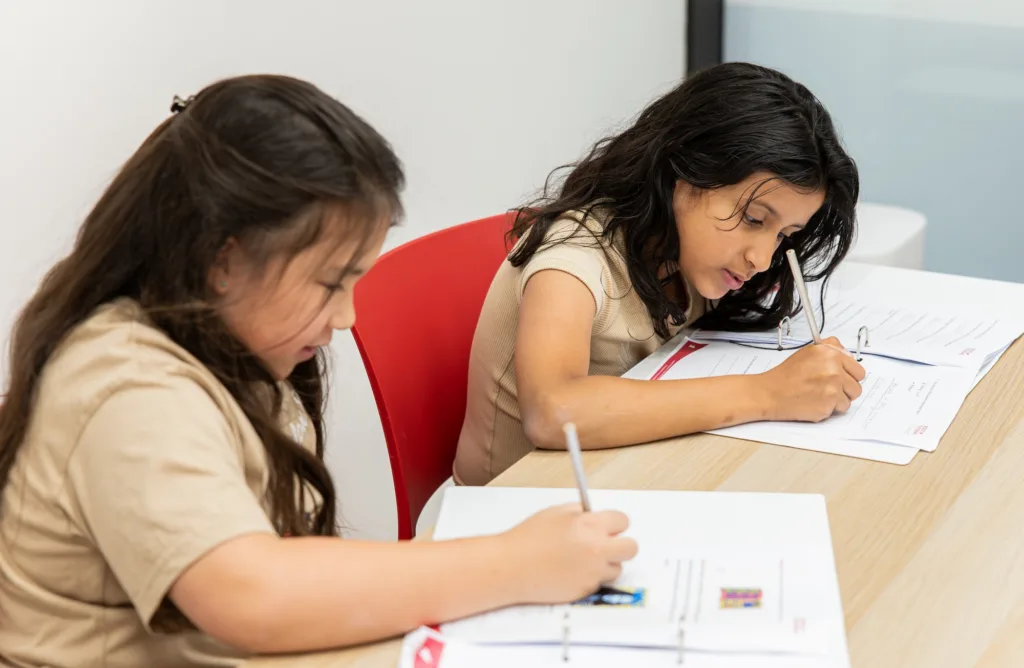
Ten or fifteen minutes, two or three times a week, spread across a school term, does far more than a single weekend spent working through an entire practice paper. What also helps, more than most parents expect, is talking through the reasoning out loud. Asking “how did you rule that one out” turns a right-or-wrong guess into a habit of thinking, and that habit is what actually transfers to test day.
It’s also worth resisting the urge to treat every wrong answer as a gap to drill. Thinking Skills questions often have more than one plausible-looking option, and part of what’s being tested is a child’s ability to reason carefully under a small amount of pressure, not just pattern-match to a memorised trick. A calm conversation about why an answer was wrong builds that reasoning far more than a stack of extra worksheets.
Building It Into the Whole Year, Not the Final Term
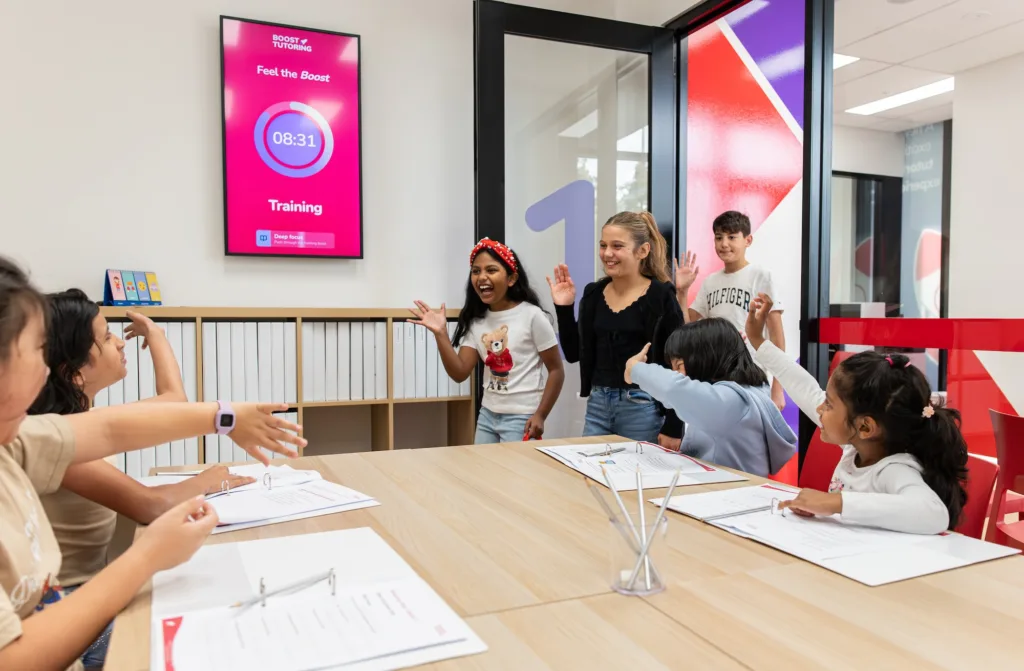
This is exactly why the five-minute Prime skills-work opener at the start of every Boost Selective session includes reasoning and pattern-based warm-ups alongside the usual vocabulary and mental maths drills. Not because it’s a Selective-specific trick, but because a child who has been doing this kind of thinking in small, regular doses all year walks into the Thinking Skills section recognising the shape of the questions, rather than meeting that style of reasoning for the first time under exam conditions.
If you’re not sure how your child’s Selective preparation is actually tracking across all four sections, not just the ones that feel like homework, book a free academic assessment and find out where things genuinely stand.
Book a free academic assessment and see exactly where your child’s foundations sit