
You pick your child up from tutoring and ask the obvious question. How did it go? You get one word back. Fine. You have just paid for an hour of something, and you genuinely have no idea whether it looked anything like a good tutoring session or just an hour of supervised homework.
With school, you get some visibility. A report card twice a year, a parent-teacher interview, the odd note home. With tutoring, most parents get nothing in the short term. You are waiting on the next set of school marks to tell you whether the sessions are actually doing anything, and that is a slow way to find out something is not working. By the time a flat result confirms it, you may have already paid for a full term of sessions that were never going to move the needle.
So it is worth knowing, in plain terms, what a good tutoring session actually contains. Not the brochure version. What should genuinely be happening in that room, so you can tell early whether what you are paying for holds up, rather than waiting until the next report card to find out.
What a Good Tutoring Session Starts With
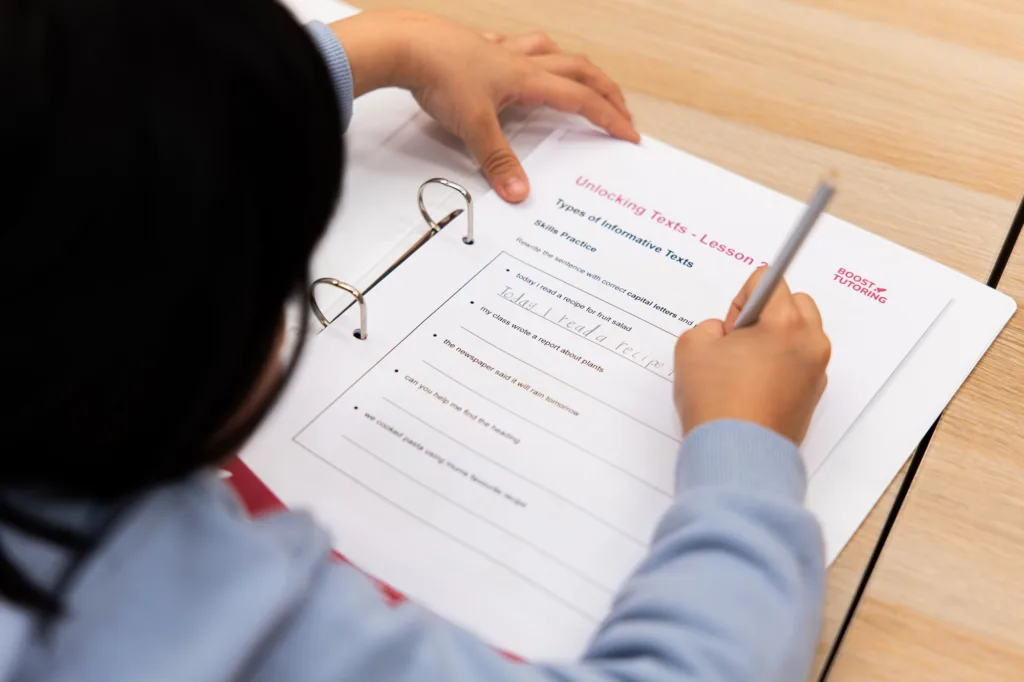
A session that opens by handing your child their school homework and leaving them to it is not really tutoring. It is supervised study time, and there is a real difference between the two. A good session opens with something deliberately chosen to build fluency before the main content starts. Times tables, mental maths, a handful of vocabulary or comprehension questions, a quick warm-up drill. It looks small, almost too simple to matter, but skills like recall speed and reading fluency are built through short, repeated practice, not through one big push the week before a test. If every session starts cold, straight into whatever homework or worksheet happens to be in the bag that day, that groundwork never gets laid, and it shows up later as slow recall under exam pressure.
There Is Real Teaching, Not Just Supervised Worksheets
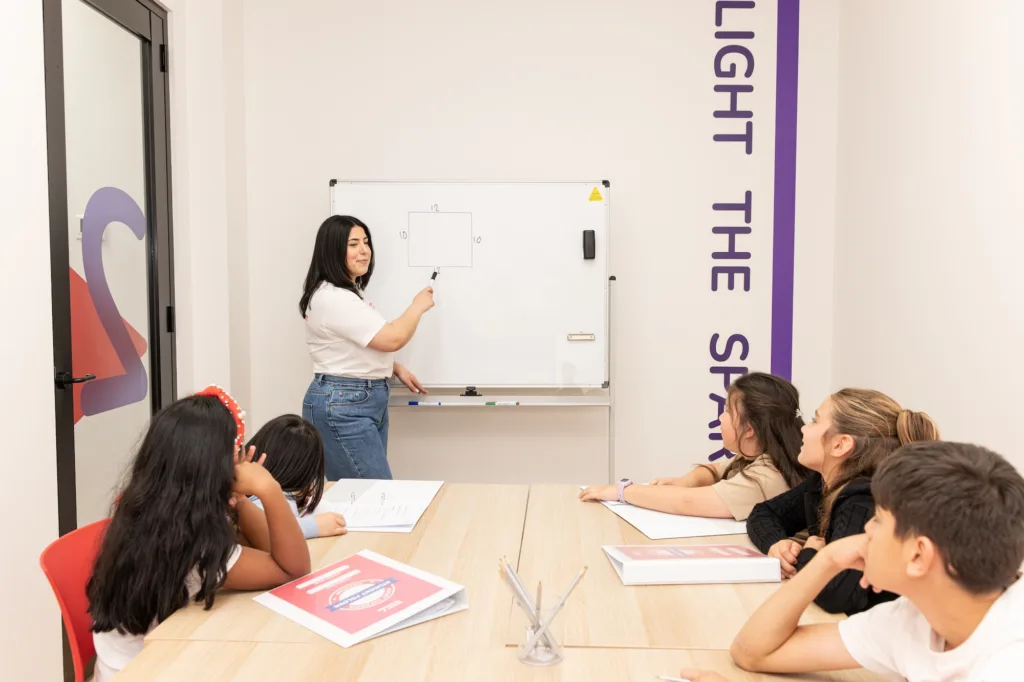
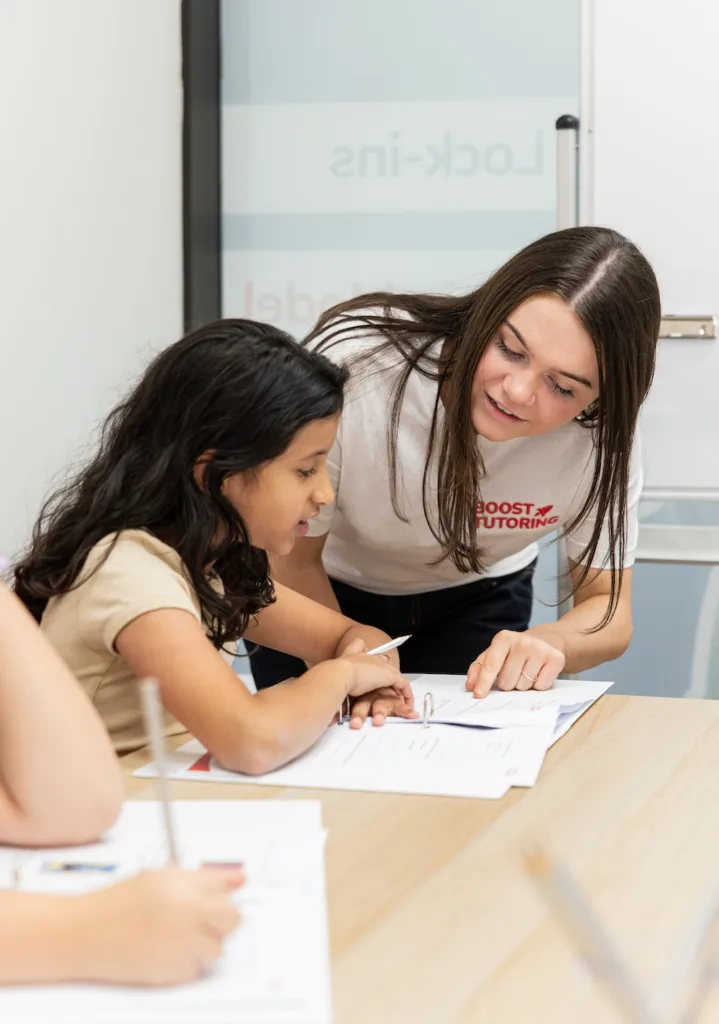
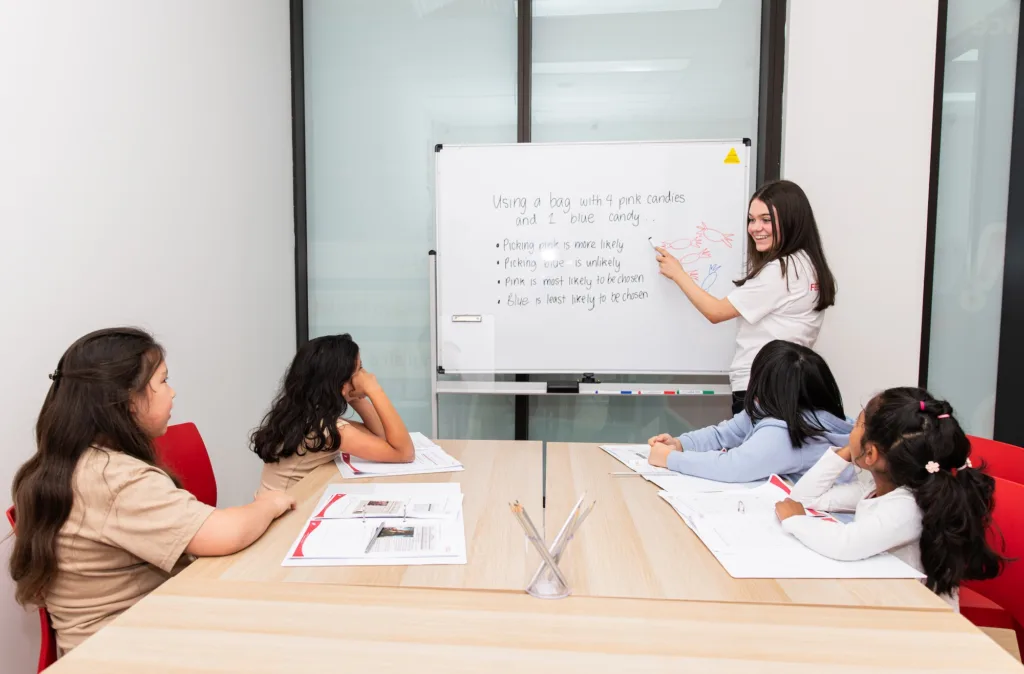
This is the one worth watching closest. In a good session, the tutor is actively teaching. Explaining a concept, working through an example on a whiteboard, checking understanding, correcting a misconception before it hardens into a habit. Picture the tutor standing, pointing at a worked problem, asking the group what happens next, rather than sitting at the side of the room. In a weaker session, the tutor is present but not really teaching. Students work through worksheets largely on their own, and the tutor helps only if someone happens to put their hand up. From the car park, both sessions look the same. An hour has passed, a folder has come home with ticks in it. For your child, they are not remotely the same. One builds new understanding. The other assumes the understanding is already there and just needs supervised repetition.
The Tutor Actually Knows Where Your Child Is Up To
Ask a tutor what your child worked on today. In a good program, you get a specific answer. We covered fraction equivalence today because it connects to what they are doing in class this fortnight, and it was a gap in last week’s work. In a weaker one, you get something vague. We did some maths. That vagueness is a signal. It usually means the content is a generic worksheet pack rather than anything connected to your child’s actual year level, syllabus, or the specific gap they need to close. A tutor who cannot tell you what your child covered, and why, is not really tracking your child’s progress from week to week. They are working through a pack in order.
The Session Ends With Practice, Not Just a Full Stop
New content that is taught once and never revisited tends to fall out of a child’s head within a week. This is true in a classroom of thirty and it is just as true in a tutoring room of six. A good session builds in time to actually rep the new content before the child leaves, or sends something home to reinforce it, so learning is not left entirely to whether a worksheet gets done at the kitchen table on a busy Tuesday night. Teaching without reinforcement is the single most common way tutoring quietly underperforms, regardless of the group size or the price being paid for it.
It Runs on a Consistent Structure, Week to Week
The last thing to check is the simplest. Is this a program, or a series of one-off sessions that happen to fall on the same day each week? A good tutoring session looks broadly the same in structure every time your child attends, even as the content underneath it changes. Same format, ideally the same tutor, a clear rhythm your child can settle into without having to work out what today’s session will be like. Consistency is what turns a series of separate hours into an actual habit. Without it, every session effectively starts from zero, and the warm-up, teaching and practice above never get the chance to compound.
What to Actually Ask
You do not need to sit in on every session to check these things. Ask the tutor, directly, what your child covered today and why it mattered. Ask what the first five minutes of a typical session usually involve. Ask whether you could sit in and observe a session before committing to a full term. A tutor or centre that is confident in what they are running will answer all three without hesitation, and often without needing to check with anyone first. One that hedges, or gives you a general answer about “the curriculum,” is telling you something too.
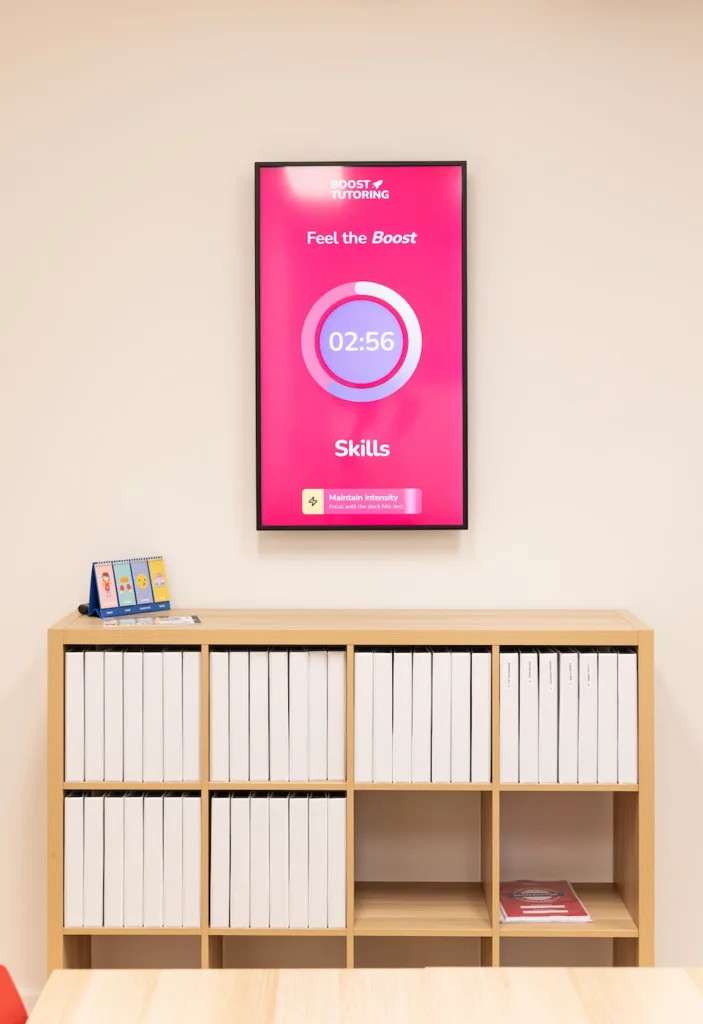
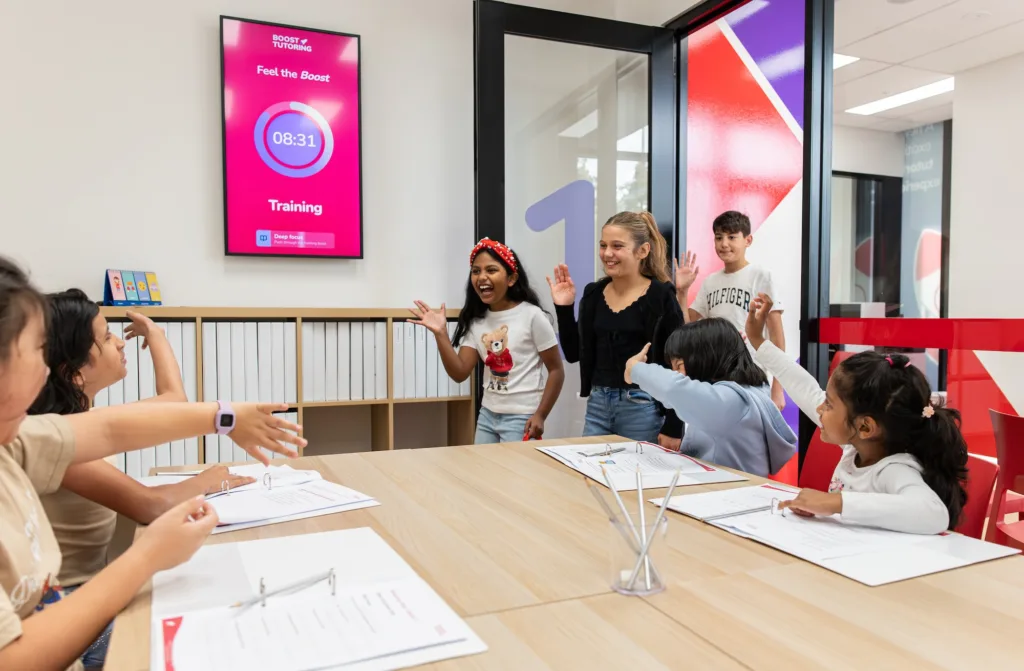
This is exactly why every Boost session follows the same structure regardless of subject or year level. Five minutes of skills work to open, real teaching through the curriculum content, and time to rep that content before the student leaves, reinforced again at home through Boost Accelerator. Not because it looks impressive from the outside, but because it is the structure that actually holds up to every question above, every single week, not just the weeks a parent happens to be watching.
If you want to see what that looks like for your child specifically, book a free academic assessment and find out where they actually sit.
Book a free academic assessment and see exactly where your child’s foundations sit