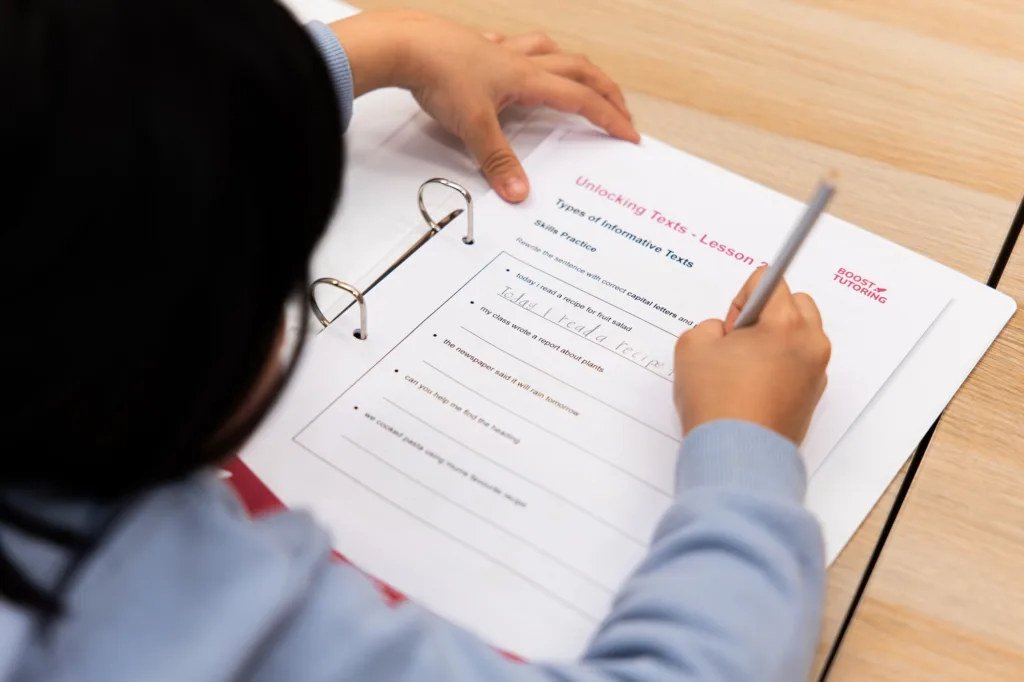

Here’s a scenario Castle Hill parents recognise. Your child has always been a reader. Devours books, strong English reports, never a concern. Then high school begins, and the English marks come back merely average. Nothing disastrous. Just unexpectedly ordinary, from a child who was supposed to be good at this.
It’s more common than you’d think, and it isn’t because your child has stopped being a strong reader. It’s because high school English stops asking them to read, and starts asking them to do something else entirely. Here’s what changes, and what actually helps.
From Understanding a Text to Analysing One
Primary English rewards comprehension. Can you read this passage and understand what it says? Can you answer questions about what happened, who did what, what a word means? A child who reads fluently and understands what they read does well.
High school English rewards analysis, which is a different job. It doesn’t just ask what a text says. It asks how it works, and why the writer made the choices they made. What effect does that word create? Why is this scene placed here? What is the writer trying to do to the reader, and how are they doing it?
That’s a genuine step up in thinking, and it’s the reason strong readers can find themselves mid-pack. They can read the text perfectly well. They simply haven’t yet been taught to stand outside it and examine how it’s built. And because they’ve always been good at English, the sudden ordinariness of their marks can rattle them more than it would a child who never expected to top the class.
The Structure Problem
The second change is that high school English wants a shape.
Primary writing often rewards imagination and expression. High school wants an argument: a clear position, evidence from the text, and an explanation of how that evidence supports the point. It wants paragraphs that do a job. It wants a response that goes somewhere.
This is where a lot of otherwise capable students lose marks, and it’s worth being precise about why. It usually isn’t that their ideas are weak. It’s that the ideas arrive in a heap rather than in an order. A student with good insights and no structure will consistently score below a student with ordinary insights arranged clearly, because the marker can only credit what they can follow.
The encouraging part is that structure is the most teachable thing in English. It’s a craft with rules. How to open a paragraph with a clear point, how to bring in evidence, how to explain rather than just quote, how to close. A student who’s been shown this properly improves quickly, often faster than in any other area of the subject.
Evidence, and the Habit of Proving Things
The third change is the demand for evidence. High school English doesn’t accept assertions. If you say a character is isolated, you have to show where the text says so, and explain how.
For many students this is an unfamiliar habit of mind. In primary, saying something sensible was enough. In high school, you have to prove it. That means reading with a pen in hand, noticing the moments that might be useful later, and learning to select the right piece of evidence rather than the first one you find.
None of this is beyond a Year 7 or 8 student. But it does have to be taught, and in a class of thirty, with a syllabus to cover, it often gets taught quickly and assumed thereafter.
What Helps at Home
Keep them reading, first of all. Widely and often. It remains the foundation of everything else, and it quietly builds the vocabulary and the ear for language that analysis depends on.
Then add the layer primary didn’t. Talk about what they read, and push gently past the plot. Why did the character do that? Why do you think the writer ended it there? How did that make you feel, and what did the writer actually do to make you feel it? These conversations, which cost nothing, build exactly the analytical instinct high school English is asking for.
And when it comes to writing, focus on structure over polish. A well-organised paragraph with a clear point, evidence and explanation is worth more than a beautifully worded one that wanders. If your child can plan before they write, half the battle is done.
How We Teach High School English at Boost
At Boost in Castle Hill, English for Years 7 to 10 runs in small groups of six to eight with the same tutor each week, aligned to the NSW syllabus. We work on precisely the things high school asks for and rarely has time to teach properly: reading closely, thinking analytically, structuring a response, and using evidence to prove a point rather than simply asserting one.
Every session opens with a few minutes of skills work, often vocabulary or comprehension, then real teaching with worked examples, then the student working through it themselves until it holds. Prime, Train, Retain. It carries on at home through a short daily worksheet, because writing and analysis improve with regular practice, not occasional bursts.
The point is to make the invisible visible. Most students who find high school English hard aren’t short on ability. They’ve simply never been shown, explicitly, what a good response looks like and how to build one.
High school English isn’t harder primary English. It’s a different subject wearing the same name. Once a student understands what’s actually being asked of them, and has been taught how to do it, the marks tend to follow.
Book a free academic assessment and see exactly where your child’s foundations sit