You added a third tutoring session, hoping more tutoring hours would speed things up. Six weeks later, the extra hour is sitting on the calendar, the invoice has gone up, and the maths test that started the whole conversation came back looking much the same. If more time was supposed to mean more improvement, where did it go?
It’s a reasonable thing to assume. More practice should mean more progress, the same way more kilometres should make a runner faster. But tutoring doesn’t run on a simple hours-in, marks-out formula. Once you understand why, it becomes much easier to see where your child’s time, and your money, are actually best spent.
The Real Limit On What Extra Tutoring Hours Can Do
A child’s concentration is not a tap you can leave running. It has a limit, and that limit shows up well before the end of a long tutoring block. The first twenty minutes of a session, when a child is fresh, tend to do most of the real work: taking in new content, attempting it, getting feedback on it. By the third or fourth hour of tutoring in a week, especially stacked on top of a full school day, a child is often present in the room without being genuinely engaged with the material.
Picture a child who does an hour of maths tutoring on Monday, then another on Thursday, and a parent adds a third on Saturday morning hoping to close a gap faster. The Saturday session usually looks different from the other two. The child is tired from the week, less willing to attempt something new, and more likely to get through the hour by leaning on the tutor rather than working independently. The hour still happens on the calendar. It just doesn’t carry the same weight as the two that came before it.
This is why going from two tutoring hours a week to four rarely doubles the results. The first two hours are usually doing the heavy lifting. The extra two are competing with tiredness, and tiredness is a poor learning partner. More time on the calendar is not the same as more learning happening inside it, and a parent watching the invoice grow can be forgiven for expecting a return that simply isn’t there yet.
What Actually Drives Progress Is Structure, Not Volume
If hours alone were the answer, every child with a tutor would be improving at a similar rate. They aren’t, because what happens inside the hour matters more than how many hours there are. A well-structured hour has a rhythm: a short warm-up to sharpen the basics, real teaching where a tutor explains and demonstrates new content, and then practice that locks the content in before the student leaves. A loosely run hour, by contrast, is often just supervised homework time, with a tutor sitting nearby in case help is needed rather than actively teaching.
One structured hour can achieve more than two unstructured ones. This is worth sitting with, because it reframes the question most parents ask when progress stalls. The question isn’t “how many hours does my child need.” It’s “what is actually happening in the hours my child already has, and is that time being used as well as it could be.”
The Difference Between Busy And Productive
A fuller tutoring calendar can feel like progress simply because it feels like effort. More sessions, more homework, more visible commitment. But busy and productive aren’t the same thing, and it’s worth checking which one you’re actually paying for.
A few honest questions help tell the two apart. Can your child tell you, specifically, what they worked on last session, or do you get a shrug and “just maths stuff”? Does each session build on the one before it, so a tutor can point to real progress across weeks, or does every session feel like a fresh start with no thread connecting it to the last?
Is your child actively working through new material with the tutor, or mostly sitting with a worksheet and occasional help when they get stuck? None of these questions are about how many hours are booked. They’re about whether the hours that already exist are being used well, week after week.
When More Hours Genuinely Does Help
None of this means extra tutoring time is never the right call. A child heading into a specific exam with a genuine, well-defined gap, or catching up after an extended absence from school, can benefit from a short, targeted burst of extra sessions. The difference is that this kind of increase has a clear purpose and a clear endpoint in mind, agreed on in advance rather than added indefinitely. It’s a deliberate response to a specific problem, not a general assumption that more must always be better.
The trap is treating extra hours as the default answer to slow progress, before checking whether the existing hours are structured well enough to be working as hard as they should. Extra time layered on top of a weak structure just means more hours of the same limited return, and a bigger bill alongside it.
The Boost Angle
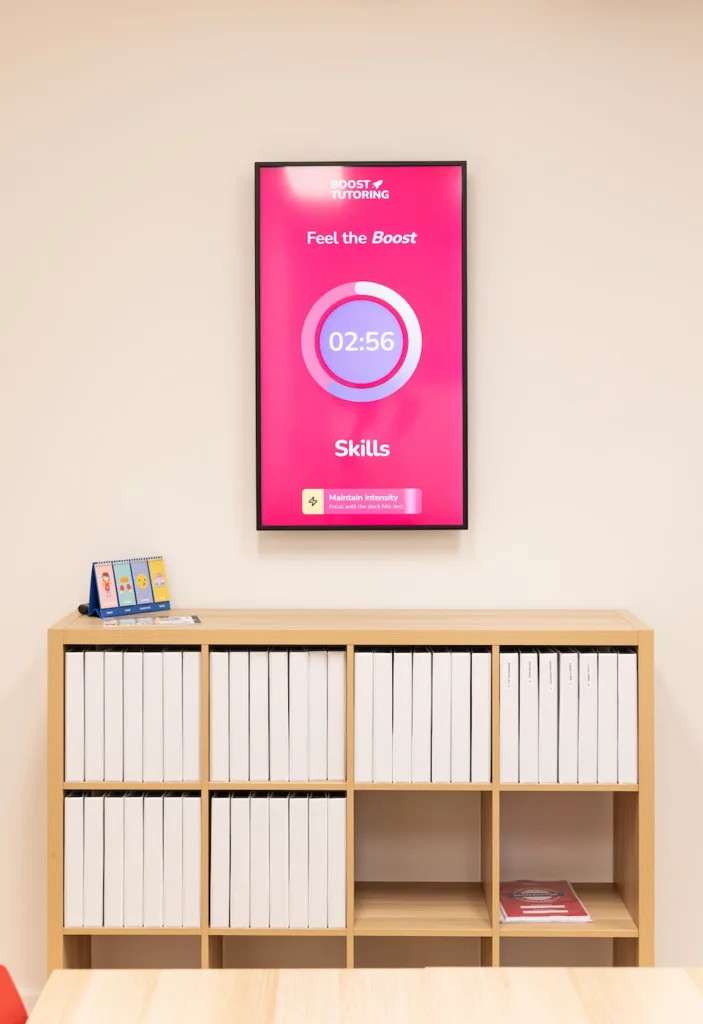
This is exactly why Boost runs on two sessions a week, one hour, one subject, six to eight students and one qualified tutor, rather than selling families on volume. Every session opens with five minutes of Prime skills work, moves into real teaching during Train, and closes with Retain, where students practise the content themselves so it actually sticks.
That structure is reinforced daily at home through Boost Accelerator, in short worksheets rather than long extra sessions bolted onto an already full week. Progress comes from the hour being used properly and repeated consistently, not from adding more of it.
If your child has been tutored for a while without much movement, the first question worth asking isn’t whether they need more hours. It’s whether the hours they already have are structured to do the job they’re meant to do.
Book a free academic assessment and see exactly where your child’s foundations sit