The report card lands, and it feels sudden. Everything seemed fine last term, and now there’s a red mark next to maths where there wasn’t one before. Nothing about it actually happened overnight. The gap had usually been sitting there quietly for a term or two, doing its work in the background, long before the marks caught up with it.
Falling behind rarely traces back to one bad term. Maths tutoring for struggling students works by locating exactly where the understanding gap first opened, then rebuilding from that point. Not by piling on more of the same work. This looks at what’s actually happening and what helps. It flags the signs worth watching before the next report card lands.
What’s Actually Going On When a Child Falls Behind
Maths topics build on each other more than most parents realise. Missing fractions in Year 4 quietly resurfaces as trouble with ratios in Year 6. Algebra becomes the next casualty after that, and the original gap never really closes on its own.
There’s a quieter reason too. After enough wrong answers, many children stop putting their hands up. Work gets rushed, delayed, or skipped, because avoiding another mistake feels safer than risking one in front of the class.
Classroom pace plays its part as well. Lessons move on with the term plan regardless of who needs more time. A student who needed another week on fractions is still expected to keep pace with everyone else.
Plenty of Australian students freeze on maths questions that look unfamiliar, even with solid underlying skills. The Australian Council for Educational Research found the same pattern after analysing PISA results from more than 13,430 fifteen-year-olds, well beyond just the classrooms already struggling.
What You Can Do at Home
The homework routine itself is more telling than any single night. A rushed page, an avoided subject, or an answer that looks like a guess rather than a calculation is worth flagging early.
Talking through a wrong answer out loud usually reveals more than another page of drill questions ever could. The exact moment their logic slipped becomes obvious once they explain their thinking.
Short, regular sessions spread across the week still tend to stick far better than one long cram session before a test. A few minutes most days keep maths from becoming the Sunday night showdown at the table.
When Home Support Isn’t Enough
Some gaps outgrow what a parent can close alone at the kitchen table. Recognising that point matters more than pushing through it.
Homework turning into a nightly standoff, or a child quietly avoiding maths altogether, both point to support needs beyond what any evening at home can fix.
That level of support usually needs more structure than any evening at the table can provide. A class of twenty-eight or more moves at one pace. A teacher genuinely cannot pause the whole room to rebuild one student’s fractions, however much they’d like to.
That’s simply what a class that size allows. Families further along this path often find it useful to read about selective prep in the Hills District, where many of the same foundational gaps come up in more depth.
How to Know Maths Tutoring for Struggling Students Is Working
Confidence usually shifts before the marks do. A child who starts attempting the harder questions instead of skipping them is already telling you something real.
Watch how they talk about mistakes too. A child who can explain where their thinking went wrong is already doing something useful. Saying more than “I don’t get it” means they’re starting to think the way maths actually asks them to.
Homework taking less negotiating is a good sign as well. A child who mentions a maths question without being asked is actually showing real engagement. Progress tends to build steadily across a term, much like the gradual climb described in NAPLAN preparation in Beaumont Hills. Look for small shifts week to week. A single dramatic turnaround is unlikely, and that’s normal.
How We Approach Maths Tutoring for Struggling Students at Boost
Here at Boost Tutoring Australia, we start with a diagnostic assessment, because sitting a child down at their current year level rarely works if the missing piece is two years back.
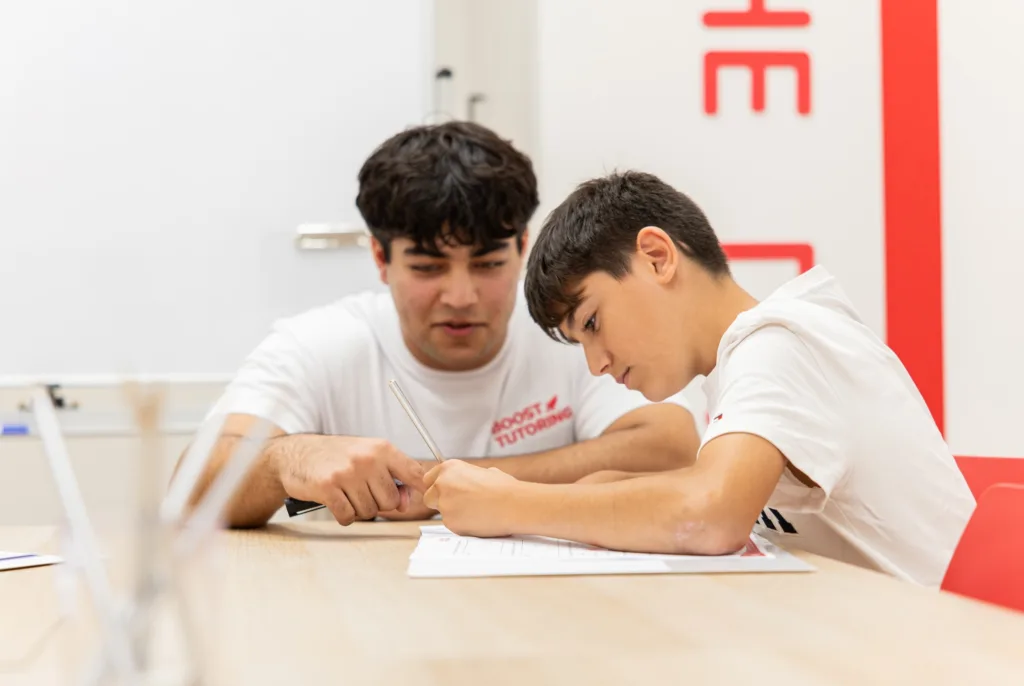
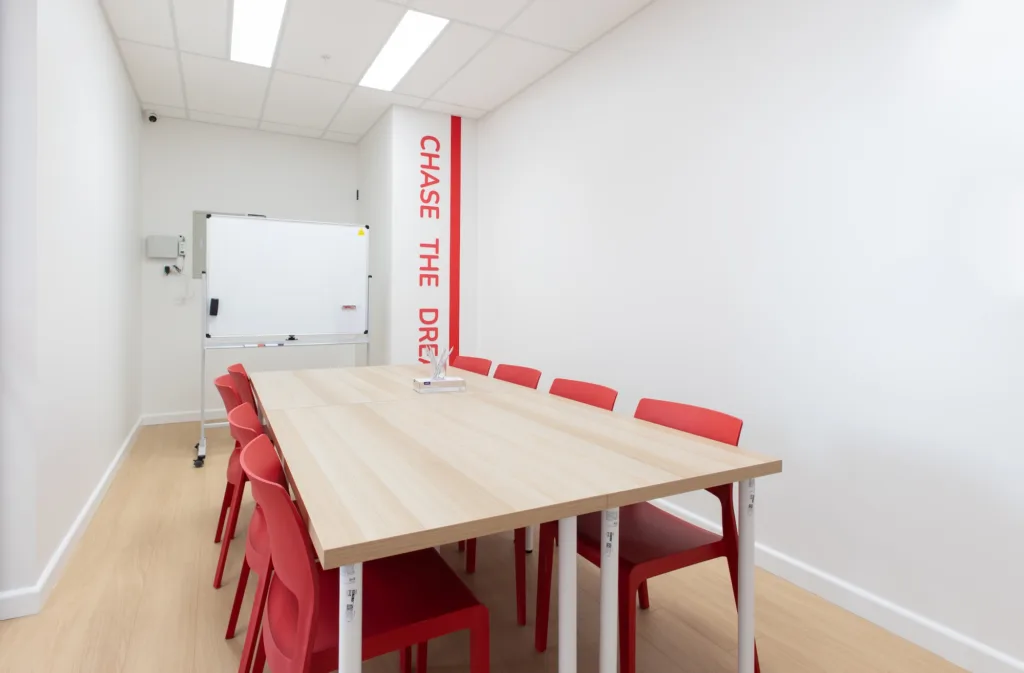
Six to eight students sit in each group and keep the same tutor every week, under the NSW syllabus. That rhythm runs on the Boost Method: Assess, Plan, Coach, Review.
Every session opens with five minutes of skills work, moves into direct teaching, then has the student apply it alone until it sticks. Prime, Train, Retain.
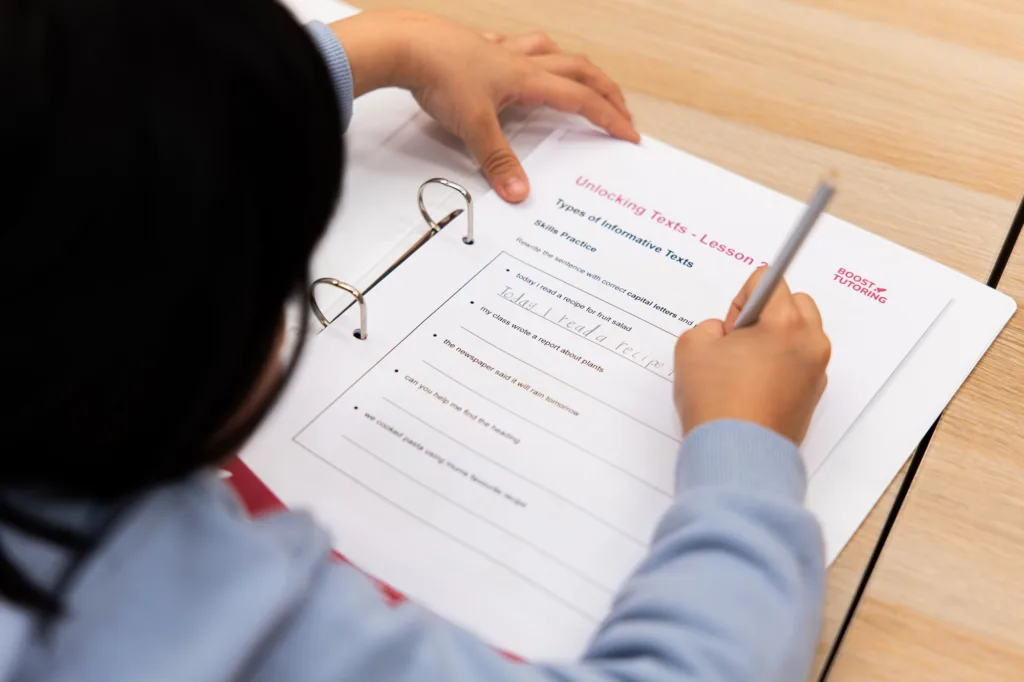
At home, a short daily worksheet does the quiet work. Ten minutes with the daily worksheet beats one two-hour cram session before a test.
Frequently Asked Questions
What are the early signs a child is falling behind in maths?
Usually, the behaviour shows up before the report card does. A homework fight that keeps happening, a reluctance to even start, or marks that quietly slide are all worth paying attention to.
What if my child only has gaps in one or two areas?
That’s actually the easier case. A gap in one or two topics is easier to close, because it hasn’t had years to snowball into something larger.
How often should a struggling student attend tutoring?
Weekly sessions suit most students well. Daily worksheets keep the practice fresh in between. That rhythm gives a tutor regular chances to catch confusion before it settles in.
Can tutoring help a child who has lost confidence in maths?
Yes. Confidence is often the real work, more than the maths itself. A diagnostic assessment usually shows a child a picture of where they stand that’s more reassuring than they expected. A maths gap is only ever a missing piece, and missing pieces are simple to find once you know where to look.
Book a free academic assessment here, and we’ll show you exactly where your child’s maths stands right now (so you’re working from a clear picture instead of a guess).