The pattern is common enough that it barely surprises us anymore. A child cruises through primary maths. Solid reports, no complaints, nothing to worry about. Then Year 7 arrives and within a term or two something has shifted. The marks drop. The homework takes longer. And a child who always thought of themselves as good at maths starts saying “I don’t get it” and, eventually, “I’m just not a maths person.”
Nothing has gone wrong with your child. What’s happened is that Year 7 maths asks for something primary maths largely didn’t, and a lot of capable students get caught out by it. Here’s what actually changes, and why it catches Hills students off guard.
The Shift From Arithmetic to Abstraction
Primary maths is mostly concrete. Numbers you can picture, quantities you can count, problems that map onto things in the real world. A child who is good at calculating tends to do well.
Year 7 starts pulling away from that. Algebra arrives, and with it the idea that a letter can stand for a number you don’t know yet. Negative numbers, indices and abstract relationships follow. Maths stops being about calculating and starts being about reasoning with symbols, and those are genuinely different skills.
This is the crux of it. A child can be very good at arithmetic and still find abstraction hard, because being fast with numbers doesn’t automatically make you comfortable with generalising. Plenty of students who were quickest in their primary class hit this wall, which is precisely why it’s such a shock when it happens.
The Foundations That Suddenly Matter
The second thing that changes is that Year 7 quietly audits everything that came before it.
Fractions, decimals and percentages are the clearest example. In primary, a shaky grasp of fractions can be worked around. In Year 7, they turn up inside algebra, inside ratios and rates, inside almost everything, and a child who never really understood them is now trying to do harder things with a tool they can’t use properly.
Times tables are the other. By Year 7, they need to be automatic, not calculable. A student who still pauses to work out seven eights is spending mental effort on the basics while the class has moved on to the actual lesson. It’s a bit like trying to follow an argument in a language you’re still translating in your head. Possible, but exhausting, and you miss things.
This is why Year 7 maths trouble so often traces back to Year 4 or 5. The gap was always there. Year 7 is simply the first year that puts enough weight on it to expose it.
Pace, and the End of the Safety Net
Then there’s the speed. High school maths moves through topics faster than primary does, and it doesn’t circle back. A student who misses something in week three is expected to be right there in week seven, using it.
The support structure changes too. In primary, one teacher sees your child all day and notices when they’re quietly lost. In high school, the maths teacher sees them a few hours a week among many other students, and a student who doesn’t put their hand up can go a long time without anyone noticing they’ve stopped following.
And students don’t put their hand up. Not in Year 7, in a new school, in front of people they’re still trying to impress. The child who’s confused often stays silent, copies the working from the board, and hopes it makes sense later. It rarely does.
What Actually Helps
The instinct is to pile on more Year 7 practice. Usually that’s the wrong move, because it treats a foundation problem as a current-content problem.
The first thing that helps is going back. If the fractions or the times tables aren’t solid, that’s where the work needs to happen, even though it feels like a detour. Firming up a Year 5 foundation is what makes Year 7 algebra land. Skipping that step and drilling more algebra is building on the same soft ground.
The second is teaching the abstraction rather than assuming it. Many students never quite have the conceptual leap explained to them: what a variable actually is, why it works, what algebra is really doing. A student who understands what they’re doing can adapt to an unfamiliar question. A student who’s memorised the steps comes undone the moment the question looks slightly different.
The third is confidence, which sounds soft but isn’t. Year 7 is exactly when children decide whether they’re a maths person, and that decision tends to stick. A student who concludes they can’t do maths stops trying, and stopping trying is what turns a temporary wobble into a lasting gap. Catching this in Year 7, rather than Year 9, matters enormously.
How We Approach Year 7 Maths at Boost
Boost Secondary covers Years 7 to 10, and Year 7 maths is one of the most common reasons families come to us. The first thing we do is work out where the student actually sits, not where the timetable says they should be. Very often the wall they’ve hit in algebra traces back to something further down, and naming that is half the relief.
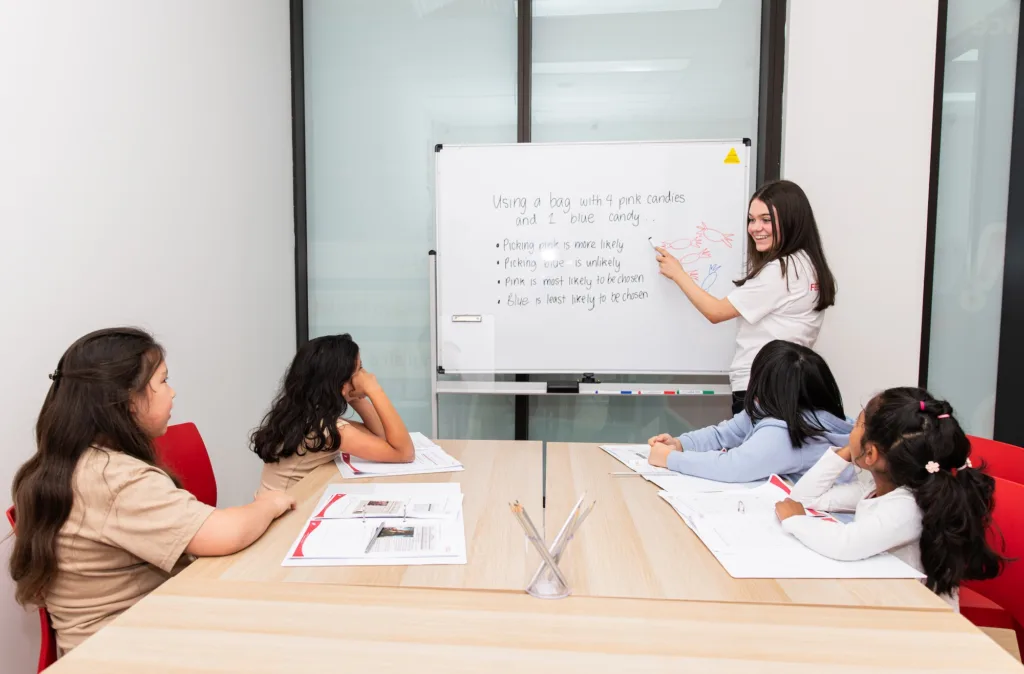
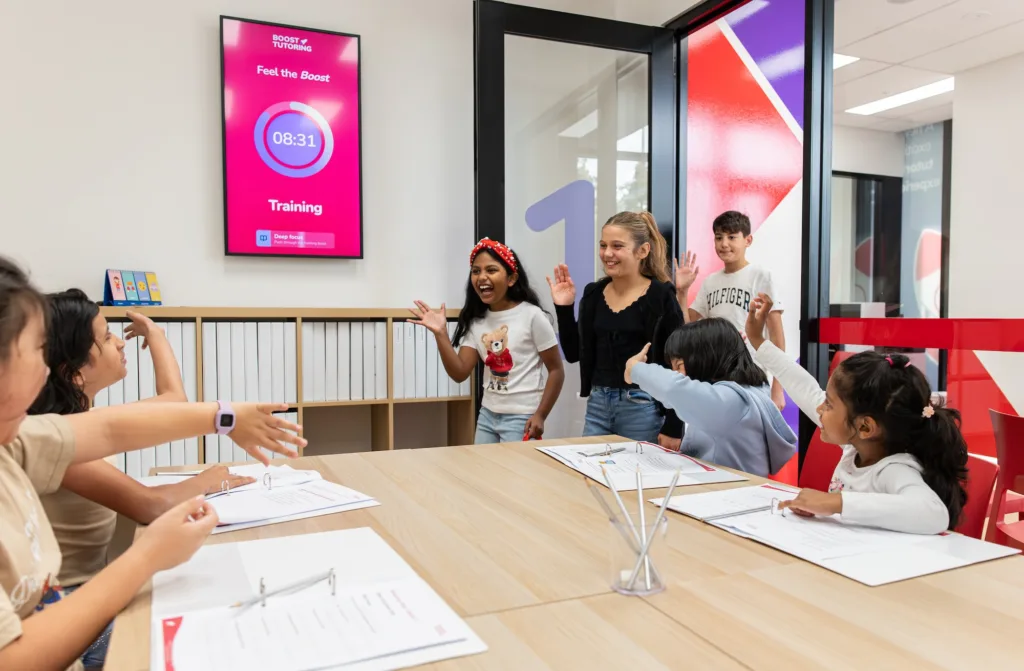
From there, sessions run in small groups of six to eight with the same tutor each week, aligned to the NSW syllabus. Each hour opens with a few minutes of skills work to sharpen the number fluency high school leans on, then real teaching with worked examples, then the student working through it themselves until it holds. Prime, Train, Retain. It carries on at home through a short daily worksheet, because fluency is built with reps, and reps only work when they’re regular.
The aim is a student who understands what they’re doing rather than copying steps, and who arrives in Year 8 solid rather than hanging on.
Year 7 maths catches good students off guard because it changes the game. It isn’t a sign your child has stopped being capable. It’s a sign the ground has shifted, and the sooner you find out exactly where they’re standing, the easier it is to steady them.
Book a free academic assessment and see exactly where your child’s foundations sit