Year 4 is the year that’s easy to overlook. There’s no NAPLAN, no change of school, no obvious milestone to mark it. Your child is settled in the middle of primary, ticking along, and nothing about the year demands your attention the way Year 3’s first NAPLAN or the looming jump to high school does. So most families leave Year 4 to run itself.
That’s a quiet mistake. Year 4 is one of the best windows you’ll get to firm up your child’s foundations in maths and English, precisely because there’s no pressure on it. If you’re weighing up Year 4 tutoring in Beaumont Hills, here’s what’s actually happening this year, and why it’s worth paying attention to.
What Changes in Year 4
Year 4 is a consolidation year. The genuinely new things that arrived in Year 3, longer reading, proper written paragraphs, more abstract number work, are now expected to become comfortable and solid. Year 4 is where the early-primary foundations either lock in properly or start to show cracks.
That matters because of what comes next. Year 5 raises the stakes, with harder content and, for many families, the start of Selective preparation. High school isn’t far off. A child who reaches those with Year 4 fully solid has room to cope. A child who reaches them with gaps spends the next few years patching old holes while trying to learn new material on top.
The happy part is that Year 4 gives you space to do this calmly. With no NAPLAN and, for most children, no looming exam, you can firm things up steadily without any of the pressure that surrounds the bigger years. It’s the rare year where getting ahead costs a child nothing in stress. For families on the OC path, the test does sit in Year 4, but even that is best served by the same steady foundation work rather than frantic cramming.
Year 4 Maths: What to Watch
A few things matter most in Year 4 maths, and they’re worth keeping an eye on.
Times tables need to become automatic this year, not merely calculable. By the end of Year 4 a child should be able to recall table facts instantly, because nearly everything ahead, division, fractions, later multi-step problems, leans on that fluency. A child still working them out slowly is carrying a weight into every maths lesson.
Multiplication and division move beyond the basics, into larger numbers and multi-step work. These are the operations high school maths quietly assumes, so Year 4 is where they need to become reliable.
Fractions start to get serious. Year 4 is often where a child’s real understanding of fractions is either built or quietly skipped, and because fractions underpin so much later maths, this is a topic worth making sure your child genuinely understands rather than just memorises.
And word problems grow, asking a child to read carefully and work out what’s being asked before calculating. That’s as much a reading skill as a maths one, which is part of why the two subjects are worth building together.
Year 4 English: What to Watch
On the English side, Year 4 is where reading and writing step up in specific ways.
Comprehension deepens. A child is no longer just reading and understanding the plain facts of a text; they’re being asked to infer, to read between the lines, to work out what a text implies but doesn’t quite say. This is the layer that quietly matters most, and it’s easy to miss, because a child can read aloud beautifully and still not be doing it.
Writing grows from sentences into structured pieces. Year 4 expects a child to organise ideas into something with a clear beginning, middle and end, rather than just setting down thoughts as they come. Learning to plan and structure a piece is the skill to build here.
Vocabulary widens, mostly through reading. A child who reads regularly and widely is quietly building the word knowledge that every subject draws on, while a child who reads little falls behind in a way that’s genuinely hard to spot until much later.
These add up to the same message as the maths: Year 4 is about turning the new things from Year 3 into solid, comfortable skills, before anything is built on top of them.
How We Approach Year 4 Tutoring in Beaumont Hills
Boost Primary covers the K to 6 years, and Year 4 sits right in its sweet spot: foundations to firm up, confidence to build, and time to do it calmly.
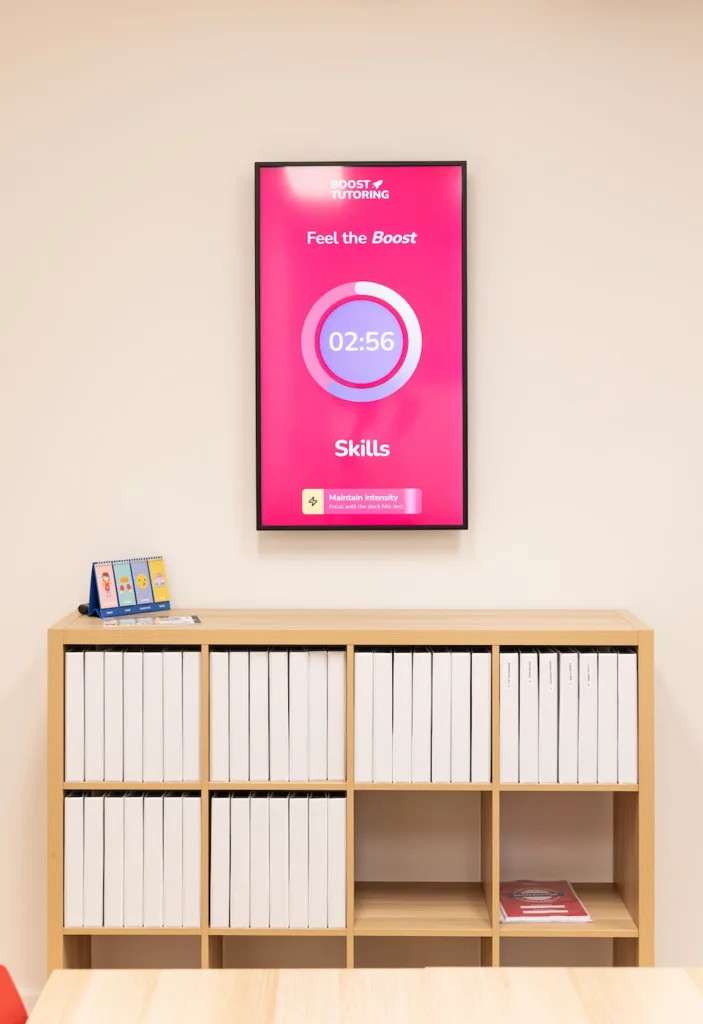
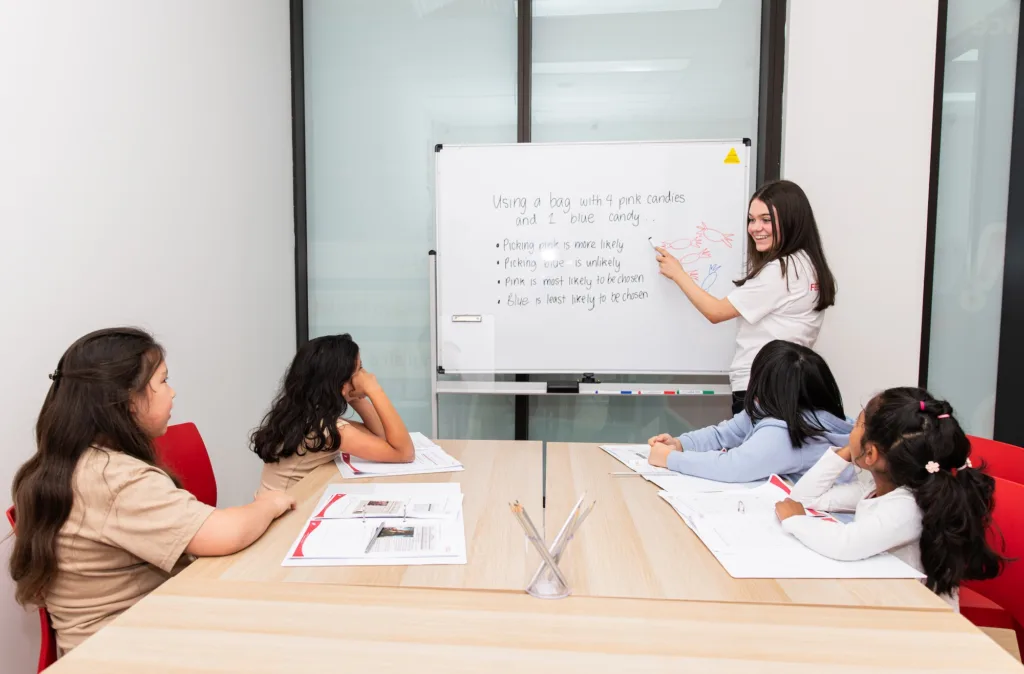
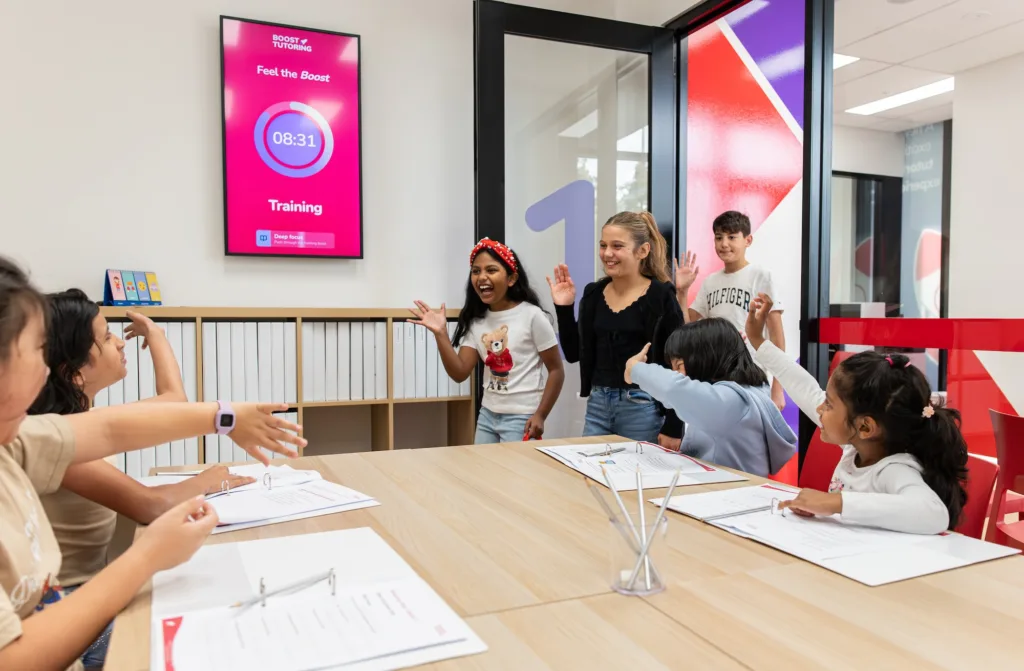
We teach both maths and English, because the two support each other, the reading that underpins word problems, the clear structure that underpins both good writing and clear mathematical thinking. Sessions run in small groups of six to eight with the same tutor each week, aligned to the NSW syllabus. Each one opens with a few minutes of skills work, the times tables and vocabulary a Year 4 child leans on more each term, then real teaching, then the student working through it themselves until it holds. Prime, Train, Retain. It carries on at home through a short daily worksheet in both subjects, because at this age a little every day does far more than a lot once a week.
The aim is simple: a Year 4 child who finishes the year genuinely solid in both subjects, ready for everything Year 5 and beyond will ask.
Year 4 is quiet, which is exactly why it’s valuable. No pressure, no looming test, just a clear run at making the foundations solid before the stakes rise. Spend it well and you make every year that follows easier.
See how Boost Accelerator keeps both maths and English ticking over, a few minutes a day