Your Year 6 child brings home a maths test with a tick on almost every question. They explain their working without being asked, they know their times tables cold, and by every measure in front of you, they’re doing well. Then you hear it from another Castle Hill parent at pickup: her son sailed through Year 6 too, and by the middle of Year 7 he was lost in maths class, marks sliding and confidence going with them. Suddenly “doing well in Year 6 maths” and “ready for high school” don’t feel like quite the same thing.
They’re not automatically the same thing, and most parents only find that out after it’s already happened. Year 6 maths and Year 7 maths are taught differently, and a child can be genuinely strong at one and still hit a wall in the other. What actually carries a child through that jump is a short, specific list of foundations, not a head start on the Year 7 syllabus itself.
Why Year 6 Confidence Doesn’t Always Survive Year 7
Primary maths is taught concretely. A teacher walks the class through worked steps, uses visual models, and gives a lot of practice on one skill before moving on. Year 7 maths moves differently. It covers algebra, geometry, number and probability within the same term, expects a level of abstraction primary school doesn’t (letters standing in for unknown numbers, negative numbers used deliberately rather than just introduced), and rarely circles back to reteach a skill once it’s assumed to be known.
A child who got through Year 6 by following the teacher’s example closely, rather than genuinely owning the underlying skill, can find themselves several steps behind before anyone notices a gap has opened. Take a simple example: solving “2x + 3 = 11” asks a student to treat an unknown number as something you can work backwards from, rather than a sum with a single obvious answer sitting in front of them. That kind of thinking is built, not switched on overnight in Term 1 of Year 7. This isn’t a sign the child was never any good at maths. It’s a sign the way they were doing it stopped being enough once the pace changed.
The Number Skills That Actually Matter Before Year 7
Four things matter more than anything else in the run-up to high school, and none of them require racing ahead into Year 7 content.
The first is instant recall of times tables and basic number facts. A child who can produce these automatically has mental space free for the new, harder content sitting on top of them. A child who’s still quietly working them out is spending that same mental space just keeping up with the arithmetic.
The second is fluent movement between fractions, decimals and percentages. Year 7 maths regularly expects a student to convert between all three within the one problem, and treats it as a given rather than something to relearn.
The third is genuine comfort with negative numbers, which is a real Year 6 syllabus topic that often gets less practice at home than fractions or times tables. It becomes formal integer operations early in high school, and a shaky grip on it in Year 6 tends to resurface as a shaky grip on algebra a year later.
The fourth is reading and working through a multi-step word problem without someone walking through each step alongside them. High school maths assumes a student can plan an answer, not just execute a taught method.
A rough home check for all four: ask your child a times table fact and time the pause before they answer, hand them a word problem with two steps hidden inside it and watch whether they read it once or several times, or ask them to explain a negative number question out loud rather than just writing the answer down. None of these need to be perfect. What you’re looking for is whether the answer comes with genuine understanding attached, or whether it’s a rehearsed step your child can perform but not really explain.
Why Independence Matters as Much as Ability
High school changes more than the content. Year 7 means multiple subjects and multiple teachers instead of one teacher who sees the whole picture, and a diary or app to manage instead of a single adult tracking everything for the class. Maths homework won’t be checked line by line by the teacher who taught that exact lesson that morning.
A child used to a parent or tutor sitting beside them for every question, rather than attempting it first and asking for help on what’s actually stuck, has more to adjust to than the maths alone. Checking your own working and noticing when an answer looks wrong is its own skill, separate from knowing the method, and it’s one that pays off from the very first week of Year 7, when five different subjects can each land homework on the same night with nobody at school checking whether it actually got done properly.
How to Use the Time Before High School Well
The useful move here isn’t cramming ahead into the Year 7 syllabus. It’s a handful of short, regular reps on the things above: a few minutes of times tables practice if recall isn’t automatic yet, one fraction-decimal-percentage conversion a week, a negative numbers question worked through properly rather than skipped, and one multi-step word problem attempted alone before any help is offered.
The report card is also worth a second look. A “good” grade earned with a parent or tutor beside them for every session is a different result to the same grade earned independently, even though the mark on the page looks identical. That gap between the two is exactly what a Year 7 classroom exposes.
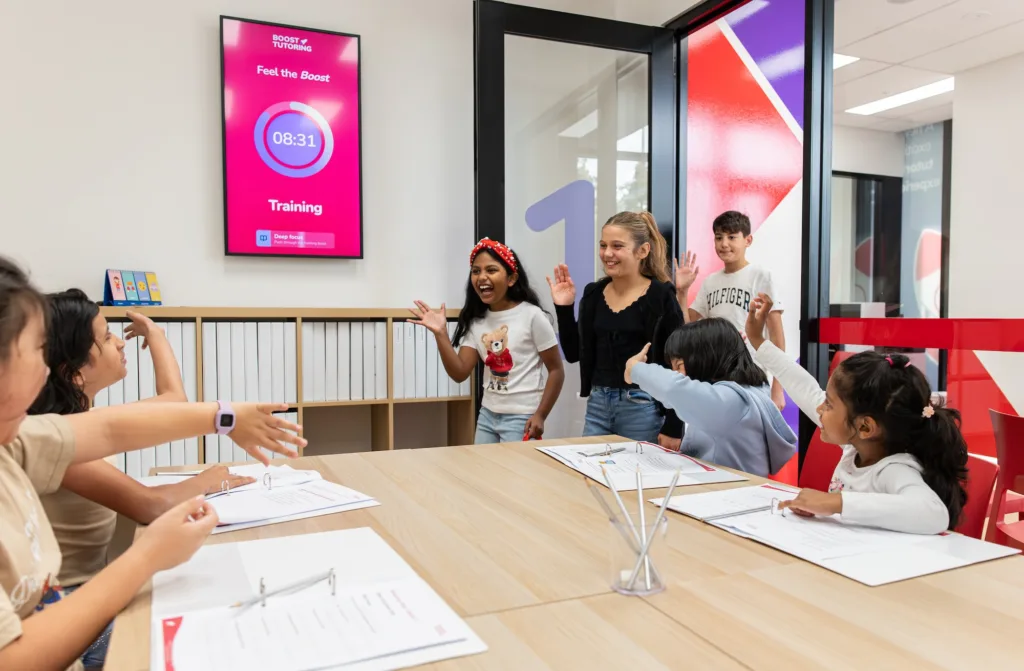
This is why every Boost Primary session in Castle Hill opens with five minutes of Prime skills work, the times tables, mental maths and quick number facts that make everything after them easier, before moving into curriculum content the student works through with real teaching behind it. It’s not designed to get a child ahead of Year 7. It’s designed to make sure the foundation is actually theirs by the time they get there.
If you’re not sure whether your child’s Year 6 maths is solid underneath a good report card, a proper assessment will tell you exactly where they stand before high school does
Book a free academic assessment and see exactly where your child’s foundations sit