Your child finishes Year 6 as one of the oldest and most confident students in the school. Ten weeks later they walk into high school as one of the smallest, with a locker they can’t open, a timetable they can’t read, and eight different teachers who don’t yet know their name. The gap between those two moments is one of the biggest a child crosses in their whole education, and it happens over a single summer.
Most Hills parents brace for the social side of that jump. Fewer prepare for the academic one, which is where the quiet trouble tends to start. Here’s what actually changes in Year 7, and how to give your child a fair run at it.
What Actually Changes in Year 7
The first change is structural. In primary school, one teacher sees your child all day, every day. They notice when something’s off. They know your child is quiet in maths and confident in reading, and they adjust. In high school, your child has a different teacher for every subject, each one seeing them a few hours a week among a hundred and fifty other students. Nobody has the full picture anymore, and a child who’s slipping can slip a long way before anyone joins the dots.
The second is pace. High school content moves faster, and it doesn’t wait. In primary, a teacher can hold a topic open until most of the class has it. In high school, the term has a plan, and the plan keeps moving. A child who misses a foundation in week two is still expected to be there in week six.
The third is independence. Suddenly your child is expected to manage a diary, track assessments across eight subjects, remember which books to bring on which day, and start work on things that aren’t due for three weeks. These are organisational skills, and they’re rarely taught explicitly. They’re just assumed.
And the fourth is that the safety net thins out. In primary, an incomplete piece of homework gets a gentle reminder. In high school, it gets a zero and a note in a system you might not check for a fortnight.
Where the Academic Cracks Show First
Maths is usually the first place. Year 7 maths pulls away from arithmetic and toward abstraction, with algebra arriving quickly. A child who’s still counting on their fingers, or who never quite locked in fractions, finds that everything is suddenly built on things they don’t have. The content isn’t harder in a way effort alone can solve. It’s harder because it assumes a foundation.
English is the second. High school English asks students to analyse a text rather than simply understand it, to build an argument, to structure a response and back it up with evidence. A child who read well in primary can suddenly find that reading well isn’t the skill being tested anymore. They’re being asked to think about what they read, and to write that thinking down in a shape they’ve never been shown.
And then there’s the quiet one: managing the workload. A child who was perfectly capable in primary can come undone in Year 7 simply because they’ve never had to plan two weeks ahead in their life.
How to Prepare Over Year 6
The good news is that all of this is preparable, and the best preparation happens in Year 6 rather than in a panicked first term of Year 7.
Start with the foundations, because they matter more than anything else on this list. A child entering Year 7 with automatic times tables, a solid grasp of fractions, decimals and percentages, and the ability to read a passage and understand it properly, has room to cope with everything else that’s changing. A child entering with gaps in those areas is trying to learn a new system while also patching old holes, and that’s a hard way to start.
Then build the independence deliberately, in Year 6, while the stakes are still low. Let your child own their homework rather than sitting beside them for it. Give them a diary and let them use it badly for a while. Let them forget something and feel the small consequence of forgetting it, because a forgotten book in Year 6 is a lesson, and a forgotten assessment in Year 8 is a mark.
And talk about the change honestly. Not as something to fear, but as something that’s coming. A child who expects the jump handles it far better than one who’s blindsided by it.
The Six Months That Matter Most
If there’s a window worth using, it’s the second half of Year 6 through the summer. Not for cramming Year 7 content, which is a waste of time, but for making sure the foundation is genuinely solid before the pace picks up.
The most useful thing you can do is find out where your child actually stands, specifically rather than generally. Not “they’re fine at maths,” but which topics are secure and which are shaky. Primary reports are often kind and rarely precise, and a child can coast through Year 6 with a soft spot that primary never fully exposed and high school will find within a term.
How We Prepare Students for High School at Boost
Boost Primary covers K–6, and Year 6 sits right at the pointy end of what it’s for. We start by working out exactly where a child sits, which is often the first time a family sees clearly which foundations are solid and which need firming up before Year 7 arrives.
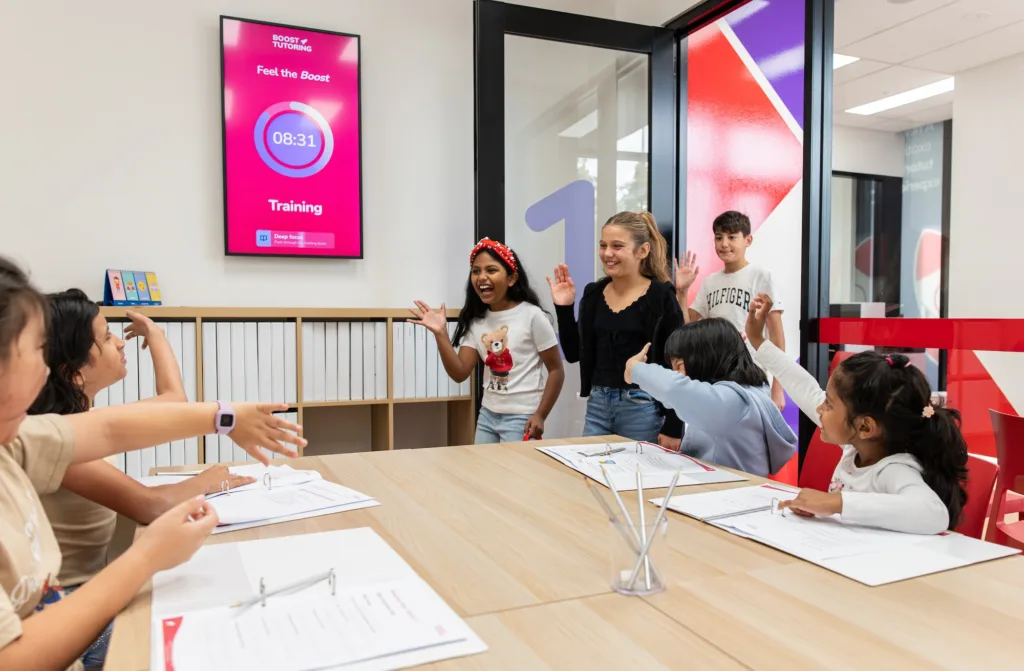
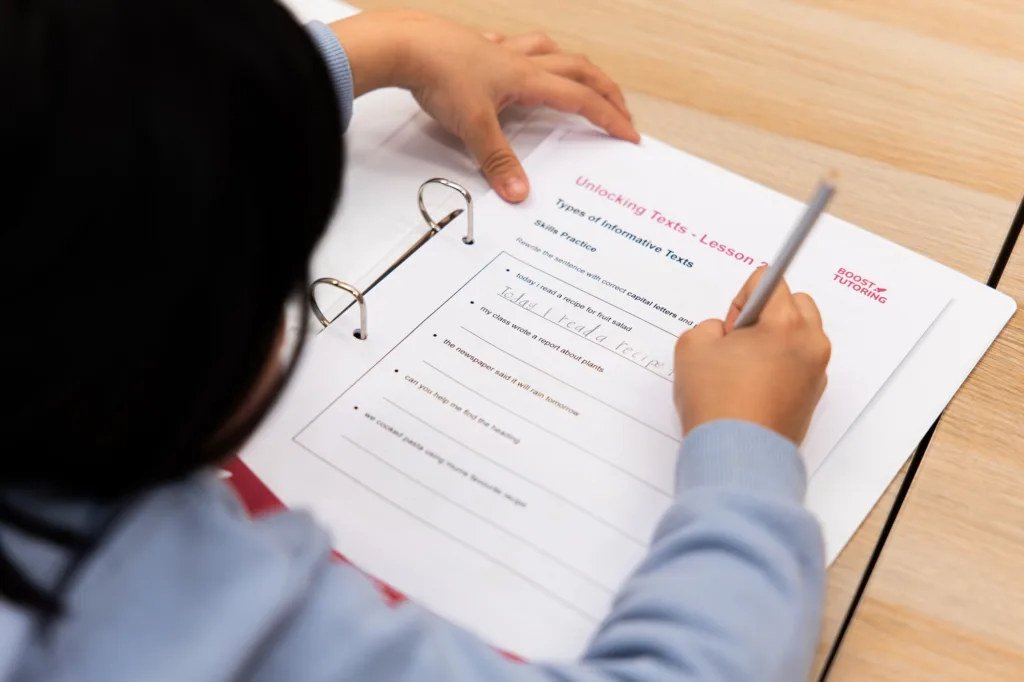
From there, sessions run in small groups of six to eight with the same tutor each week, aligned to the NSW syllabus. Each hour opens with a few minutes of skills work, the times tables and mental maths high school leans on hardest, then real teaching, then the student working through the content themselves until it holds. Prime, Train, Retain. It carries on at home through a short daily worksheet, which quietly builds exactly the independent working habit Year 7 is about to demand.
The aim is a child who walks into high school with the foundations solid, so they can spend Year 7 adjusting to everything that’s new rather than scrambling to catch up on everything that’s old.
The jump to high school is real, and it’s bigger than most families expect. But it’s a jump a child can be genuinely ready for, and readiness is built in Year 6, not in the first term of Year 7.