Roughly four weeks into Term 1, the homework routine your child relied on starts to slip. Questions take longer. Hesitation creeps in. That’s usually when Year 7 maths help stops feeling optional and starts feeling necessary.
Why Does Year 7 Maths Feel So Different From Primary School?
The challenge isn’t just harder maths. The whole structure changes at once — new rooms, new teachers for every subject, and far less hand-holding than primary school ever gave your child.
The routine your child knew is gone almost overnight. Different teacher, different room, different pace, sometimes all before lunch. They’re expected to work independently before they’ve had time to build that habit.
Then there’s the content. Formal algebra, geometry and statistical reasoning all arrive in Year 7 under the Australian Curriculum Version 9.0. Whatever gaps your child carried from primary school stop staying quiet.
A strong Year 6 report doesn’t guarantee an easy start to secondary maths. Even capable kids get unsettled when unfamiliar concepts pile up fast.
Fractions, algebraic substitution, and several new topics can all land in the same term. It’s the volume that catches them out.
Primary maths rewarded getting the right answer. Secondary maths wants your child to show their working and justify the reasoning behind it. It also wants your child to read a problem that doesn’t announce which method to use. That’s exactly where even strong students get caught out.
What Maths Skills Do Students Need to Succeed in Year 7?
Most struggles in secondary maths started earlier than Year 7. Something that didn’t quite set a year or two back sits unnoticed until harder material lands on top of it.
Children who arrive with solid fluency in a handful of areas tend to settle into Year 7 faster. Fractions sit right at the top of that list, particularly with unlike denominators.
Being able to apply decimal and percentage conversions matters as much as knowing them. So does recalling multiplication and division quickly, without reaching for a calculator.
Working out what a question is actually asking before picking a method takes practice on its own. A comfortable grip on angles, shapes and area rounds the list out.
None of that is advanced work, which is exactly why it’s easy to miss. A shaky grip on even one area creates friction the moment Year 7 begins.
Algebraic thinking sits directly on top of all five. Weak fractions resurface the moment algebra begins, and shaky percentages follow your child straight into financial maths.
One gap rarely stays in the topic it started in. Everything built on top of it gets a little harder to follow as the term goes on.
A 2022 International Journal of STEM Education review tied falling confidence in early secondary school to weak transition support. The earlier that gets picked up, the easier it is to turn around.
When Should Parents Consider Extra Year 7 Maths Support?
Not every Year 7 student needs extra support. But noticing small changes early often stops an ordinary first-term wobble from settling in for good.
The first signal usually shows up in behaviour, well before it shows up in grades. Maths homework left half-finished, or avoided altogether, night after night, is one of them.
“I’m just bad at maths,” said with a certainty that wasn’t there in primary school, is another.
Anxiety before assessments, even on content covered properly in class, is worth noticing too. So is your child reaching the right answer but struggling to explain how they got there.
Marks that stay flat no matter how much extra study goes in at home are the clearest signal of all. More practice rarely helps while the real misconception stays hidden underneath it.
More than one in three Year 7 students felt unready for secondary school, according to 2022 figures from Life Ed Australia. That uncertainty tends to show up in class participation well before it shows up in results.
A nightly homework standoff usually traces back to one thing. An assessment often finds weak fractions quietly affecting several Year 7 topics at once, not only the one causing the visible frustration.
Once that gap gets addressed first, classroom confidence and homework habits tend to follow close behind. Finding the right gap matters more than covering everything your child has missed.
Covering everything your child has missed rarely solves much while the actual gap stays hidden underneath it. Progress tends to arrive faster once that weak point has actually been found.
How Can Parents Support Their Child’s Maths Learning at Home?
What helps most at home isn’t getting every question right. It’s staying interested in how your child is going day to day, not waiting for the report card to find out.
Ask how they reached an answer rather than just checking if it’s correct. The explanation usually tells you more than the result does.
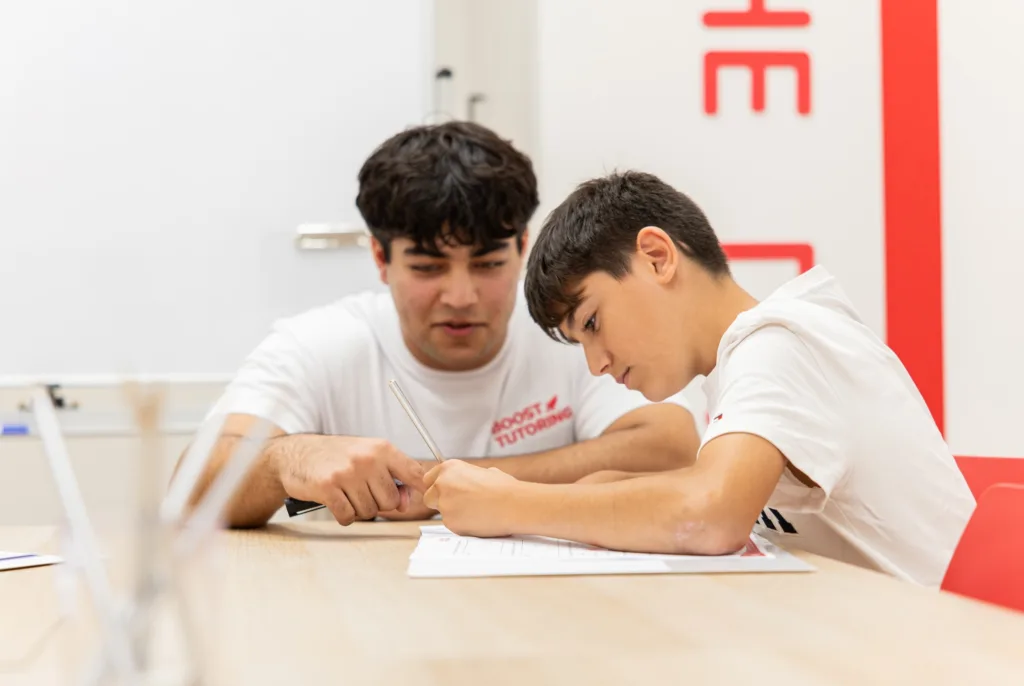
Sitting nearby during homework, without jumping in, gives your child room to think through hard questions on their own. It’s a small habit, and it tends to matter.
If you’re in the Hills District, our maths and English tutoring across the Hills page is worth a look for what structured support can add to what you’re already doing.
The way your child handles a wrong answer matters more than most parents realise. For some kids, one mistake is enough to derail confidence for the rest of the lesson.
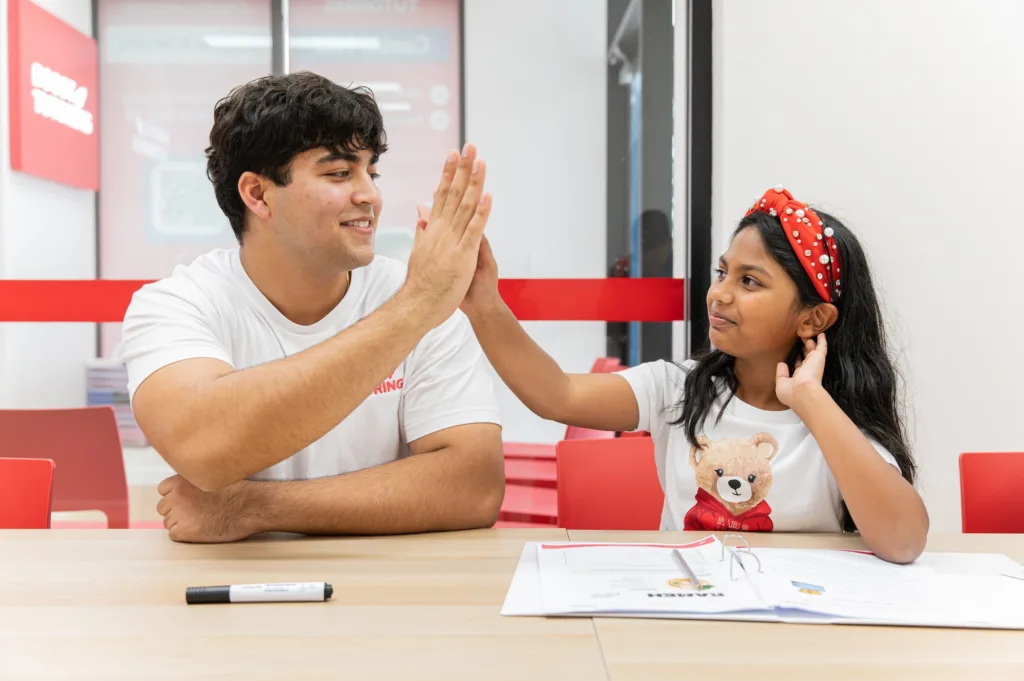
A calm response helps them recover faster. Treating mistakes as a normal part of learning, rather than something to fix, makes the next attempt easier.
Real confidence builds when hard questions become manageable through practice, not when they’re avoided. Your child gets through them and comes out the other side somewhere different.
Where Can Families Find Year 7 Maths Help in Australia?
Some children move forward with a bit of encouragement and steady practice at home. Others need help pinpointing the exact skill that’s holding them up.
A decent tutoring program starts by finding out where your child genuinely stands, not where their year level says they should be.You also need updates as they progress.
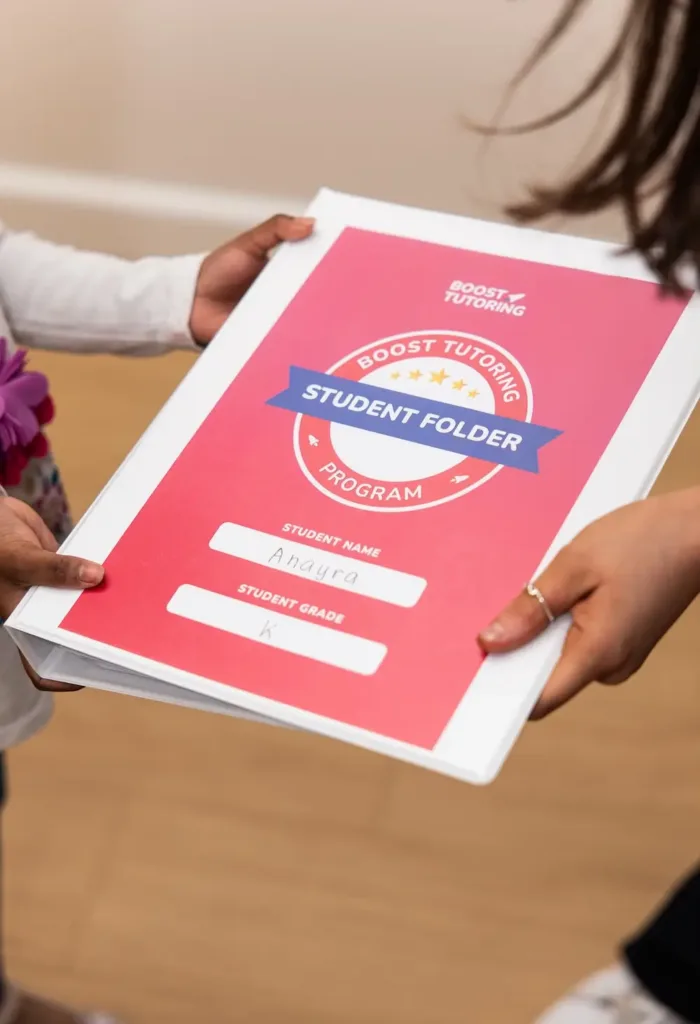
A single report at the end of term arrives too late to change course if something isn’t working. Every Boost Tutoring program runs through four stages: Assess, Plan, Coach and Review.
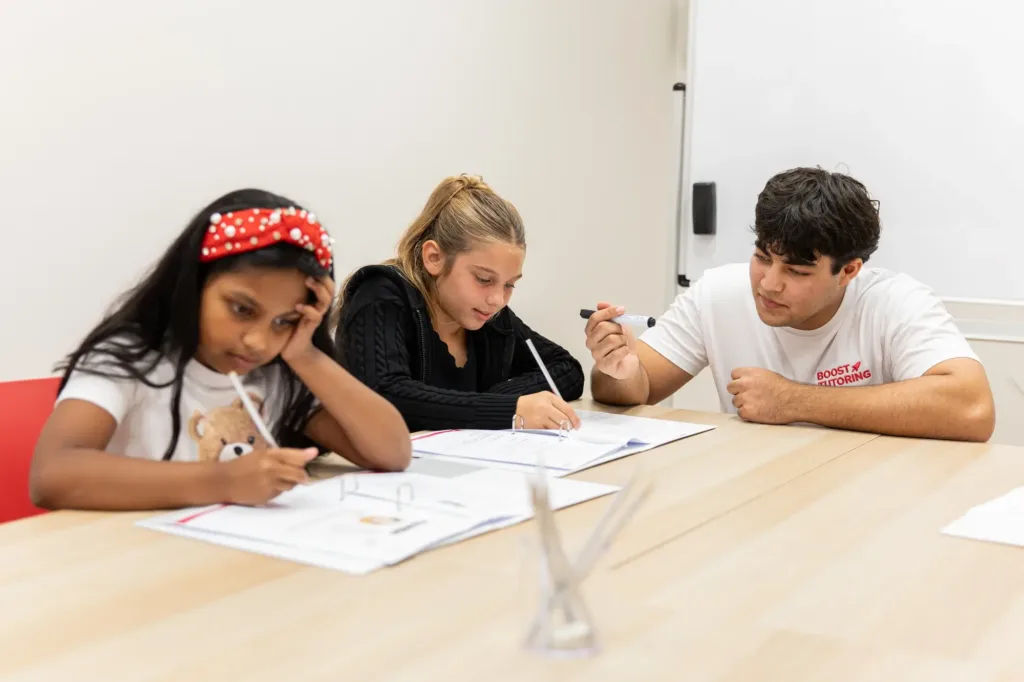
Our services outlines what each phase involves and who it suits. Extension work suits children already moving comfortably who just need more depth. Smaller groups give tutors more chances to catch confusion early, before it settles into a habit. Boost Tutoring runs through Beaumont Hills and Castle Hill.
If you’re weighing up other options, our guide to selective prep in the Hills gives useful local context.
Frequently Asked Questions About Year 7 Maths
These are the questions parents tend to ask most in the first few weeks of secondary school, once the new routine has properly settled in.
Is Year 7 maths harder than primary school maths?
Yes, but the jump is structural as much as academic. Secondary maths asks your child to think more deeply, adapt to a faster pace, and take on more responsibility sooner than expected.
A shaky start usually reflects a new learning environment more than it reflects ability. It’s worth holding onto that, especially in the first term.
How do I know if my child needs Year 7 maths help?
Avoidance is usually the earliest clue. Homework that used to get done without a fuss starts being put off, once uncertainty replaces the confidence that was there before.
If you keep hearing “I’m just not a maths person,” that comment is worth following up on. A free assessment through Boost Tutoring quickly shows whether missing foundations are behind it.
Can tutoring improve maths confidence as well as grades?
Often, yes. As understanding settles, confidence tends to follow, and you’ll usually see your child attempt harder work well before the grades reflect it.
What topics do students typically learn in Year 7 maths?
Algebra, measurement, geometry, statistics and probability all appear under the Australian Curriculum V9.0. The shift is often bigger than families expect after primary school.
Is Year 7 too early to get maths tutoring?
No. It’s one of the better times to start, in fact. Term 1 or Term 2 gives a gap room to close before it compounds. Gaps caught early are far easier to address than ones carried into Years 9 and 10.
Help Your Child Start Year 7 Maths With Confidence
Maths is usually where the secondary jump bites hardest. If your child is already pulling away, you probably don’t need a test result to confirm what you’re seeing at home.
Book a free assessment with Boost Tutoring to see exactly where your child currently sits. From there, we’ll map the gaps and build a plan around them. Contact us here or explore all our services.