After school at the kitchen bench, a Year 4 child reads a whole chapter aloud to whoever’s cooking. Every word lands and even the tricky names come out clean. Then you ask what the chapter was about, and the answer is a shrug and “a dog, I think.” It’s a strange moment, because the reading sounded so good. Reading the words and understanding them are two different jobs, though, and only one was happening at the bench.
To most children, reading comprehension primary skills feel like the same thing as reading well, because getting every word right is what’s been praised since Kindergarten. Ask what happened and they’ll name a character or a single moment, then stop, sure they’ve answered. Most Hills District families notice it in Year 3, once the chapters stretch out and the questions start asking why. It’s a teachable skill, though an armful of library books won’t teach it alone.
Why Reading Comprehension Is Harder Than It Looks
Understanding Words Is Different From Understanding Meaning
A parent at the bench hears the pace first. Underneath it sits plain decoding, with the eyes catching letters and the brain naming each word fast enough to sound polished. Meaning lives a layer further in. To get there, a child works out what each word means in this one sentence and fills the gaps with what they’ve seen of ordinary life.
A sentence such as “Mia pulled her coat tighter and watched the bus disappear” never mentions the cold or a missed bus. A reader who follows the passage still picks up on both.
In a session, it usually shows up as a child who can answer “who” and “where” questions straight from the page but goes quiet once the answer has to be pieced together. That isn’t laziness. The trouble sits in the thinking after each word lands, which a parent listening from the next room can’t hear.
Why Reading More Books May Not Be Enough
More books is the tip most parents hear first. It has merit, since wide reading grows vocabulary and shows how a story or report is built. The catch is that a child who skims past what they don’t understand can read fifty books and keep skimming.
Students at two regional NSW primary schools sat comprehension tests in Years 3 and 4, then again two years on, for a 2024 Australian Journal of Education study. Early scores turned out to be the best guide to later ones. That suggests a gap seen in Year 3 is often still there in Year 5.
Then there’s effort. Students who reported more academic self-handicapping, easing off so a weak score comes with a ready excuse, scored lower both times.
To be fair, the sample was small, and no home-reading routine was tested. The study can’t show that confidence alone fixes reading. Still, it matches what tutors see in a child who’s quietly decided they’re “not a good reader” and stops trying the hard parts, which another stack of books won’t change by itself.
Which Skills Help Children Understand What They Read?
Building Vocabulary and Identifying Main Ideas
Comprehension usually cracks first at a word like “sombre”. Three of them in one paragraph and the sentence around them goes blank, though most children never mention it. They’ll just keep going. Talking through word meanings in context does far more than a list of definitions. When a story says a character was “reluctant”, ask your child what the character did that showed it, then try the word in a sentence about their own day.
Main ideas work in a similar way. The check is one sentence on what the paragraph was for, said without peeking back. First attempts usually replay every event in order, which shows the details stuck and the sorting hasn’t started yet. A strong answer drops nearly all of the detail and keeps the one thing the paragraph was there to say. If it comes out as “it’s about how sharks find food”, that’s the skill working.
Making Inferences and Finding Clues in Texts
Much of what a story means never gets written down. Readers reach it by pairing a clue on the page with something they already know. A character slams her bedroom door and skips dinner, and nobody needs telling that she’s upset. The question that builds this habit is a simple one: “What makes you think that?” It asks a child to point to the words behind their answer, so a guess turns into a reason. The thinking skills section of the OC and Selective tests leans on the same habit.
Language and general knowledge carry a lot of that load, which is why inference develops unevenly. Those foundations are laid well before Year 3, and a national report shows how early. On starting school, children’s language and thinking skills had the strongest link to their Year 3 and Year 5 NAPLAN results. Communication skills and general knowledge sat just behind them.
The Australian Education Research Organisation report wasn’t a trial of any home-reading method. Even so, that NAPLAN link carries a lesson. A child with shaky foundations needs those rebuilt before extra practice can stick.
How Parents Can Help Without Turning Reading Into a Test
Asking Questions That Encourage Deeper Thinking
A good book question sounds like something asked over dinner. Start with what happened, move to why a character behaved a certain way, then ask which detail made them think so. Then comes the hard part for most parents, which is waiting. A child who’s asked “why” needs a few seconds to think, and jumping in with the answer, or correcting the first half-formed attempt, teaches them that someone else will finish the thought. If an answer drifts off track, ask what in the story suggested it. Given that nudge, most children talk themselves back to the right page.
Book talk goes better when it sounds like the car ride home after a family movie, with no pen or score involved. That matters, because children say far more when nobody seems to be marking them. Reading then stays something the family does together.
When Home Reading Practice Is Not Enough
Many children sharpen their reading comprehension primary skills on nightly books and good questions alone. Others need closer teaching than a tired Tuesday allows. The usual tell is a child who reads a passage aloud beautifully and then can’t retell it or say what it was mostly about.
Another is an answer they can’t explain, even when the words were easy. One of those on a tired night means very little.
When the same signs keep turning up for weeks on end, across stories and fact sheets alike, something underneath needs a closer look. The answer to how to help your child catch up without overwhelming them is rarely more homework. It starts with a clear name for the gap, whether that’s vocabulary or inference.
How to Build Stronger Reading Habits Over Time
Making Reading Practice Short and Consistent
A Sunday hour of reading usually loses out to ten or fifteen minutes on most weekdays. Shorter stints are easier to keep going, and a child’s focus holds to the end. Parent and child read together, then spend two or three minutes talking, first about what happened and then about why someone did it.
Comfortable books do a lot of the quiet work. A child halfway through a favourite series, or deep into a shark phase, spends their effort on meaning and little on sounding out. Once the chats come easily, the bar can rise a notch. A slightly harder book works, and so does asking what might happen on the next page.
When Primary English Tutoring May Help
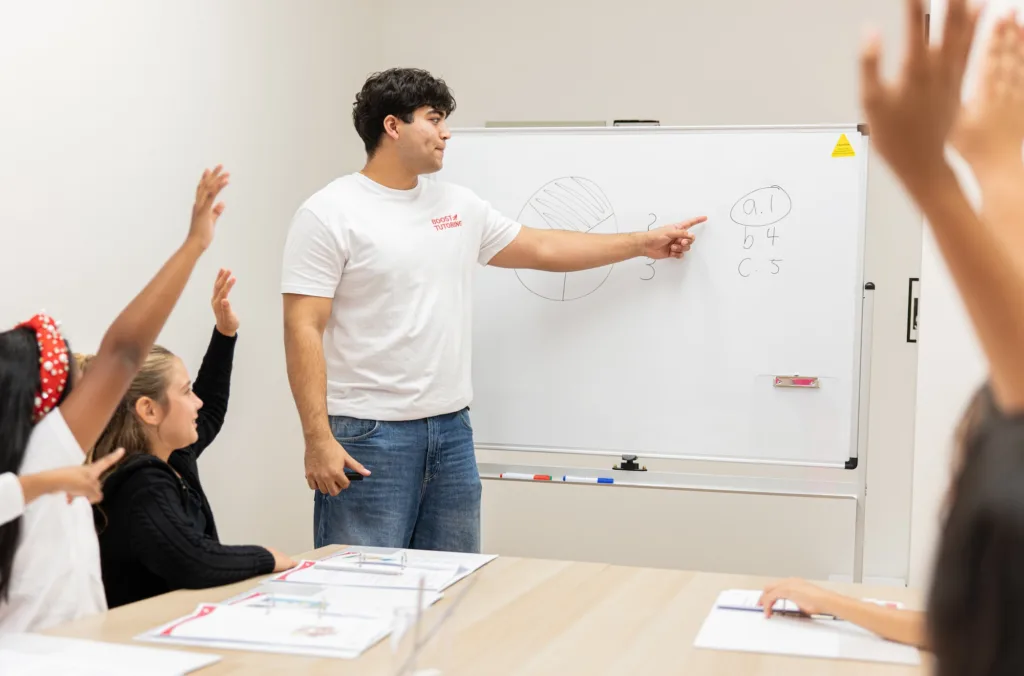
Outside help makes sense once the same stumble keeps returning. From home, a vocabulary gap and an inference gap look almost identical at the kitchen bench. A tutor running a small group notices which questions a child quietly skips and where an explanation trails off. That’s where the teaching goes.
By Term 3, a reading log full of titles says little about either gap. Knowing which one is in play decides what the next ten weeks of teaching look like.
This is the thinking behind how a Boost session opens. Students spend five minutes on foundational skills before any curriculum content, in a small group with the same tutor weekly. In small-group English tutoring for primary students at Boost Tutoring Castle Hill and Beaumont Hills, those minutes go on vocabulary and retelling, then on backing answers up with the text.
Pushing a child ahead of the class isn’t the point. Secure footing under comprehension is, well before the Year 5 texts arrive.
If your child reads aloud fluently yet blanks on the story, the question is whether vocabulary or inference sits behind it. That’s what an assessment at Boost Tutoring Australia is designed to show.
Book a free academic assessment and see exactly where your child’s foundations sit