At 7:40 pm, four pages into a chapter book propped on the pillow, a Year 3 reader hasn’t stumbled over a single word.
The plot comes back in order, from the runaway dog to Mia searching the park. Grandpa came home holding the empty lead and barely spoke at dinner. Then you ask why Grandpa was so quiet. A shrug. “It doesn’t say.” Strictly speaking, it doesn’t, and working it out anyway is what reading inference is for.
Tutors see this pattern constantly with Hills District primary students. The retell is accurate, but the moment a question asks why, the answer stops. Bedtime rarely reaches the why questions, so the gap stays out of sight until a school comprehension sheet asks them. The practice fits inside that same bedtime chapter book.
What Does It Mean to Make an Inference?
Inference works like a small sum, with a detail on the page added to something the reader already knows. “Where did Mia look for the dog?” has its answer printed on the page. “Why was Grandpa so quiet?” doesn’t, so the first is retrieval and the second asks a child to interpret clues.
Children who stumble on the second kind usually aren’t weak readers. They’ve learnt that answers live on the page, and until now that’s always been true.
Helping Children Connect Clues With What They Know
A character steps inside holding a dripping umbrella, shoes caked in mud. Nothing mentions rain, yet most children will say it’s been raining, because they’ve shaken off an umbrella themselves. The answer was split between the page and their own experience.
Inference is really several skills under one name. Across 75 studies, nine specific types of inference turned up in a 2023 Texas A&M University review.
A popular American textbook and two reading tests didn’t always ask the same inference questions, says the paper in Technology, Knowledge and Learning. The mismatch shows at the kitchen table, where a child breezes through feelings questions and then stalls on why the author mentioned a detail.
Why Do Children Struggle to Read Between the Lines?
Plot recall is usually solid. Chapter by chapter, a child can list what happened, yet the small details showing how a character feels slip straight past. Some children grab an answer with nothing under it, like “He’s sad because he’s sad.” Others reach a sound answer but can’t name the words that led there.
Both answers look the same on a written comprehension sheet. One bare line, no reason, and the teacher marking it can’t separate them.
Recognising Clues About Characters and Events
Authors skip the word nervous. It comes through what a character says and does, and through the order that things happen in. Three clock checks and some pacing by the door point to nerves. Granted, young readers often skim that kind of detail to reach the next event.
Tutors listen for one giveaway here. Once the question turns to feelings, a Year 3 finger lands on whichever line says “sad” or “cross”. The slammed door two lines up gets skipped.
Supporting an Answer With Evidence
Guessing turns into inference once a child can point to the words behind it. “She’s worried, because she keeps checking the clock and she’s walked to the door twice.”
Two clues, one conclusion. Then again, maybe she’s excited. A birthday party in the next paragraph tips it that way. Talking that through shows a child the page outranks even the adult asking.
A raised eyebrow sorts the two quickly. The guesser swaps answers on the spot. The reasoner flips back to the page and searches for the line that made them say it.
How Can Parents Practise Inference Skills at Home?
Worksheets can stay at school for this one. The practice is mostly talk and a few why questions, much like helping with homework.
Asking Questions During Shared Reading
Most of the talk at home can run on three questions. “What makes you think that?” “Which clue helped you work that out?” “What might happen next?”
Teachers stop where a story leaves something unsaid and ask a how or why question in the early primary read-alouds that University of Minnesota researchers studied.
Then the teacher talks through how two details fit together. Three to five inferential questions per book is the range suggested in the researchers’ 2023 paper in The Reading Teacher. Any more turns a story into a test. The silence after each one is harder. Most adults hint within seconds, yet ten full seconds usually brings back the answer a child reasoned through.
Choosing Stories That Encourage Deeper Thinking
A character who storms off without a word leaves more to work out than one labelled angry. Those are the books for bedtime. Picture books handle it well, even for older primary children, since pictures show what words skip. Action series, on the flip side, spell everything out.
How Can Children Build Stronger Inference Skills Over Time?
Progress zigzags across a school year. A child who reads feelings well can still stall on an informational text, where the inference is about cause and effect.
Reading inference still builds in a rough order. Feelings and events usually click first, and themes come last, with motives and predictions in between. The three habits below follow it.
- Clear clues first. Ask what a character feels based on what they did, like stomping upstairs.
- Ask where it says so. Have your child point to the word or picture behind their answer, a habit that carries into written comprehension.
- Then make the clues quieter, with subtler passages and two possible readings to weigh up.
When Might Extra Reading Support Help?
When a term of good questions at home hasn’t shifted much, that result is worth knowing. Sometimes the snag isn’t inference at all, since a child can’t build a conclusion from a word they don’t know. On top of that, written answers can lose marks through grammar mistakes that lower student marks, even when the thinking behind them is sound.
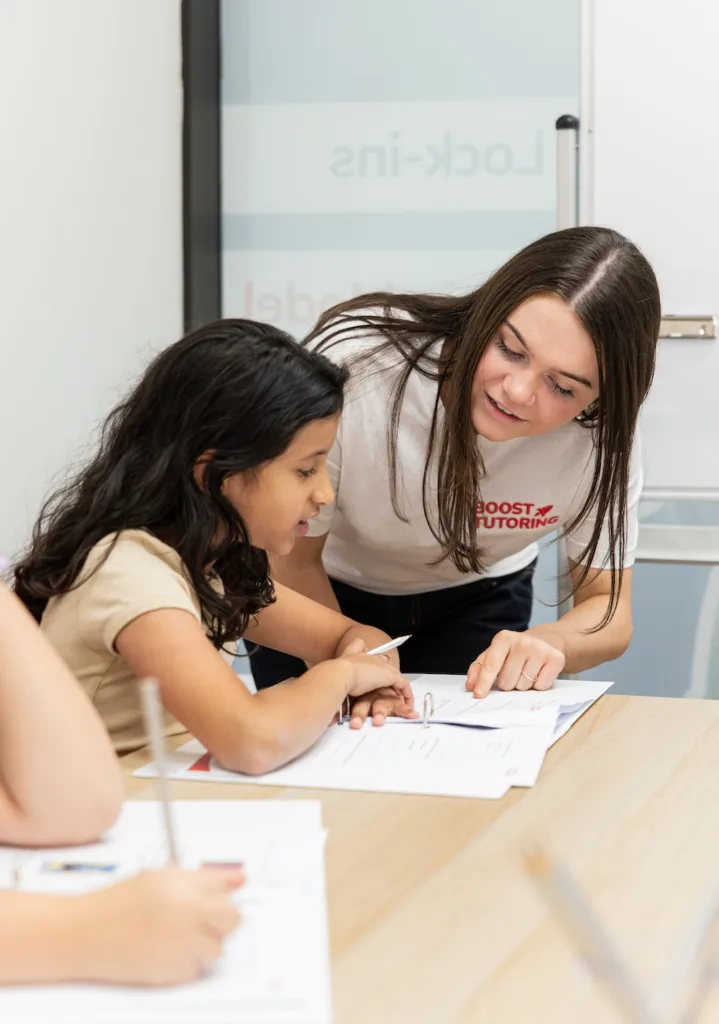
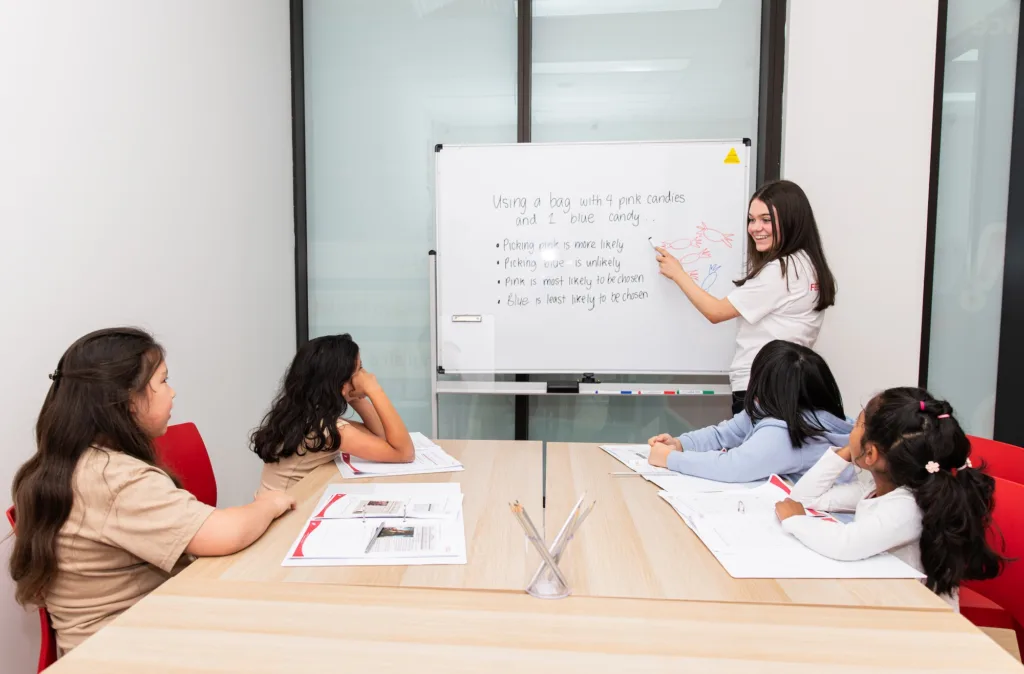
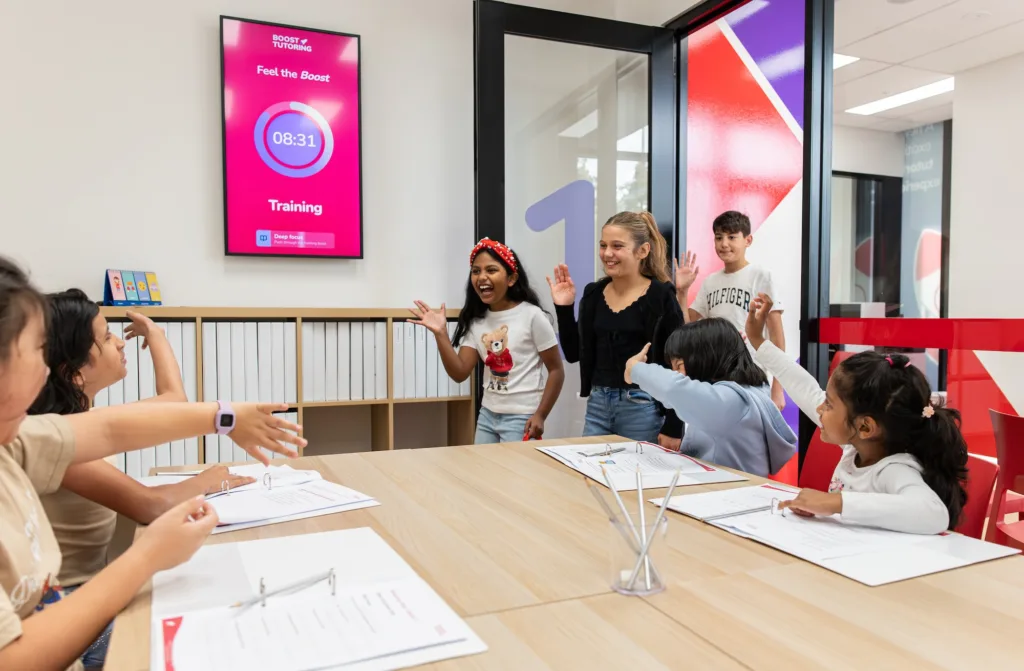
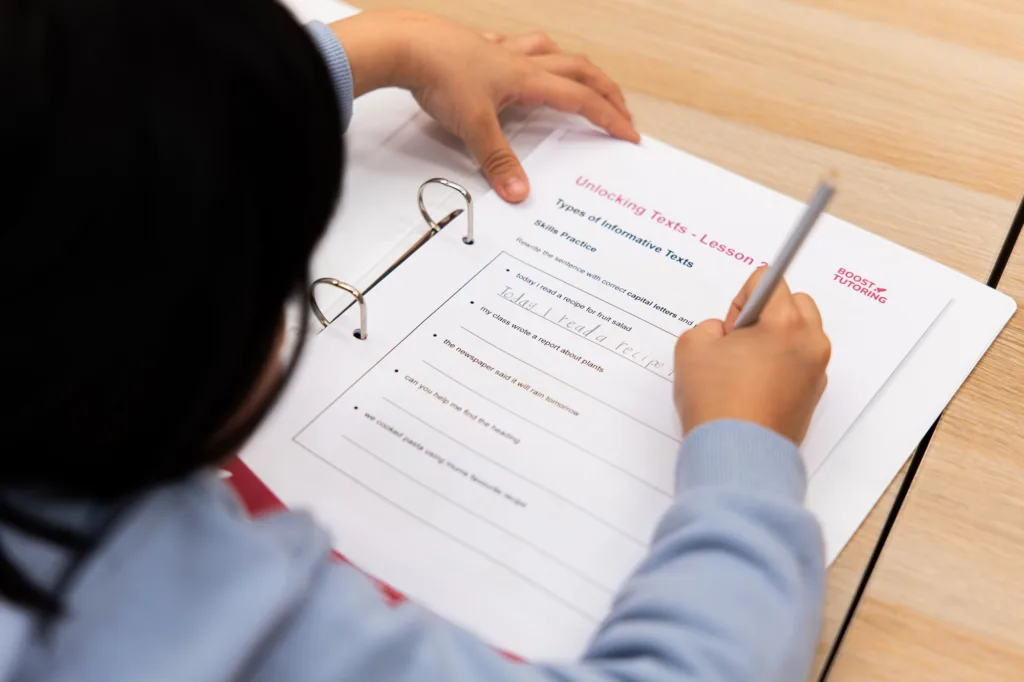
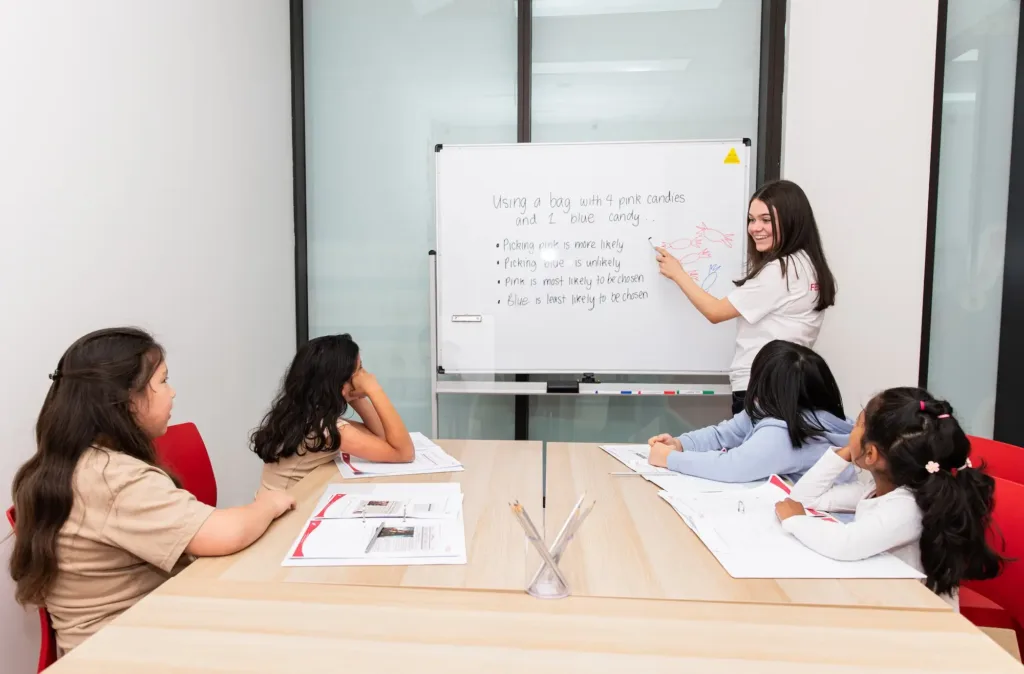
This is why foundational skills come first in every primary English session at Boost Tutoring Castle Hill. The first five minutes cover vocabulary and quick inference questions.
After that warm-up, the tutor teaches straight from the class content, and the last stretch is spent practising it before anyone packs a bag. Every small-group English tutoring keeps one tutor week after week, so skipping the why question gets noticed early. That tutor hears the shrug before a school report does.
If your child’s bedtime retells are spot on but the why questions keep getting a shrug, an assessment with Boost Tutoring pinpoints where the gap sits and which skill to start with.
Book a free academic assessment to see where your child’s reading foundations stand