Ask most children to argue a point out loud and they’ll do it happily, endlessly, and with real conviction, especially about bedtime or screen time. Ask the same child to write a persuasive piece, and something freezes. The opinions that flowed so easily at the dinner table won’t come out on the page, or they come out as a jumble of “because it’s good” and “everyone thinks so.” Persuasive writing is a skill many children find surprisingly hard, even the ones who love to argue.
It’s also one of the most important kinds of writing they’ll learn, and one of the most teachable. If you’re considering persuasive writing tutoring in Beaumont Hills, here’s what the skill actually involves, why children find it hard, and what helps.
What Persuasive Writing Actually Asks
Persuasive writing has a clear job: to argue a position and convince the reader of it. That’s more demanding than it sounds, because it asks a child to do several things at once.
They have to take a clear position, not sit on the fence. They have to support it with reasons, not just assert it. They have to back those reasons with evidence or examples, so the argument carries some weight. And they have to organise all of it so a reader can follow the case being built, from opening to conclusion.
Underneath the writing, persuasive writing is really structured thinking. It’s the skill of building an argument: having a view, working out why you hold it, and laying out the case clearly enough to bring someone else around. That’s why it matters well beyond English, and why it turns up in the tests that count, it’s one of the forms that can appear in both the NAPLAN writing task and the Selective writing task, and it’s a thinking skill a child will use for the rest of their life.
Why Children Find It Hard
A few specific things trip children up, and they’re worth recognising.
The most common is opinion without support. A child states what they think, strongly, and then stops, as though the opinion were the argument. “We should have longer lunch breaks because they’re good” isn’t persuasive, because it gives the reader no reason to agree. Learning that an opinion needs backing up is often the first hurdle.
The second is weak or repetitive reasons. A child gives three reasons that are really the same reason said three ways, or reasons that don’t hold up to a moment’s thought. Building genuinely different, solid reasons is a skill in itself.
The third is a lack of structure. The argument arrives in the order it occurred to the child rather than the order that builds a case, so even good points land in a heap. A reader can only be persuaded by an argument they can actually follow.
And the fourth is forgetting the reader. Persuasion is about moving someone else, which means anticipating what they think and addressing it. A child who only states their own view, without a nod to the other side, writes something less convincing than one who acknowledges the counter-argument and answers it.
The Structure That Makes It Work
The good news is that persuasive writing has a clear, learnable structure, and a child who’s been taught it writes far more convincingly than one left to work it out alone.
It starts with a clear position, stated up front, so the reader knows exactly what’s being argued. Then each reason gets its own paragraph, built the same way: make the point, support it with evidence or an example, and explain how it supports the position. That small structure, point, evidence, explanation, is the engine of persuasive writing, and a child who learns it has a reliable way to build any argument.
A strong persuasive piece also addresses the other side. Acknowledging a likely objection and answering it makes an argument far more convincing than pretending the objection doesn’t exist, and it’s a mark of real sophistication in a young writer. And it opens and closes deliberately: an introduction that states the position clearly, and a conclusion that drives it home rather than just stopping.
The single most useful habit, though, is planning before writing. A child who spends two minutes deciding their position, their reasons, and the order before they start writes a far stronger piece than one who begins typing and hopes an argument emerges. Persuasion is built, not improvised.
How We Teach Persuasive Writing at Boost in Beaumont Hills
Persuasive writing is exactly the kind of thing our approach is built for, because it’s a craft with teachable parts rather than a talent a child either has or doesn’t.
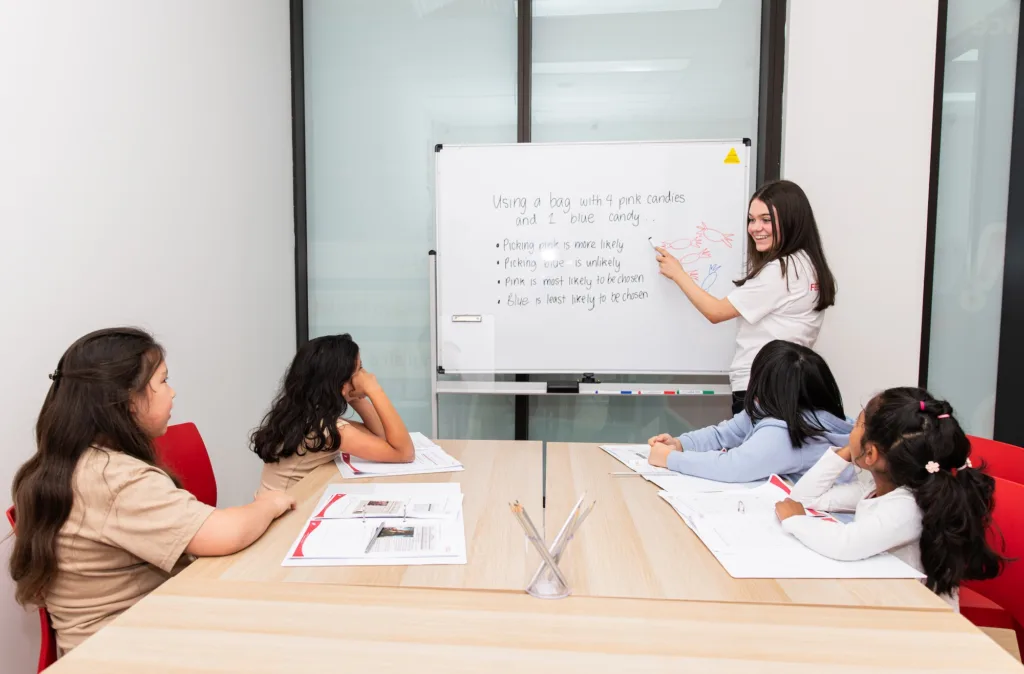
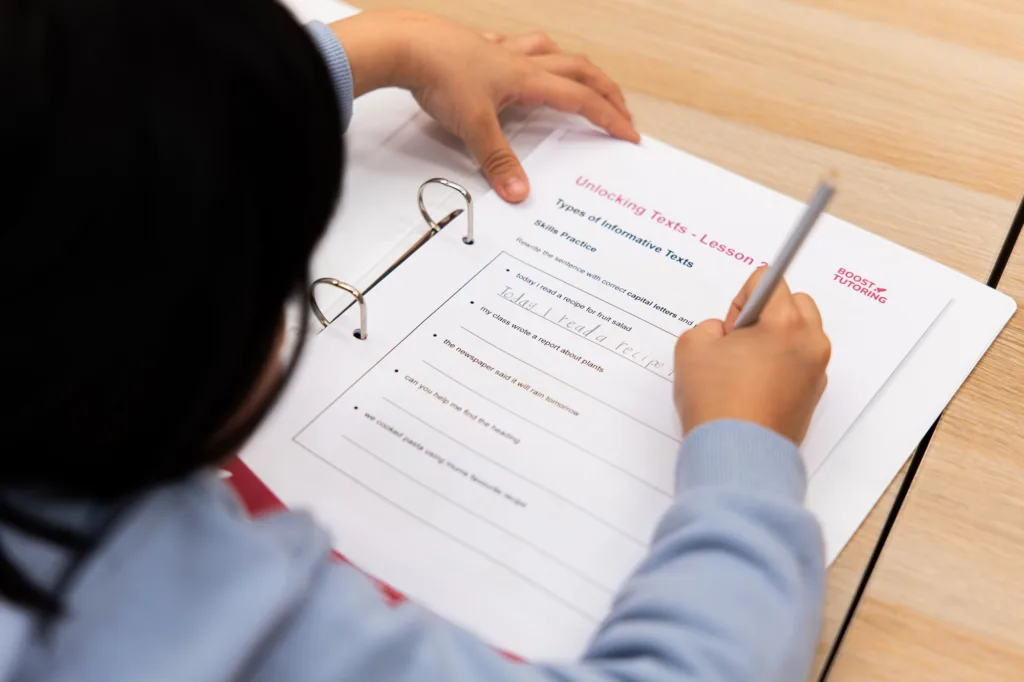
At Boost, English runs in small groups of six to eight with the same tutor each week, aligned to the NSW syllabus. We teach persuasive writing as a structure a child can rely on, how to take a clear position, build reasons with evidence and explanation, address the other side, and open and close with force, and we teach planning first, so the thinking is done before the writing starts. Each session follows Prime, Train, Retain: a few minutes of skills work, real teaching, then the student writing and working through it themselves until the structure becomes second nature. It carries on at home through a short daily worksheet, because writing, like everything else, improves with regular practice.
The aim is a child who can take any position and argue it clearly and convincingly, on the page as easily as they do at the dinner table.
Persuasive writing isn’t a mysterious talent. It’s structured argument, and it’s thoroughly teachable: a clear position, well-built reasons, a nod to the other side, and a plan before the pen moves. Taught properly, the child who “can’t write persuasively” usually just hasn’t been shown how. The place to start is finding out where your child’s writing actually sits.
Book a free academic assessment and find out where your child’s writing actually sits