Your child has just started high school, or is about to. The uniform’s a bit big, the bag’s full of books for subjects they’ve never studied, and the first few weeks are a blur of new faces, new rooms and a timetable nobody can quite read yet. Year 7 is a huge adjustment, and while plenty of attention goes into preparing for it, far less goes into supporting a child once they’re actually in it.
That’s a shame, because the first year of high school is exactly when the right support can make the biggest difference. If you’re considering Year 7 tutoring in Castle Hill, here’s what the year is really like, where students tend to wobble, and how to help them through it.
What the First Year of High School Is Actually Like
The jump from primary is bigger than the calendar suggests. In primary, one teacher saw your child all day and knew them well. In Year 7, there are eight teachers, each seeing them a few hours a week among many others, and none holding the full picture. A child who’s quietly lost can stay lost for a while, because there’s no single person watching closely.
The content steps up and speeds up. Maths turns abstract, English asks for analysis rather than just understanding, and across every subject the pace is faster and the expectations higher. And the independence demanded is a shock in itself: managing a diary, tracking assessments across subjects, remembering what to bring, starting work that isn’t due for weeks. Most of this is simply assumed.
For the first few weeks, the novelty carries a child through. Everything’s exciting and new, and they rise to it. The real test comes a little later, once the novelty fades and the workload settles in, which is exactly why the first wobble often arrives mid-year rather than at the start.
Where Year 7 Students Wobble, and When
A few predictable things trip Year 7 students up, and knowing the timing helps you catch them.
In maths, the arrival of algebra and the jump to abstraction catch out plenty of capable students, especially any whose primary foundations, times tables, fractions, operations, weren’t quite solid. Year 7 maths exposes those gaps fast, and a student can go from confident to lost in a single term.
In English, the shift from understanding a text to analysing it surprises strong readers, who find that reading well isn’t quite the skill being tested anymore. Learning to build an argument and structure a response is new, and rarely taught slowly.
And underneath both, the workload. Many Year 7 students come unstuck not on the content but on managing it, forgetting assessments, leaving things late, drowning in the organisation high school assumes they can handle.
The timing matters. These wobbles tend to show up a term or two in, after the first-term novelty fades, not in week one. So a child who seemed to be sailing through February can hit a wall by mid-year, and a parent watching only the first few weeks can be caught off guard. The first real report card is often where it surfaces.
Why Catching It Early in Year 7 Matters
The first year of high school sets patterns that tend to stick, which is why a wobble here is worth catching quickly.
A gap that opens in Year 7 doesn’t stay put. Year 8 builds straight on Year 7, so a student who falls behind early carries it forward, and the gap compounds. A maths wobble in Year 7 left alone is often a real problem by Year 8, and a settled belief, “I’m just not a high school maths person”, not long after.
The habits set early, too. A student who learns in Year 7 to manage their time and keep on top of the workload carries that for years. One who learns to scramble and cram keeps scrambling. The first year is where the whole approach to high school is quietly decided.
So catching a Year 7 wobble early, while it’s small and before it hardens into a habit or a belief, is far easier than waiting. The first report that disappoints is a signal to act, not a thing to hope improves on its own.
How We Support Year 7 Students in Castle Hill
Boost Secondary covers Years 7 to 10, and Year 7 is one of the most valuable points to step in, because support during that first year heads off problems before they compound.
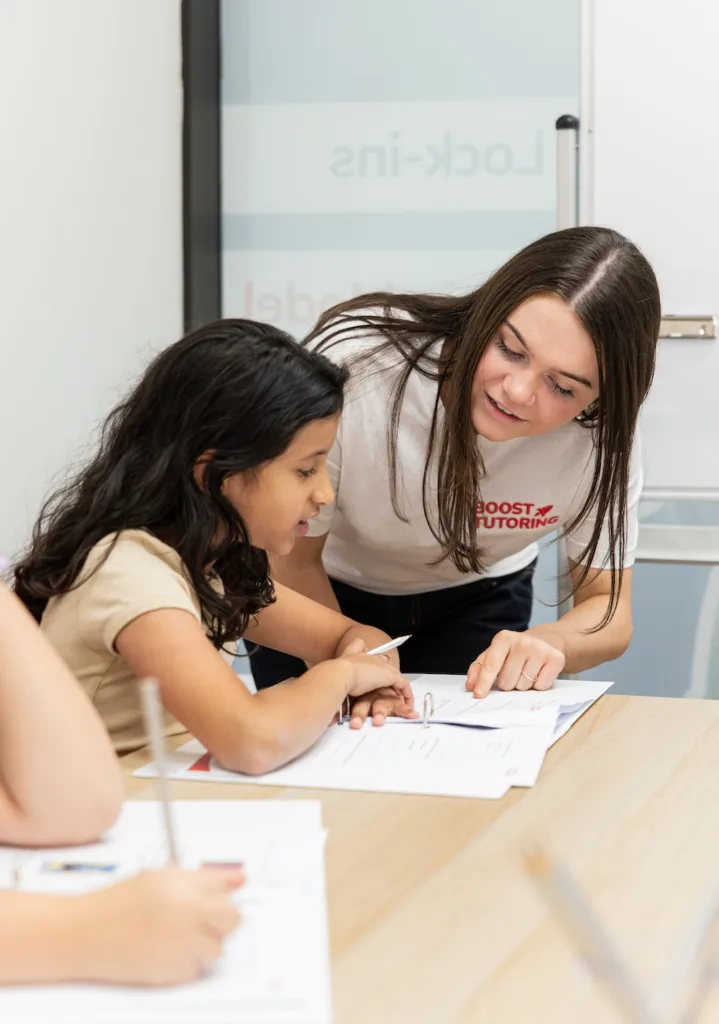
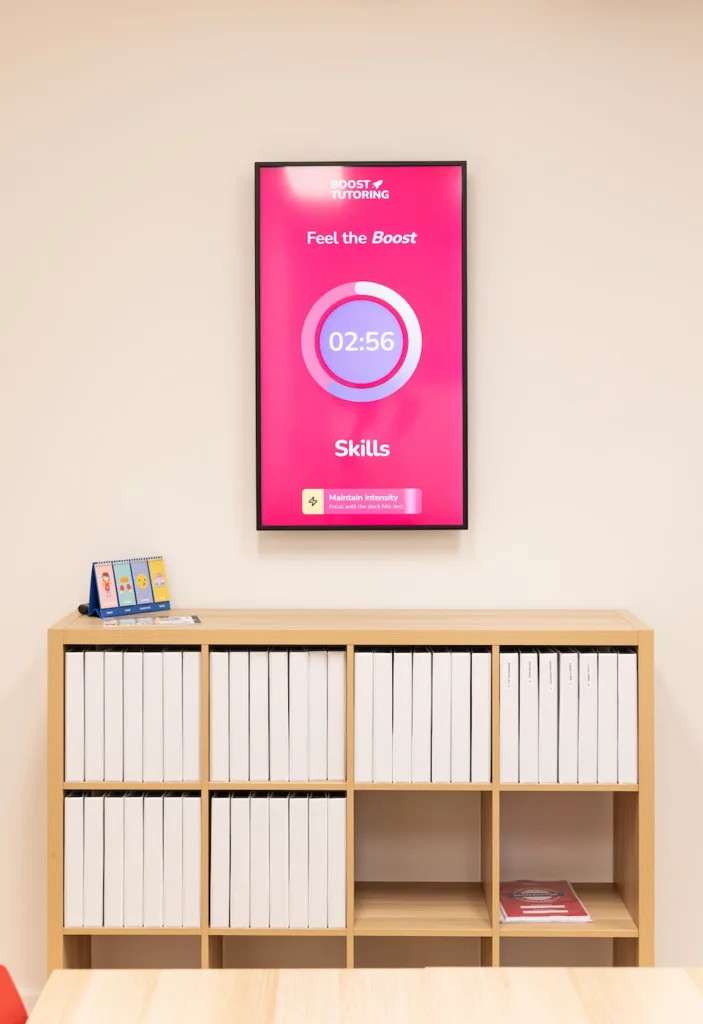
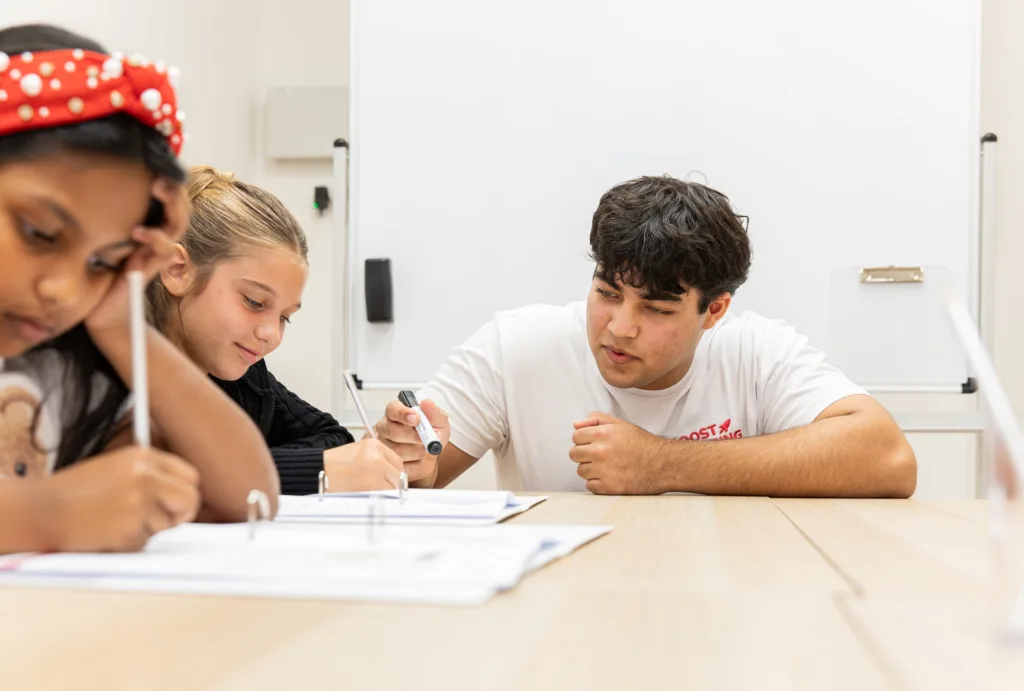
We start by working out where a student actually sits, which for a Year 7 student often means checking whether the primary foundations underneath the new content are genuinely solid, since that’s where most early high school trouble traces back to. Sessions run in small groups of six to eight with the same tutor each week, aligned to the NSW syllabus, in maths and English. Each opens with a few minutes of skills work, then real teaching with the reasoning made visible, then the student working through it themselves until it holds. Prime, Train, Retain. It carries on at home through a short daily worksheet, which also builds the independent working habit high school demands.
The aim is a Year 7 student who settles in steady, catches any wobble early, and builds good habits in the year that sets the tone for the rest of high school.
Year 7 is a big adjustment, and the first year of high school is exactly when good support pays off most. Watch for the wobble that tends to arrive once the novelty fades, catch it early, and your child builds the habits and confidence that carry them through the years ahead. The place to start is finding out where your child actually sits now.