Everyone agrees Year 3 is a foundations year. The trouble is that “foundations” is a vague word, and it’s hard to act on something vague. What foundations, exactly? Which specific skills should your child have solid by the end of Year 3, and how would you even know if they do?
This is the useful version of the conversation. If you’re thinking about Year 3 tutoring in Beaumont Hills, or just want to keep an eye on things yourself, here are the specific building blocks Year 3 is meant to lock in, across reading, maths and writing, and how to tell whether your child actually has each one.
The Reading Foundations
Year 3 is where reading quietly changes job, from learning to read to reading to learn, and two foundations matter most.
The first is fluency: reading smoothly, at a reasonable pace, without having to work hard at sounding out words. By Year 3 this should be mostly automatic, because a child still labouring over the words has no spare attention left for understanding them.
The second, and more important, is comprehension: actually understanding what’s been read. This is the one that matters and the one that’s easiest to miss, because a child can read aloud beautifully and understand very little.
How to tell if it’s solid: have your child read a page, then ask what it was about, and why a character did something, or what might happen next. A child with strong reading foundations can tell you, and can go a little beyond the literal facts. A child who reads fluently but goes blank on “what was it about?” has a comprehension gap worth addressing now, while it’s small.
The Maths Foundations
Year 3 maths lays several foundations that everything later leans on, and a few are worth watching closely.
Number facts and times tables. Year 3 is where quick recall of addition and subtraction facts should be solid, and where times tables begin in earnest. These need to head toward automatic, because fluency here frees a child to think about harder problems later.
Place value. Understanding what each digit in a number actually means, that the 3 in 30 is worth more than the 3 in 3, underpins almost all the number work that follows, and gaps in it cause errors that look careless but aren’t.
The start of multiplication and division, and multi-step thinking. Year 3 introduces these, and word problems begin to appear, asking a child to read, reason and then calculate.
How to tell if it’s solid: watch for speed and confidence with number facts. A child still counting on fingers for simple sums in Year 3, or slow and unsure with early times tables, has a fluency gap. And check they understand rather than just perform, ask them to explain how they got an answer; a child who can is on solid ground.
The Writing Foundations
Writing takes a real step up in Year 3, from single sentences toward short, organised pieces, and a few foundations matter.
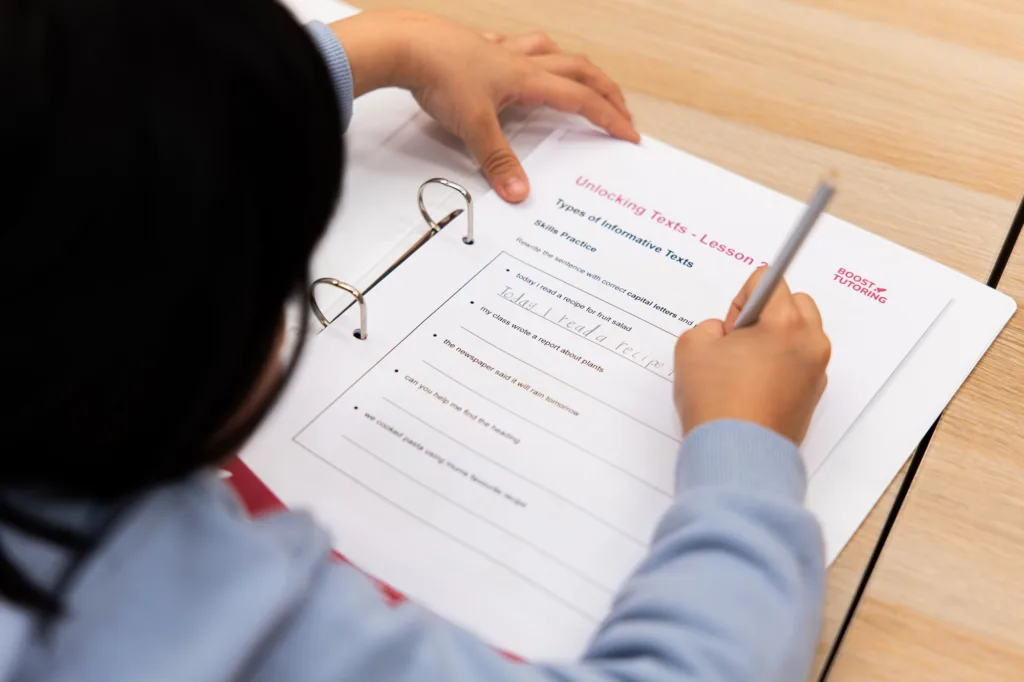
Writing a clear sentence, reliably, with capital letters and full stops in the right places. This should be becoming second nature.
Building sentences into a short piece with some shape, a beginning, a middle and an end, rather than ideas written down in whatever order they arrive.
And the basics of spelling and grammar, enough that they’re not getting in the way of getting ideas onto the page.
How to tell if it’s solid: look at a piece of your child’s writing. Does it hold together, or is it a jumble? Can they plan a little before they write, or do they just start? And is spelling and punctuation roughly under control, or a constant battle? Writing is often the last of the three to come together, so some wobble here is normal, but a child who finds getting any words onto the page genuinely hard is worth helping now.
How We Build Year 3 Foundations in Beaumont Hills
At Boost, Boost Primary covers the K to 6 years, and Year 3 sits right in the sweet spot for building exactly these foundations.
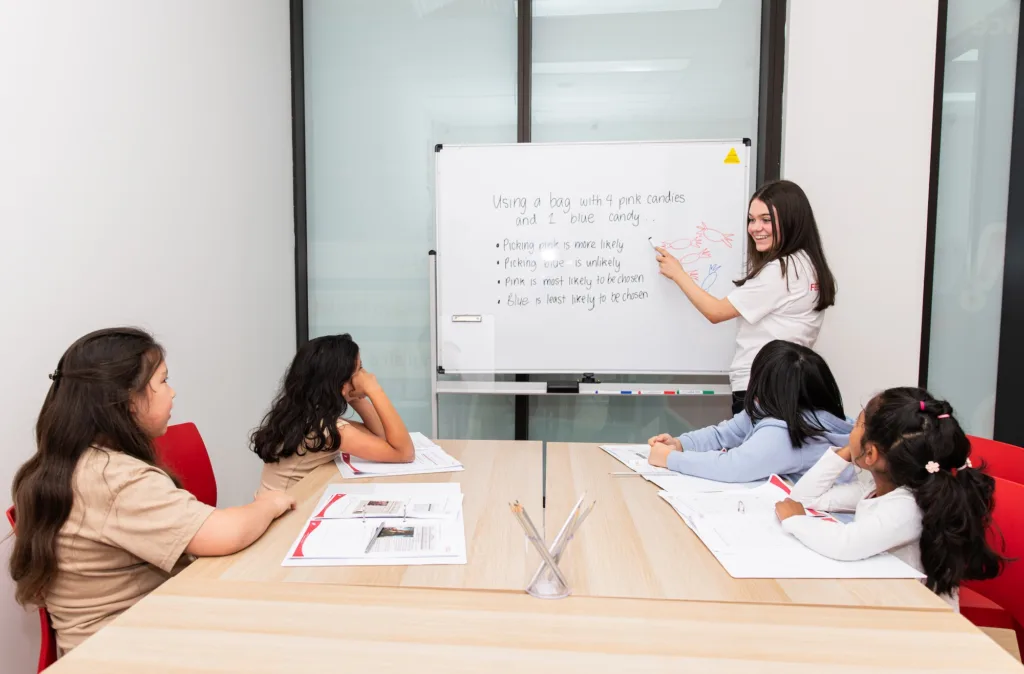
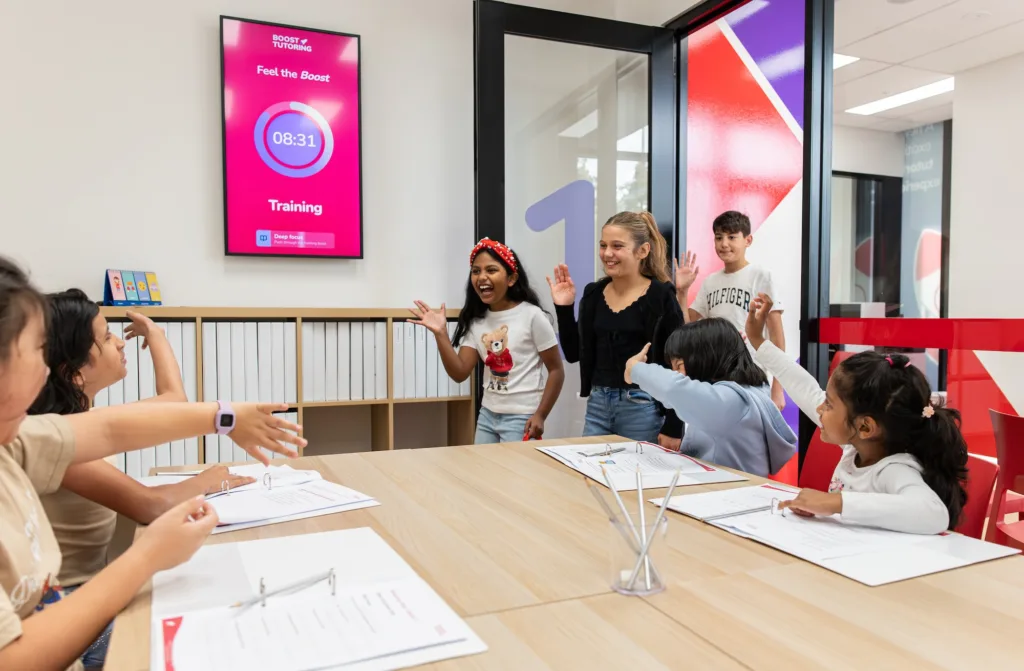
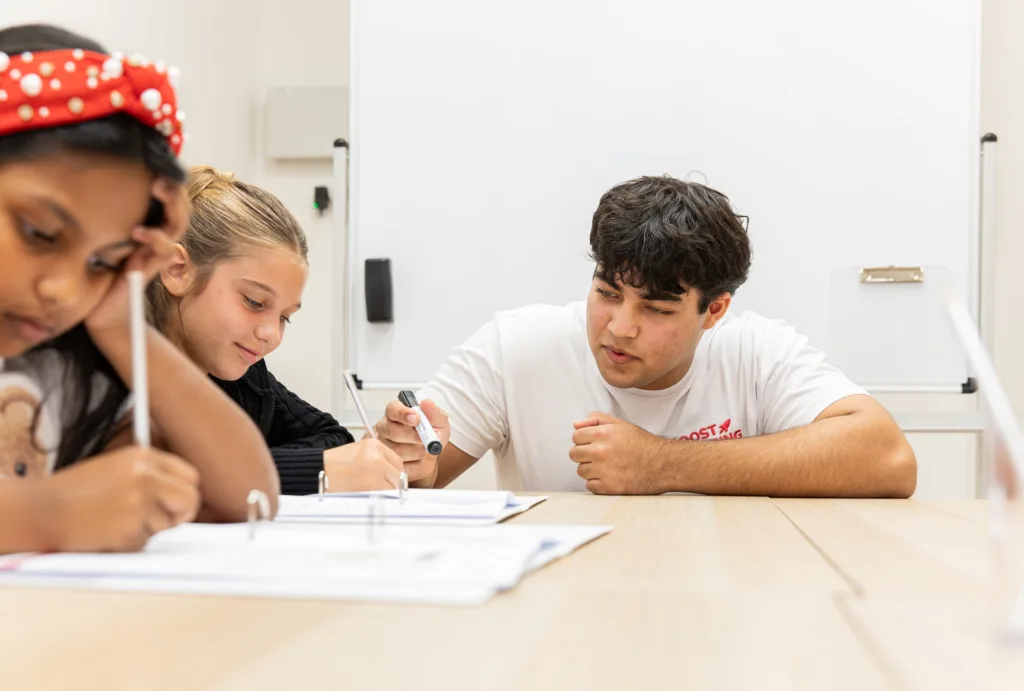
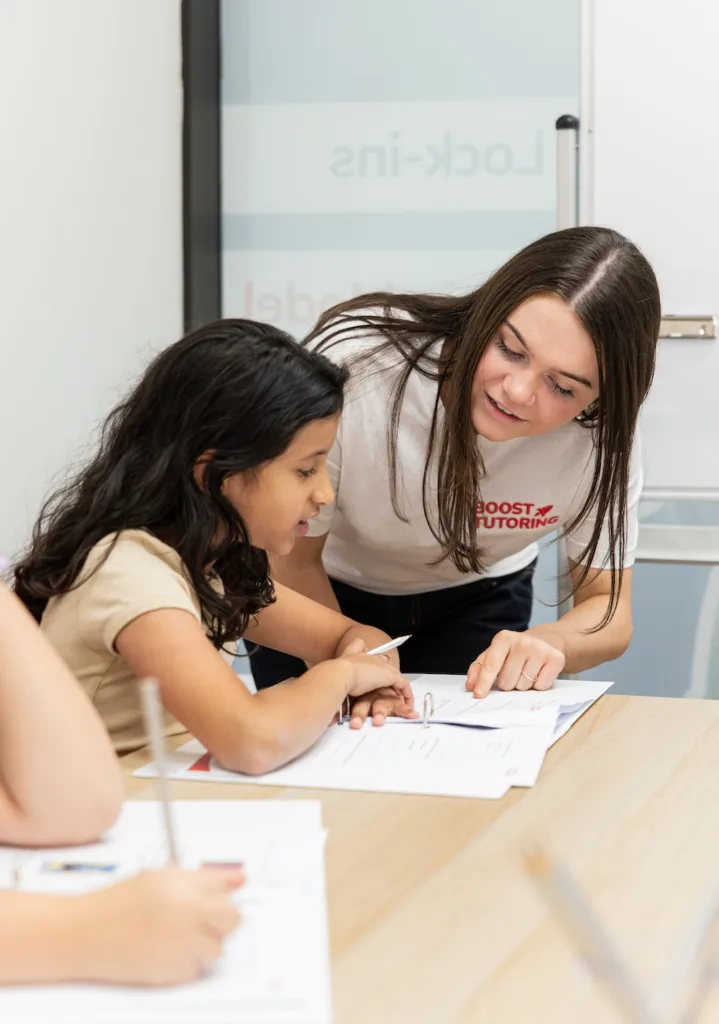
We start by working out where your child actually sits across all of them, which of the reading, maths and writing building blocks are solid and which need attention, so nothing’s guessed at. Sessions run in small groups of six to eight with the same tutor each week, in maths and English, aligned to the NSW syllabus. Each opens with a few minutes of skills work, the times tables, number facts and vocabulary Year 3 is building, then real teaching, then the child working through it themselves until it holds. Prime, Train, Retain. It carries on at home through a short daily worksheet, because at this age a little every day builds foundations far better than a lot once a week.
The aim is a child who finishes Year 3 genuinely solid across reading, maths and writing, ready for everything the later primary years and beyond will build on top.
“Foundations” only becomes useful when you know which ones. In Year 3, they’re fluent reading and real comprehension, quick number facts and solid place value, and writing that holds together. Check each, firm up any that are shaky now while it’s easy, and your child moves into the later years on solid ground. The clearest place to start is finding out exactly which foundations are solid and which aren’t.
Book a free academic assessment and see exactly where your Year 3 child’s foundations sit