Here’s a moment many Beaumont Hills parents know. Your child reads a passage aloud without a stumble, every word right, and then can’t answer “why did the character do that?” or “what’s the writer really saying here?” The reading was fine. The understanding wasn’t, at least not the kind the question was asking for. That gap, between reading the words and grasping what’s underneath them, is what comprehension is really about, and it’s where a lot of capable readers quietly come unstuck.
If you’re considering English tutoring in Beaumont Hills with comprehension in mind, here’s what comprehension actually involves, why one part of it is so much harder than the rest, and how it’s built.
The Two Levels of Comprehension
Comprehension isn’t a single skill. It works on two levels, and children usually handle one far better than the other.
The first is literal comprehension: understanding what the text directly says. What happened, who did it, where and when. The answer is right there on the page, and most children who read fluently can find it. This is the easy level, and it’s often all that gets tested in the early years.
The second is inferential comprehension: understanding what the text implies but doesn’t state. Why a character acted as they did, how they’re feeling based on their behaviour, what the writer is suggesting without spelling it out, what’s likely to happen next. The answer isn’t on the page; the child has to work it out by reading between the lines.
Most children are fine with the first level and find the second genuinely hard. And because the first level sounds like comprehension, and a fluent reader handles it easily, the gap at the second level often goes unnoticed, until the questions start demanding it.
Why Inference Is Where It Gets Hard
Inference is the harder level for a real reason: it asks a child to do more than read. It asks them to connect clues in the text, combine them with what they already know about the world, and draw a conclusion the writer deliberately left unstated.
That’s a genuine thinking skill, not just a reading one, and it leans on things a child builds over time: background knowledge, vocabulary, and the habit of actually thinking about what they read rather than just reading the words.
It’s also the level that matters most as a child gets older. Early comprehension questions are mostly literal; by late primary and especially high school, the questions are increasingly inferential and interpretive, asking what a text means, not just what it says. A child strong on literal comprehension but weak on inference hits a ceiling exactly when school starts demanding the harder skill. This is why some children who were “good at reading” in early primary find comprehension suddenly hard later: the goalposts moved to inference, and nobody built that skill deliberately.
How to Build the Inference Skill
The encouraging part is that inference can absolutely be taught and built, and much of it through things that cost nothing.
Ask “how do you know?” When your child answers a question about a text, push gently for the evidence. “He was nervous.” How do you know? This trains them to notice the clues that inference relies on.
Talk about why, and what happens next. Why did the character do that? What do you think happens after the story ends, and what makes you think so? These questions are inference in action, and doing them in conversation builds the instinct.
Work out word meanings from context. When a child meets an unfamiliar word, rather than simply supplying it, ask what they think it means from the sentence around it. That’s inference at the vocabulary level, and it strengthens both.
And read widely, because inference draws on background knowledge. The more a child knows about the world, the more clues they can connect, so broad reading quietly feeds comprehension as well as vocabulary.
None of this requires drills. It requires reading, and talking about reading, with the questions aimed a level below the surface.
How We Teach Comprehension at Boost
At Boost in Beaumont Hills, comprehension is central to our English teaching, and we focus on exactly the level that matters most and is hardest to build: inference and interpretation, not just the literal understanding fluent reading already provides.
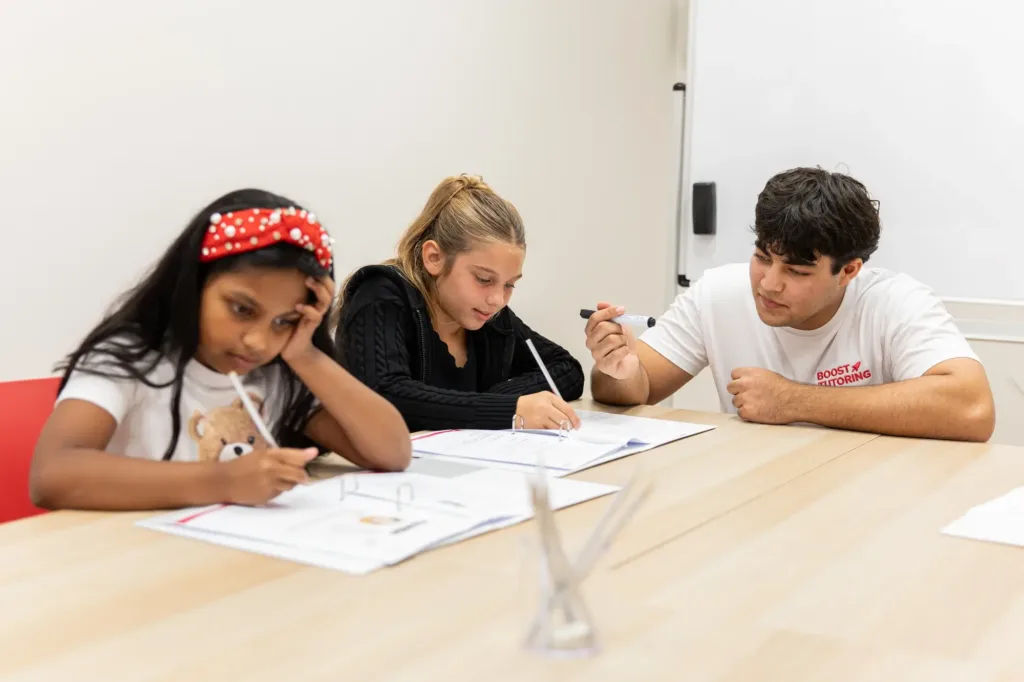
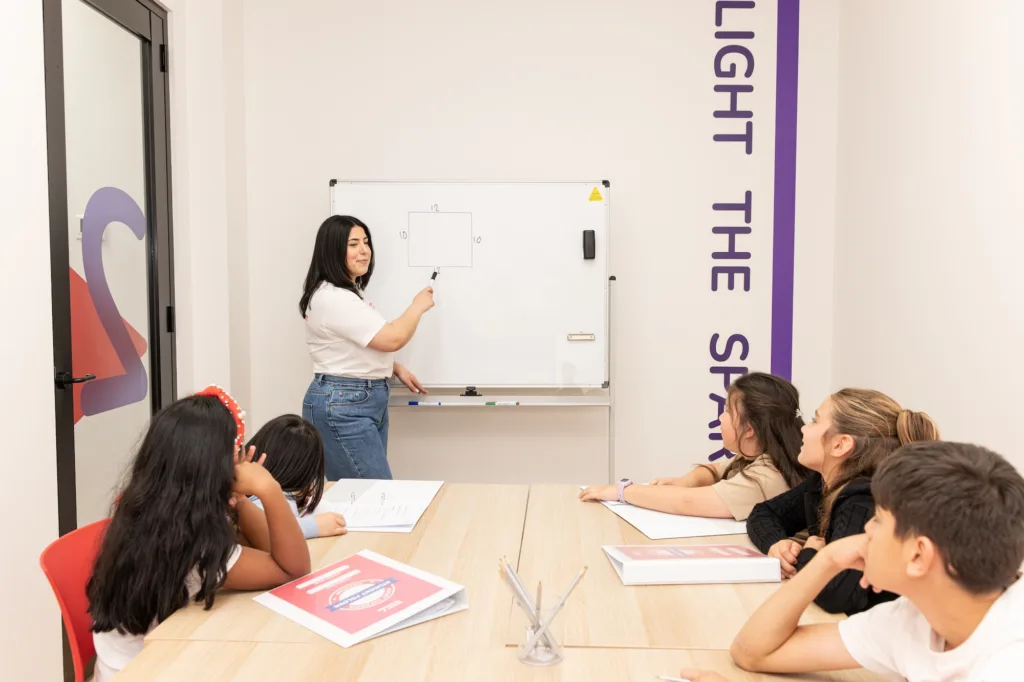
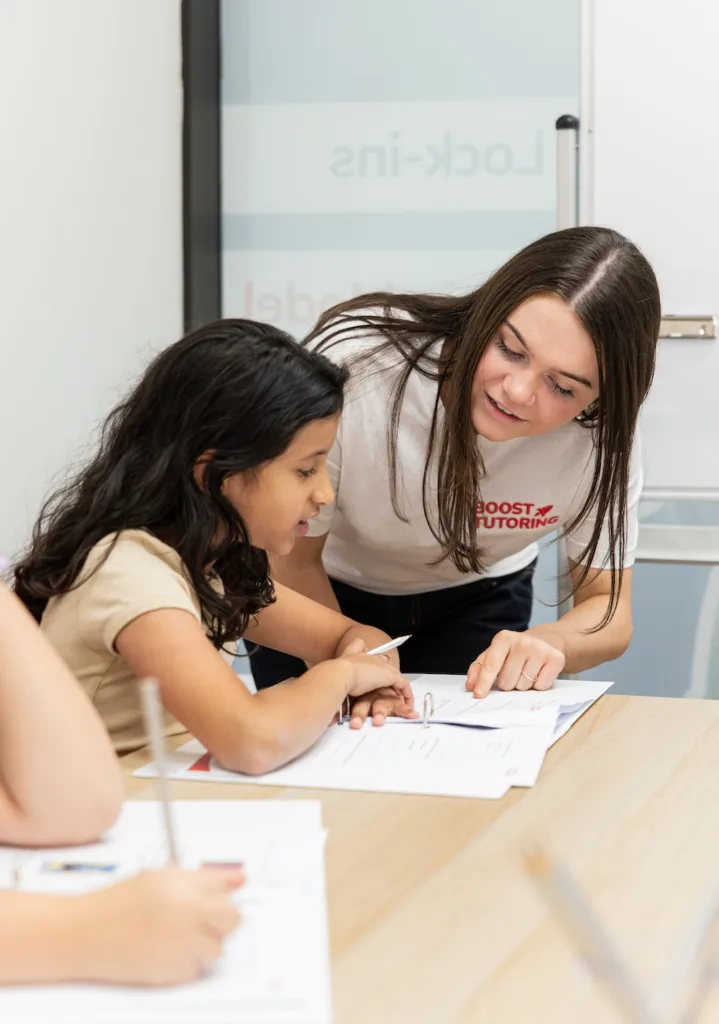
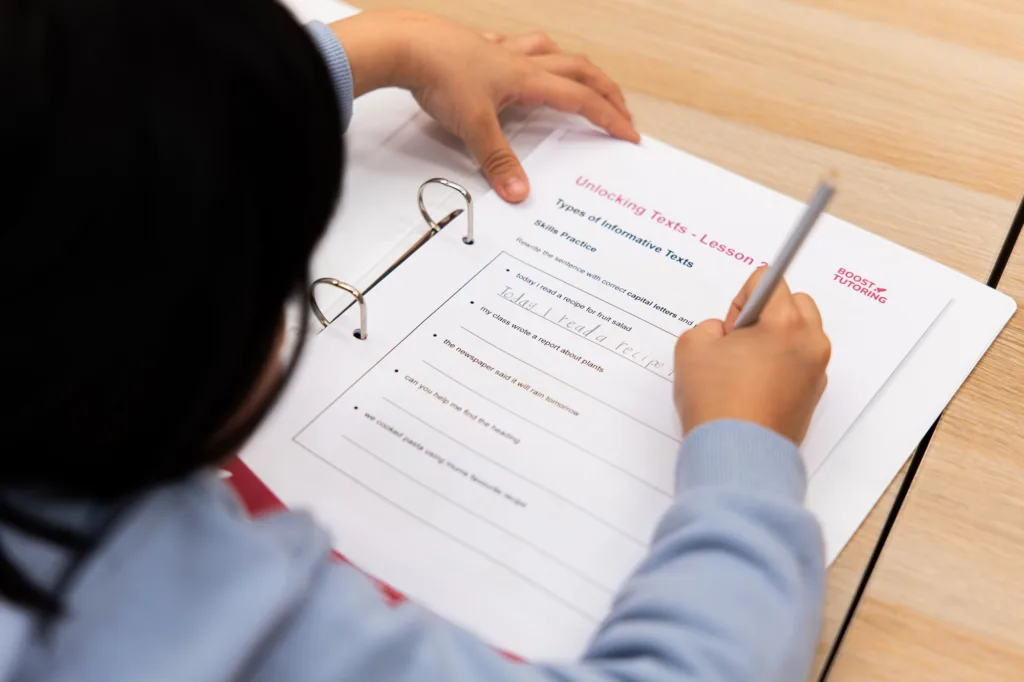
We teach children to read between the lines, to find the evidence for a conclusion, and to reason about what a text is doing, which is the skill high school English and every comprehension test increasingly rewards. Sessions run in small groups of six to eight with the same tutor each week, aligned to the NSW syllabus, built around Prime, Train, Retain, with comprehension woven through the skills work, the teaching and the practice. It carries on at home through a short daily worksheet, because comprehension, like everything, strengthens with regular practice.
And because comprehension is easy to miss behind fluent reading, we start by working out how well your child actually understands, not just how well they read aloud.
Comprehension is more than reading the words. The part that matters, and the part that’s hard, is inference, understanding what a text implies rather than only what it states, and it’s the skill school increasingly demands as a child gets older. The good news is that it’s thoroughly teachable. The place to start is finding out how well your child actually understands what they read.
See how Boost Accelerator builds comprehension a little every day