If you’re preparing a child for the Selective test, the single most useful thing to understand is that it isn’t one test. It’s four, bundled into one morning, and each rewards something quite different. Treat it as a single blur of “exam prep” and you’ll almost certainly over-focus on the familiar parts and neglect the ones that matter just as much.
This guide walks through all four sections, what each actually tests, and how to prepare for each. If you’re starting to think seriously about Selective test prep in Castle Hill, this is the lay of the land.
The Four Sections of the Selective Test
The Selective High School Placement Test, sat in Year 6 for entry into Year 7, is computer-based and made up of four sections: Reading, Mathematical Reasoning, Thinking Skills, and Writing.
The crucial thing to know is that each of the four counts equally, a quarter of the placement score. That even weighting changes how you should prepare, because there are no cheap wins from pouring everything into one section. A child brilliant at maths but weak at writing has, in effect, capped their score before they start. Balanced preparation across all four is the only sensible approach.
With that framing, here’s what each section is really testing, and how to prepare for it.
Reading and Mathematical Reasoning: What They Reward
These are the two sections that feel most familiar, which can make families complacent about them.
Reading is comprehension under time pressure. Children read a range of texts and answer questions, and the marks are lost less on reading the words than on understanding them, particularly the inferential questions that ask what a text implies rather than states. Preparing for it isn’t about drills; it’s about a child who reads widely and is in the habit of thinking about what they read, so inference comes naturally. Strong, deep reading, built over time, is the preparation.
Mathematical Reasoning is not the same as school maths. It rewards applying maths to unfamiliar, multi-step problems, reasoning rather than recalling a method. A child who’s only ever practised standard question types can be thrown by its problems, which are designed to make you think. Preparing for it means strong number fluency as a foundation, plus practice with the kind of unfamiliar problem-solving the section favours, not just more of the same sums.
Thinking Skills and Writing: The Two Parents Underestimate
These are the two sections families most often neglect, and the two that most reward attention.
Thinking Skills is the one parents understand least, because schools don’t teach it. It’s logic and reasoning, pattern recognition, deduction, abstract problem-solving, the kind of thinking that doesn’t map onto any school subject. A child won’t simply pick it up in class, which means it needs deliberate attention. The good news is it responds to practice with the specific kinds of questions it uses, combined with the general reasoning that good problem-solving builds. Ignore it, as many families do while drilling maths, and you’ve left a quarter of the test underprepared.
Writing is the other underestimated section. It’s a single piece written in thirty minutes, typed, and the genre isn’t known in advance, it could be narrative, persuasive, a report, a diary entry, any of several forms. The most common mistakes are preparing only one genre and then being caught out, and writing fluently but not addressing the task. Preparing well means practising across genres, learning to plan and structure quickly, and always answering exactly what’s asked. And because it’s typed, comfortable typing matters more than parents expect.
How We Approach Selective Prep in Castle Hill
At Boost, we prepare students for Selective across all four sections, because the even weighting means none can be neglected.
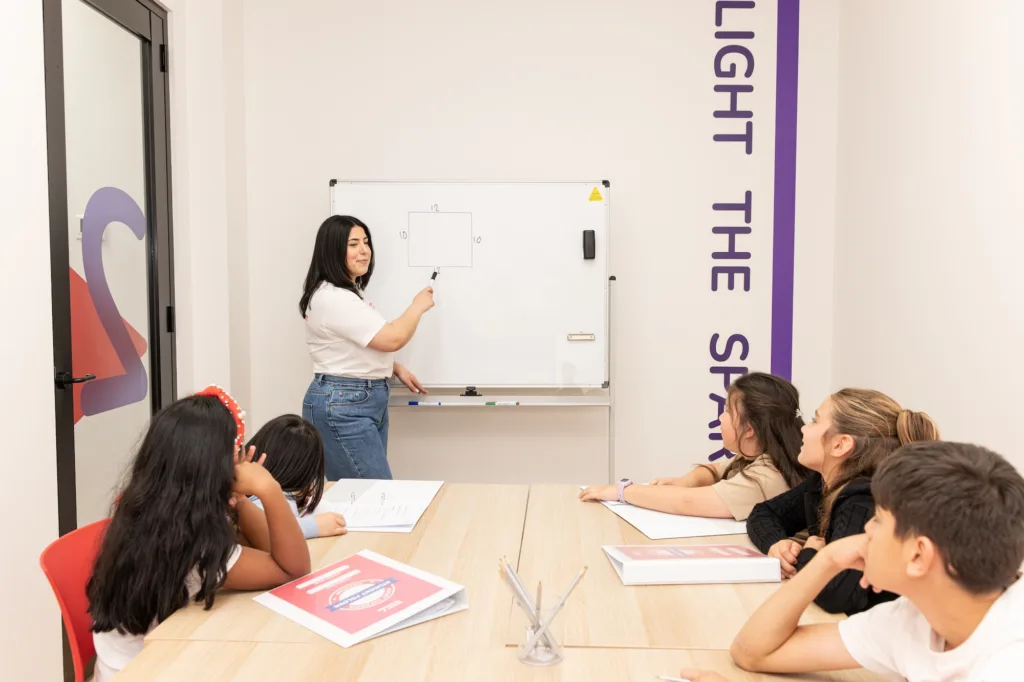
We start by working out where a child sits, which quickly shows which sections are strong and which need work, so preparation is targeted rather than generic. Boost Selective for Years 5 and 6 builds the foundations all four sections rest on, strong reading, confident mathematical reasoning, and the kind of thinking the test rewards, then layers in section-specific familiarity closer to the test, including the Thinking Skills and writing work that families so often under-prepare. Sessions run in small groups of six to eight with the same tutor each week, aligned to the NSW syllabus, built around Prime, Train, Retain, with daily practice at home.
The aim is a child prepared evenly across all four sections, rather than strong in the familiar ones and exposed in the rest.
The key to Selective prep is understanding that it’s four tests in one, each worth a quarter, each rewarding something different. Prepare across all of them, give particular attention to Thinking Skills and writing, the ones most families neglect, and build the foundations the whole test rests on. The place to start is finding out where your child sits across the four, so you know exactly where the work is needed.
Book a free academic assessment and see where your child sits across all four Selective sections